How do Photovoltaic cells work to generate electricity?
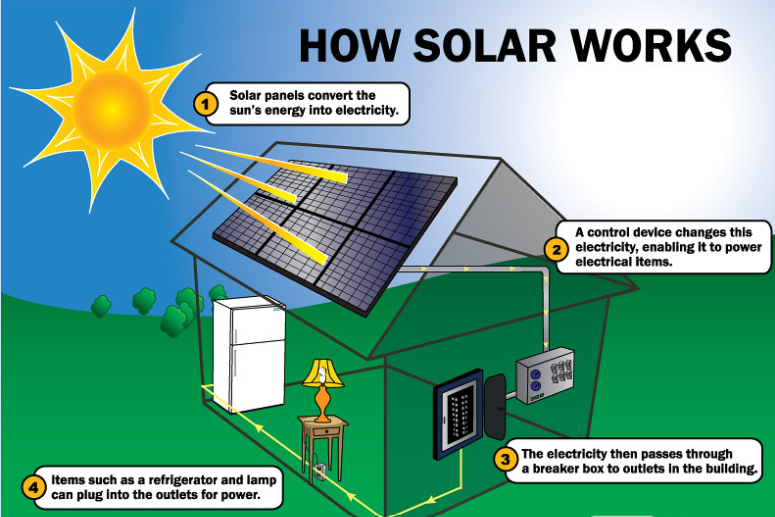
How solar panels work to convert solar energy to electricity?
We all know that Solar panels are made up of many Photovoltaic (PV) cells. But have you ever wondered how do photovoltaic cells work to generate electricity from sunlight? In this post, I am going to explain how solar panels work to generate electricity.
If you’re considering solar panel installation for your home, you may be curious to know how do solar panels work to produce electricity. So keep reading to learn how solar panels harness energy from the sun and convert it into usable electricity.
But before I show how does solar panels work, let me first describe what is a solar panel.
The Origins and Key Moments in Solar Panel History
Before diving into the nuts and bolts of how solar panels convert sunlight into electricity, it’s fascinating to take a quick look back at how this remarkable technology came to be.
The story of solar photovoltaics stretches back over a hundred years. The term “photovoltaic” itself combines the Greek word for “light” and the name of Italian physicist Alessandro Volta—yes, the very one who lent his name to volts—hinting at the process where sunlight is turned directly into electricity.
Early on, the first solar cells cobbled together in the 1800s were humble affairs, barely scraping out 1% efficiency. So, while the concept was thrilling, it wasn’t exactly powering neighborhoods just yet. The real breakthrough began in the mid-20th century as research and curiosity blossomed—and with a little help from the space race.
When the U.S. launched Vanguard 1 in 1958, it wasn’t just another shiny object in orbit. It was packing solar panels, becoming the first satellite to be powered by the sun after its batteries fizzled out, and it kept transmitting signals for years—well outlasting its chemical-powered peers.
Since then, solar panels have steadily made their journey from orbiting satellites to providing clean energy on rooftops across the globe. In fact, with rapid advances and a global push for renewables, solar is no longer just a futuristic option—it’s quickly becoming a familiar sight in neighborhoods everywhere.
What is Solar Radiation and How Is It Harnessed?
To put it simply, solar radiation is the energy sent out by the sun in the form of light and heat. This stream of energy—think of it like invisible rays pouring down from above—travels through space and reaches the Earth’s surface every single day.
Now, modern solar technologies, such as the photovoltaic (PV) cells inside solar panels, are designed to capture this sunlight and put it to work. When the sun shines on a solar panel, those PV cells absorb the sunlight, setting the stage for the electricity-generating process that powers homes and gadgets.
What is a solar panel?
Solar panels are made up of many Photovoltaic or solar cells, also known as PV cells. Just like the cells in a battery, the solar cells in a solar panel are small devices designed to generate electricity. These cells are protected by a glass casing that shields them from environmental damage such as moisture, impacts, and UV exposure. Inside the panel, metal plates are used to collect and transfer the electrical current generated by the cells. Connecting wires link the cells and metal plates, allowing the electricity to flow out of the panel and into the electrical system.
Let’s break down the main components of a solar panel:
- Solar cells: The core of every panel, these cells absorb sunlight and convert it into electricity. Most solar panels use silicon-based cells, which come in two types: monocrystalline (made from a single silicon crystal, offering higher efficiency) and polycrystalline (made from silicon fragments, typically a bit less efficient but more affordable).
- Glass casing: A durable glass layer covers the panel, providing protection from environmental hazards and helping the cells last for decades.
- Insulation layer and back sheet: Beneath the glass, these layers help prevent heat dissipation and protect against humidity, both of which can reduce the panel’s performance over time.
- Anti-reflective coating: This special coating increases sunlight absorption, ensuring the cells get as much exposure as possible.
- Wiring (such as 12V wire): Regulates and routes the electricity generated by the cells to your inverter or electrical system.
- Bus wires: These connect the individual silicon cells together, carrying the electrical current throughout the panel.
All these layers and components work together to ensure the solar panel efficiently captures energy from the sun and safely delivers it as usable electricity for your home or business.
Why is silicon the go-to material for solar cells?
Now, you might be wondering: why is silicon the most common choice for solar cell material? The answer comes down to a combination of performance, availability, and practicality.
- Abundant and affordable: Silicon is the second most abundant element in the Earth’s crust (think: beach sand), making it easy to source and relatively inexpensive to process compared to many other semiconductors.
- Perfect properties for electricity generation: Silicon’s atomic structure allows it to efficiently absorb sunlight and convert it into electrical energy. When sunlight hits a silicon cell, it excites electrons—creating the electric current we harvest as power.
- Durability and longevity: Silicon-based solar panels are incredibly robust, offering decades of reliable performance with minimal loss of efficiency over time.
- Adaptability: Whether it’s used in rigid rooftop panels or flexible solar gadgets, silicon can be shaped and engineered for a wide variety of solar applications.
Thanks to these advantages, silicon has become the backbone of modern solar panel technology—striking an ideal balance between efficiency, durability, and affordability.
How are solar panels made?
If you’ve ever gazed at a solar panel and wondered how all those shiny rectangles come together, you’re not alone. The process of making solar panels starts with the most important ingredient: silicon, a material found abundantly in beach sand. But turning ordinary sand into the highly pure silicon needed for solar cells is an impressive feat. Here’s how the process works from start to finish:
Step 1: Refining Silicon
Solar panel manufacturing begins by heating quartz sand in powerful arc furnaces, extracting pure silicon from its natural form. This purified silicon will form the core of each solar cell, but it takes a tremendous amount of energy and careful control to reach the purity levels required for efficient solar panels.
Step 2: Forming Silicon Ingots and Wafers
The pure silicon is shaped into large cylindrical ingots, a bit like glass logs. During this step, boron is added to the silicon so it takes on a positive electrical charge—the foundation of the solar cell’s function. These ingots are then sliced into ultra-thin wafers, each one about the thickness of a sheet of paper.
Step 3: Treating the Wafers
To boost their ability to absorb sunlight, these delicate silicon wafers are treated with a special anti-reflective coating, typically giving them a blue or black shimmer. Then, a very thin layer of phosphorus is introduced on the surface, giving the silicon a negative charge to balance the boron’s positive charge. This positive/negative setup is key to generating electricity when sunlight hits the cell.
Step 4: Assembling the Cells Into a Panel
- Thin metal conductors are meticulously printed or soldered onto the wafer, creating pathways for electricity.
- Dozens (sometimes hundreds) of these finished solar cells are wired together in a grid to make up one panel.
- The matrix of cells is sandwiched between a toughened glass front layer and a protective backsheet made of durable plastic, which guard against the elements—rain, hail, wind, and sun.
Step 5: Final Construction
- The edges are sealed, and the cell assembly is fitted into a sturdy metal frame—often made from anodized aluminum for corrosion resistance.
- A junction box and connection wiring are added to channel the electricity produced by the panel to your home’s electrical system.
The end result is a weather-resistant, electricity-generating powerhouse built to last for decades—even as it sits on your roof braving everything from summer thunderstorms to winter cold. In just a few careful steps, nature’s humble sand is transformed into a modern marvel that delivers clean, renewable power for years to come.
What is the process of manufacturing solar panels?
Now that we know a bit about what makes up a solar panel, you might be wondering: How are these marvels actually made? The process of manufacturing solar panels is a fascinating journey from raw silicon to the sleek modules you see on rooftops.
Let’s walk through the key steps involved:
- Purifying and Shaping Silicon: Everything starts with raw silicon, most often sourced from sand. The silicon is purified and formed into large, cylindrical ingots. The direction of the silicon’s atoms is carefully managed to maximize electrical output. During this stage, boron is mixed in to give the material a positive electrical charge.
- Creating Silicon Wafers: The solid silicon ingots are then sliced into ultra-thin wafers—about the thickness of a sheet of paper! These wafers are treated with a special anti-reflective coating to help the cells soak up as much sunlight as possible rather than bouncing it away.
- Doping and Adding Conductors: To kickstart the electric flow, phosphorus is introduced to the wafer surface, giving it a negative charge to complement the boron’s positive charge. This difference creates the electric field essential for electricity generation. Conductive gridlines—made of tiny strips of silver or other metals—are then printed or laid onto the wafers so that electrons can be collected and moved efficiently.
- Assembling the Solar Cell Matrix: Once each individual cell is ready, the cells are connected together with thin metal strips called bus wires. These cells are arranged in a precise grid, so their combined power output is maximized.
- Final Panel Construction: The interconnected cells are layered between a tough back sheet and a durable glass cover. Everything is sealed tightly to protect from moisture and environmental wear. To finish, a frame is added for structural support, and a junction box is attached so wires can safely deliver electricity out to an inverter or your home.
From raw silicon to finished panel, each layer and component is meticulously assembled to ensure long-lasting performance and efficient energy production.
However, while a battery’s cells make electricity from chemicals, a solar panel’s cells work through a phenomenon called the photoelectric effect to produce electricity from sunlight. Now, let’s see how do solar cells work.
Photovoltaic (PV) System Components
A solar energy system is made up of several essential components that work together to convert sunlight into usable electricity for your home or business. At the heart of every PV system are the solar panels—also known as PV modules—which contain multiple solar cells designed to convert sunlight into direct current (DC) electricity.
Once the solar panels generate DC electricity, it flows to a solar inverter. The inverter is a crucial component that transforms the DC electricity into alternating current (AC) electricity, which is the standard form of electricity used by most household appliances and the electrical grid.
The mounting system is another important part of a solar energy system. It securely attaches the solar panels to your roof or the ground, ensuring they are positioned at the optimal angle to capture the most sunlight and maximize energy production.
A monitoring system is often included to track the performance of your PV system. This system provides real-time data on energy production, system health, and efficiency, allowing you to monitor how much clean electricity your solar panels are generating. These monitoring systems typically work through the inverter, using companion apps or smart home devices to make information easily accessible. Some systems gather data from a central inverter, while others use microinverters attached to each solar panel for more detailed, panel-level insights.
With a performance monitoring system, you can see not only how much energy your system is producing, but also how much you’re consuming—helping you optimize your energy use and quickly spot any issues that may arise. This level of visibility gives you peace of mind and ensures your PV system continues to deliver the clean energy you expect.
Some PV systems also feature energy storage solutions, such as batteries, which store excess energy produced during the day for use at night or during power outages.
By understanding the role of each component in a PV system, you can better appreciate how solar energy systems work together to provide reliable, renewable energy for your home or business.
Measuring and Optimizing Solar PV System Performance
Understanding how a solar photovoltaic (PV) system performs—and how efficiently it transforms sunlight into usable electricity—is key to getting the most out of your investment.
Measuring Performance and Efficiency
At its core, the efficiency of a solar panel is a percentage that tells you how much sunlight hitting the panel is actually converted into electricity. For example, if a 400-watt panel receives 1000 watts of sunlight per square meter and produces 400 watts of power, it has an efficiency of 40%. Most modern residential panels fall between 18% and 22% efficiency, with some premium models from companies like SunPower or REC climbing even higher.
Performance isn’t just about those lab numbers, though. Real-world conditions—such as the angle of your roof, the amount of daylight you get, temperature changes, and even occasional shade from that big maple tree—can all affect how much energy your solar system produces day to day.
Optimizing Your Solar Power Output
Thankfully, there are several proven ways to maximize how much electricity your system can generate:
- Optimal Panel Positioning: Ensuring your solar panels are installed at the right tilt and orientation for your location helps capture the maximum amount of sunlight year-round.
- Regular Maintenance: Keeping your panels free of leaves, dirt, and debris boosts performance, as does making sure no nearby shrubs or trees start casting unwanted shade.
- System Monitoring: Using your system’s monitoring software, you can keep tabs on each panel or the whole array. If production drops, you’ll catch it early—sometimes before you’ve even noticed a change in your power bill.
- Choosing High-Efficiency Panels: If space is limited, investing in higher-efficiency panels allows you to generate more power from a smaller area.
- Microinverters and Power Optimizers: Upgrading to systems that feature microinverters or DC power optimizers (brands like Enphase or SolarEdge, for example) helps panels work independently. This way, shade or debris on one panel won’t drag down the performance of the entire system.
By keeping tabs on both how your system is performing and what factors might be affecting it, you’ll ensure your solar investment keeps delivering clean energy and strong savings for years to come.
Key Considerations in Solar System Design
Designing an effective solar system isn’t just about picking out panels—it’s a careful balancing act between your available roof (or ground) space and your energy needs. Before any installation can begin, these two elements—how much electricity you use and how much real estate you’ve got for solar panels—take center stage.
The process often starts with analyzing your utility bills to figure out your average daily and monthly energy consumption. From there, you can determine how many panels you’ll need to cover that usage. Of course, where you’ll put those panels matters, too—your roof’s size, shape, orientation, and any shading from trees or nearby buildings all play a part in the calculations.
But that’s just the start. A well-designed solar system also takes into account:
- Optimal Panel Placement: Adjusting the tilt and orientation of panels to capture the most sunlight based on your location’s latitude.
- Shading Analysis: Assessing potential shade from chimneys, trees, or other structures, which can limit performance.
- Local Regulations and Permitting: Navigating building codes, homeowner association guidelines, and permit requirements that might affect your installation.
- System Expansion: Considering whether you might want room to add more panels down the road.
- Energy Storage Needs: If incorporating batteries, factoring in space, budget, and backup requirements.
Advanced software tools and online resources—like Google Project Sunroof or Mapdwell—make it much easier to visualize your energy potential and design a system that fits both your property and your power goals.
By weighing all these factors, you’re set up for a solar installation tailored to your needs, maximizing your return on investment and your home’s renewable energy output.
Understanding Tracking Systems and Their Role in Solar Efficiency
While most solar panels are fixed in place, tracking systems add another level of sophistication to a solar array. These are motorized mounts designed to adjust the angle of your solar panels throughout the day, ensuring they stay pointed toward the sun as it moves across the sky.
There are two main types of tracking systems:
- Single-axis trackers: These systems rotate panels along one axis—typically east to west—following the sun’s daily path. This allows your panels to capture more sunlight during sunrise and sunset compared to stationary mounts.
- Dual-axis trackers: Taking things a step further, dual-axis systems pivot both horizontally and vertically. They adjust to seasonal changes in the sun’s position, maintaining the most efficient angle year-round.
By keeping solar panels optimally aligned with the sun, tracking systems can significantly increase energy production—sometimes by 20–35% compared to fixed-tilt installations. While they add some complexity and cost, the efficiency gains can be especially valuable for locations with limited roof or ground space where maximizing power output is a priority.
Types of Solar Panel Racking and Mounting Systems
Not all solar panels simply sit on your roof and bask in the sun—how they’re mounted plays a big role in capturing that precious sunlight. Choosing the right racking and mounting approach is key for optimizing your system’s performance (and longevity). Here’s a look at the most common options:
Roof-Mounted Systems: This is the go-to choice for most residential solar installations. Rails or brackets securely attach the panels to your roof—whether that’s shingles, tiles, or metal. Some systems forego rails altogether, using direct-to-roof attachments for a more streamlined look and lighter weight. On flat roofs, ballasted systems (held in place by heavy blocks) or non-penetrating racks are used to avoid drilling and extra stress on the rooftop.
Ground-Mounted Systems: Ideal if your roof isn’t quite solar-friendly, or if you have space to spare in your yard or field. Panels are mounted on frames anchored directly into the ground—sometimes with steel rods, screws, or heavy concrete blocks for stability. These frames let you adjust the tilt and orientation so you can catch just the right sun angles throughout the year.
Tracking Systems: For those seeking maximum exposure, tracking systems automatically adjust the position of your panels to follow the sun’s path as it crosses the sky. Single-axis trackers move panels from east to west each day, while dual-axis trackers add a vertical adjustment to capture the sun’s elevation hour by hour. While these setups are more complex (and sometimes pricier), they can boost your energy harvest significantly.
With the right racking and mounting setup, your solar panels will be perfectly positioned to soak up every possible ray—whether they’re perched on a roof, standing tall on the ground, or following the sun’s every move.
Assessing Your Rooftop’s Solar Potential
If you’re curious about whether your home or building is a good fit for solar panels, the good news is that evaluating your rooftop’s solar potential is easier than ever.
Start by using online solar assessment tools like Google’s Project Sunroof, Aurora Solar, or Mapdwell. These platforms use satellite imagery and your address to estimate how much sunlight hits your roof, accounting for factors like roof size, orientation, local weather patterns, and shading from nearby trees or buildings. With just a few clicks, you’ll get an estimate of the potential energy production and even the possible cost savings over time.
But there’s more to designing a solar system than just sunlight estimates. A thorough assessment also considers space requirements, potential shade throughout the year, the optimal tilt or pitch of your panels, and whether permits will be needed in your area. The best online tools and software solutions can help with these calculations, offering features like shade analysis, load profile generation, automatic system design, and even draft proposals for permitting.
For a more precise evaluation, consider reaching out to a local solar installer. Professionals can perform an on-site inspection, take roof measurements, and analyze your household’s energy usage. They’ll check the age and condition of your roof, its pitch or tilt, and any obstructions that could affect solar panel placement.
Steps to assess your rooftop solar potential include:
- Entering your address into an online mapping tool to view your roof’s solar exposure.
- Reviewing suggested system sizes and estimated yearly savings.
- Taking note of any relevant site details—like shading or roof condition—that may affect your system.
- Consulting with a solar provider for a customized site survey and quote.
By following these steps, you can confidently determine whether your rooftop is primed for tapping into solar energy—and what benefits you can expect from making the switch. And with today’s digital tools, you’re no longer left guessing—accurate planning is just a few clicks away.
How Solar Hot Water and Concentrated Solar Power (CSP) Systems Work
After exploring how photovoltaic cells turn sunlight into electricity, you may wonder how other solar technologies harvest energy from the sun. Let’s look at two other popular approaches: solar hot water systems and concentrated solar power (CSP) systems.
Solar Hot Water System Components and Process
Solar hot water systems are designed to harness the sun’s energy to heat water for household use, rather than generate electricity. The core components include:
- Solar Collectors: These are typically mounted on your roof and contain absorber plates, which capture the sun’s heat.
- Transfer Fluid System: Pipes carry either water or antifreeze through the absorber plates, allowing the fluid to absorb the collected heat.
- Heat Exchanger: The heated fluid passes through a heat exchanger, where it transfers thermal energy to the water stored in a tank.
- Storage Tank: This insulated tank keeps the hot water ready for use.
- Control Units and Backup Heater: A controller manages flow and temperature, while a backup heating element ensures hot water is available on cloudy days.
Instead of generating electricity, this system directly heats water—a simple, efficient method for reducing household energy costs.
Concentrated Solar Power (CSP) Technology
CSP systems operate on a much larger scale, often powering entire neighborhoods or adding renewable energy to the electrical grid. The process involves:
- Mirrors or Lenses: Large arrays of mirrors track the sun and reflect its rays onto a small focal point.
- Central Receiver or Absorber: All the concentrated sunlight is focused onto a receiver filled with a fluid—typically molten salt or oil—that can reach very high temperatures.
- Heat Engine: The hot fluid generates steam, which spins a turbine connected to a generator, ultimately producing electricity.
CSP plants are especially common in sun-soaked regions like the American Southwest, Spain, and parts of Australia, where there’s plenty of direct sunlight to power these large installations.
CSP in Industrial Processes
Beyond generating electricity, concentrated solar-thermal power technology offers a wide variety of industrial applications. By harnessing intense solar heat, CSP can drive energy-intensive industrial processes—anything from producing cement and steel to desalinating water and supporting chemical manufacturing. Since many of these industries traditionally rely on fossil fuels, CSP provides a promising pathway to decarbonize manufacturing and reduce the overall carbon footprint of the economy.
As the demand for cleaner, more sustainable energy grows, CSP’s ability to deliver both grid-scale electricity and high-temperature heat makes it a valuable tool for tackling industrial emissions and supporting a low-carbon future.
Types of Concentrated Solar Power (CSP) Systems
Just like there are different ways to brew your morning coffee, there are a few main designs for CSP systems—each with its own unique way of wrangling sunshine into usable heat and, eventually, electricity. The two most common types you’ll hear about are power tower systems and linear concentrators.
- Power Tower Systems:
Imagine a field filled with thousands of sun-tracking mirrors—called heliostats—all aiming sunlight at a single receiver perched atop a tower. This super-focused beam heats up a fluid (often molten salt) inside the receiver to extremely high temperatures. The hot fluid then creates steam to spin a turbine and generate electricity. Power towers can store heat for use after sundown, making them a heavy hitter for round-the-clock renewable power. You’ll often find these futuristic installations shimmering in desert regions where the sun means business. - Linear Concentrator Systems:
Instead of a single tower, linear systems use long rows of curved mirrors—think of a giant parabolic trough or a line of Fresnel lenses. These mirrors reflect sunlight onto a pipe running along their focus line, heating up a transfer fluid (like oil or water). The heated fluid, just as in the tower design, is used to make steam for turbines. Linear concentrators are more common for mid-sized solar power plants and can be easier to install for projects with a wide, flat footprint.
Whether it’s the dramatic profile of a power tower or the elegant sweep of parabolic mirrors, CSP systems are all about collecting and concentrating sunlight to unleash serious amounts of clean energy. Their scale and storage abilities make them an important piece of the puzzle as we transition to a more sustainable grid.
Dish/Engine CSP Systems: Stirling Up the Sun
Another clever twist on concentrated solar technology is the dish/engine system. Picture a gleaming, satellite-style dish covered in mirrors, all angled to capture and focus sunlight onto a single point—the sweet spot right at the dish’s focal point. Here, instead of heating a liquid or salt in a big tank, the concentrated sunlight is directed into a small engine, typically a Stirling engine.
How does it work? The focused solar energy heats up the engine, causing gas inside to expand and drive pistons or a turbine. This mechanical motion is then converted into electricity. Because each dish/engine is self-contained, these units are great for modular, scalable clean energy solutions—from remote outposts to small communities. Plus, they can be set up in places where building big power towers or mile-long rows of mirrors just isn’t practical.
While less common than their power tower and linear concentrator cousins, dish/engine systems have earned a niche as solar’s elegant minimalist—they pack a punch in a compact package and can be quickly deployed wherever the sun’s shining brightest.
The Role of Thermal Energy Storage in CSP Systems
One standout advantage of concentrated solar power (CSP) systems is their ability to store thermal energy for later use—even after the sun has set or clouds roll in. This is made possible through thermal energy storage, often using large tanks of molten salt or other heat-retaining materials.
Here’s how it helps CSP systems shine:
- Continuous Power Generation: By storing excess heat collected during peak sunlight hours, CSP facilities can keep generating electricity long after sunset, bridging the gap when solar energy wouldn’t otherwise be available.
- Grid Reliability: This stored energy makes CSP a valuable resource for the electric grid, providing steady, dispatchable power and helping even out the fluctuations that naturally come with solar production.
- Maximized Efficiency: With thermal storage, CSP plants can operate more consistently—even delivering power during periods of high demand, regardless of sun conditions.
Ultimately, thermal energy storage transforms CSP systems into a more flexible and dependable source of renewable energy.
By understanding these different types of solar energy systems—photovoltaic, solar hot water, and CSP—you can better appreciate the diverse ways we’re harnessing the sun’s limitless energy.
What Are Current Research Areas in Solar Energy Technologies?
Solar innovation doesn’t stop at turning sunlight into electricity or heating water—scientists and engineers are constantly cooking up new ways to make solar energy more efficient, affordable, and versatile. Today’s solar research projects span from next-generation materials to smarter integration with our power grids. Here’s a peek at some of the most exciting areas getting attention:
High-Efficiency Photovoltaics: Researchers are exploring advanced materials like perovskites and tandem solar cells, which aim to push the boundaries of how much sunlight can be converted into usable energy—often by stacking multiple layers or mixing materials to capture more of the sun’s spectrum.
Solar Cell Durability and Recycling: As solar panels age, finding eco-friendly ways to recycle or repurpose their components is key. Scientists are investigating new techniques to extend panel lifespans and close the recycling loop for critical materials like silicon, silver, and rare metals.
Flexible and Lightweight Solar: Don’t be surprised if the next wave of solar tech looks more like thin film or flexible sheets than rigid panels. These lightweight options can be integrated into curved surfaces, building materials, or even backpacks and tents for off-grid adventures.
Energy Storage Integration: With solar providing plenty of juice during the day but little at night, pairing solar with advanced battery systems—think next-generation lithium-ion, flow batteries, or even new solid-state designs—is a hot topic. The goal? Smoother supply, better backup, and true 24/7 reliability.
Floating and Agrivoltaic Solar: Solar arrays aren’t just for rooftops and deserts anymore. Floating solar installations on lakes, reservoirs, and even canals are gaining traction, helping conserve land and reduce water evaporation. At the same time, agrivoltaics—solar panels raised above crops—let farmers harvest energy and food from the same plot.
Smarter Grid Integration and Digital Controls: On the software side, research is turning to “smart” inverters, AI-driven forecasting, and advanced grid management tools. These help utilities handle the ebb and flow of solar generation and keep everything humming along smoothly—even on cloudy days.
Solar energy’s future is bright, and ongoing research ensures we’ll keep finding creative ways to capture, store, and use clean sunlight wherever it shines.
How do photovoltaic cells work?
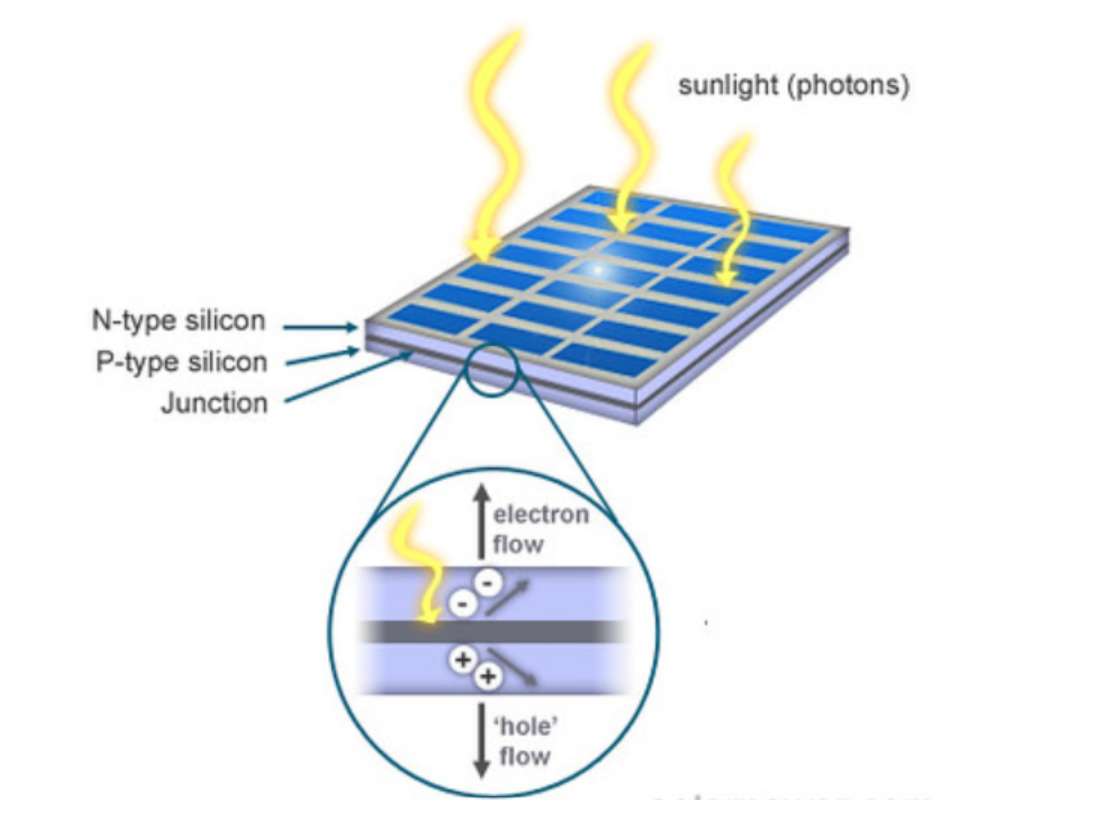
The photoelectric effect is the ability of matter to emit electrons when a light is shone on it. It is a property exhibited by some special materials when exposed to light that causes them to absorb the tiny particles or packets of energy called photons, with which the light is composed of. When sunlight hits the solar cell, these photons knock electrons free from the atoms in the special materials of the solar cells, converting sunlight into electricity. This movement of electrons creates an electric current within the cell. The resulting electrical current is generated and captured for use, forming the basis of solar power generation.
Now, how do photovoltaic cells work or how do solar cells work? Photovoltaic or Solar cells are made of special materials called semiconductors. Silicon is the most commonly used semiconductor for making a solar cell. Silicon carries millions of tiny atoms that have charged electrons. The most common design of solar panels today uses two different types of silicon – positively charged (P-type) and negatively charged (N-type). This is to create a solar cell made up of two different layers, a layer of positively charged silicon and a layer of negatively charged silicon sandwiched together. To achieve this, small quantities of other elements are squeezed into the silicon layers.
The silicon in the top layer is combined with phosphorus atoms, which contain more electrons to create a negatively charged silicon (N-type) layer and the bottom layer gets a dose of boron, which contains fewer electrons to create a positively charged silicon (P-type) layer. When these two different layers of opposite charges are separated and placed side by side inside a Solar cell or Photovoltaic cell it creates an electric field across the cell just like in a battery. This unique configuration enables a reaction that produces electricity when the silicon cells are exposed to sunlight.
What are perovskite solar cells and how do they improve solar panel efficiency?
While silicon is the tried-and-true superstar of most solar cells, exciting advances are emerging in the world of materials science—one of the most promising being perovskite solar cells. Perovskites are a special class of synthetic materials with an unusual crystal structure, making them exceptional at absorbing sunlight and converting it into electricity. What sets perovskite solar cells apart is not only their impressive efficiency but also their unique manufacturing process, which can use inexpensive printing techniques much like those used for newspapers.
But where perovskites really shine is when they team up with traditional silicon cells in what’s known as a “tandem” design. Here’s why that matters:
Broader Light Absorption: In tandem cells, the thin perovskite layer sits atop the silicon layer. The perovskite targets high-energy, visible light, while the underlying silicon grabs the lower-energy, infrared portion of sunlight. This means the solar cell captures more of the sun’s energy across a wider spectrum.
Higher Efficiency: By working together, these two layers push solar cell efficiency well past the limits of silicon alone. For example, recent tests certified by the National Renewable Energy Laboratory (NREL) have measured tandem cell efficiencies approaching 35%, a notable leap compared to the typical 20–23% achieved by most commercial silicon panels.
In short, perovskite tandem cells represent a leap forward—making it possible to generate more electricity from the same patch of sunlight and paving the way for even more powerful solar panels in the future.
How solar panels work to generate electricity?
Now that it is explained how do Photovoltaic cells work let’s now see how does solar panels work to generate electricity using Photovoltaic cells.
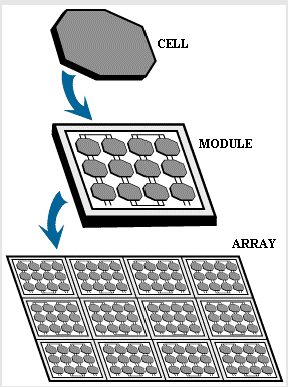
Each Photovoltaic or solar cell generates very little power (a few watts) so they are grouped as modules. To maximize output dozens of the solar cells are packaged together into solar modules, which in turn are packaged into solar panels that are mounted on a rooftop and arranged to maximize their hours of exposure to direct sunlight. Multiple panels can be connected together to form a solar panel array or solar array, which increases the overall power output of the system.
In simple terms, a Photovoltaic solar panel converts the sun’s rays into electricity by using the photons or particles of light from the sun to knock electrons free from the silicon atoms in the solar cells resulting in usable electricity. This electricity can then be used to supply renewable energy to homes or businesses.
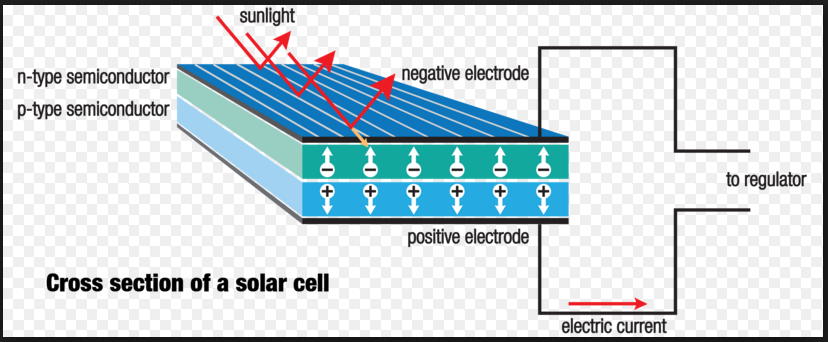
Sunlight is composed of minuscule particles called photons or “packets” of energy, which radiate from the sun in the form of electromagnetic radiation. As these light particles hit the solar cell, the energy from the photons is transferred to the loose electrons in the silicon atoms. The energized electrons are then able to escape their bond with the atoms and move freely from one layer to the other layer of the cell providing a flow of electricity. Because of the way, the cells are made with layers of material with different atomic structures, it creates an electrical imbalance within the cell, which acts a bit like a slope down which forces the free electrons to move in one direction creating a Direct Current, or DC. If conductors are attached to the positive and negative sides of a cell, it forms an electrical circuit and when the electrons flow through such a circuit in one direction, they generate Direct Current electricity or DC. This DC is then sent to an inverter which converts the direct current into Alternating Current (AC) suitable for use in businesses and homes.
The amount of electricity produced by PV panels depends on several factors, including the intensity of solar radiation, the orientation of the solar array, and environmental conditions. Diffused light, such as on cloudy days, results in lower power output compared to direct sunlight. Cloud cover can reduce the efficiency of solar panels, but panels can still generate some electricity under these conditions.
While solar panels are most effective in direct sunlight, they do not stop working when the skies are overcast. On cloudy days, solar panels typically produce about 10–25% of their rated capacity, depending on the thickness and density of the cloud cover. This means your system continues to supply renewable energy, just at a reduced rate when compared to clear, sunny days. As a result, location and average weather patterns play an important role in estimating the overall performance and output of a solar power system.
How do solar panels generate electricity?
How solar panels work?
Here’s a quick sum-up of how solar panels work to generate electricity for residential and business uses. Solar panels operate by converting sunlight into electricity through the photovoltaic process.
Step 1. The particles of sunlight (photons) hit the solar cells of the solar panel;
Step 2. The energy from the photons is transferred to the loose electrons in the atoms of the semiconductor material with which the solar cells are made;
Step 3. The energized electrons escape their bond with the atoms and the free electrons move in one direction from one layer to the other oppositely charged layer of the solar cell thereby generating DC (Direct Current);
Step 4. The DC is then passed through an inverter which converts the Direct Current into Alternating Current (AC) for use in homes and businesses;
Step 5. Any excess electricity that’s not used is fed back into the grid;
Step 6. Whenever more power is needed than the solar system can produce or when the solar system is not generating power in real time the required power is drawn from the grid;
Step 7. An export/import meter monitors the energy exported compared to the energy imported from the grid;
You may also like to read: Off Grid Power System Using Solar – all you need to know about
Frequently asked questions
Now that I have explained how solar panels work, let me also answer some of the related questions often asked by potential solar panel users.
How much energy does a solar panel produce?
It would be evident from the explanation of how solar panels work step by step to generate electricity that the amount of energy a solar panel produces is not only proportional to the sun’s intensity but also depends on three factors – efficiency of solar cells, size of solar panel and the amount of sunlight directly hitting the panel. Individual solar panels typically power a single home or building, while larger arrays are used for bigger applications or solar farms.
A typical solar panel produces around 265 watts of power. This can vary based on the size and efficiency of the solar panel. The maximum power rating of each solar panel—i.e., how much energy a solar panel produces during peak conditions—is normally listed at its back. A peak sun condition is approximately equal to the power of the sun at noon on a clear day at the equator.
Most solar panels in the market today usually produce between 250 and 400 Watts of power. The output of solar panels mainly depends on factors like shading, orientation, and sun hours. In addition, designing a solar system involves considering other important factors such as available roof space, potential sources of shade (like trees or nearby buildings), and the optimal tilt or angle of the panels to maximize sunlight exposure. The process may also require checking local regulations, securing the necessary permits, and carefully planning the system’s layout. Many designers use software tools to estimate energy needs and help map out the most efficient and effective solar setup for a specific location.
But where does all this solar energy really come from?
To understand this, let’s take a step back and look at the origin of solar energy. Solar energy is, at its core, the light and heat that come from the sun. The smallest form of solar energy is the photon—a tiny packet of light energy.
Photons are created in the sun’s core, which reaches a staggering 27 million degrees Fahrenheit. Inside this fiery core, hydrogen atoms constantly collide and fuse to create helium through a process called nuclear fusion. This reaction unleashes enormous amounts of energy, sending billions of photons streaming out from the sun every second. In fact, over 500 million tons of hydrogen atoms are converted into helium every second, releasing energy that eventually reaches us here on Earth in the form of sunlight.
These photons travel nearly 93 million miles to reach our planet, delivering the energy that solar panels capture and convert into electricity for our homes and businesses.
Not All Sunshine Is Created Equal
But not every location on Earth—or even within a single country—receives the same amount or strength of solar radiation. Think about the difference between the crisp, weak sunlight in northern Scotland and the intense rays in southern Spain. The amount of solar energy that hits your rooftop can be dramatically influenced by your geographic location.
For example, within the UK, the European Commission’s PVGIS tool estimates that a 4 kWp solar system on a south-facing 30-degree pitched roof will produce about 840 kWh more electricity per year in Land’s End (the southern tip of England) than in John O’Groats (the northern tip of Scotland). That difference comes down to how much sunshine—or more precisely, solar irradiation—each place receives.
Direct vs. Diffused Light
The total solar energy hitting a solar panel includes both direct sunlight and diffused light. On clear days, direct radiation from the sun delivers maximum power to your panels. When clouds intervene or sunlight bounces off other surfaces, what reaches your panels is diffused light, which has a lower concentration of energy. This means your solar output will decrease on cloudy or overcast days, but panels will still generate some electricity.
So, while the journey of a photon from the sun’s core to your rooftop is truly epic, the local conditions—location, weather, and even the angle of your roof—play a crucial role in determining how much of that solar energy you can actually capture and use.
What are the advantages of a grid-tied solar system?
A grid-tied solar system provides many benefits. It provides backup power when the sun isn’t shining or if extra power is needed.
The electricity generated by the rooftop solar panels first supplies the needs of the home, with the grid supplying additional electricity as needed. When homes or businesses generate more electricity from their solar systems than their requirements, the excess power is automatically exported to the public grid, and credit is allowed for this contributed electricity.
This process is called net metering. If your solar panels produce more electricity than you use, your utility company may credit you for the surplus energy sent back to the grid. Your electric bill then reflects the net amount of electricity you consume—your total usage minus what your solar panels have generated and contributed to the grid.
At night when the solar system is not generating power in real-time, the grid will provide energy for lights and other appliances as usual, in exchange for the excess energy it shares with the grid during the day. For this, an export/import meter is installed by the power company to monitor how much is being imported or exported during the day.
This not only helps reduce monthly electricity costs, but it also allows solar panel owners to maximize their investment by making full use of the energy their system produces.
A key element of grid-tied systems is seamless integration with the existing electrical grid. This integration is made possible by inverters—devices that convert the direct current (DC) electricity produced by solar panels into alternating current (AC), which is what most homes and the grid use. Modern inverters also manage the flow of power between your home and the grid, ensuring safe and efficient operation, and even providing services that help stabilize the grid.
Types of Inverters Used in Solar Systems
While all inverters serve the core function of DC-to-AC conversion, they come in a variety of forms to suit different needs:
- Stand-alone inverters are typically used in off-grid systems. They draw DC energy from batteries charged by solar panels and operate independently of the main utility grid.
- Grid-tie inverters are designed specifically to synchronize the electricity from your solar panels with the utility’s power. These inverters automatically shut down during power outages for safety reasons, so they don’t offer backup power on their own.
- Battery backup inverters add another layer by drawing stored energy from batteries. These systems can continue providing power during outages and can export surplus energy back to the grid when it’s available.
- Hybrid (or intelligent) inverters combine the capabilities of both grid-tied and battery backup systems. They can manage solar power, battery storage, and grid interaction all at once—automatically switching between modes as conditions change.
By choosing the right inverter, grid-tied solar systems not only maximize the use of solar energy but also deliver flexibility and reliability, whether you’re simply offsetting your energy usage or building in resilience for outages.
Grid-tied solar systems can work alongside other distributed energy resources, such as battery storage. Adding a battery allows you to store excess solar energy generated during the day for use at night or during power outages, increasing your energy independence and resilience. In some advanced setups, homes and businesses can form microgrids—local energy networks that can operate independently from the main grid during emergencies.
One of the biggest benefits that a grid-tied solar system provides to the grid is that it often produces electricity when and where the power demand is at its peak and most valuable. For example, in many regions demand for electricity peaks in the afternoon on hot, sunny days, when the use of air conditioning is high, and when the rooftop solar system is performing powerfully.
Grid-tied solar system, therefore, helps utilities meet peak demand without firing up the expensive and more polluting power plants. Rooftop systems also reduce the strain on the power transmission and distribution equipment as homes and businesses first draw power from that system instead of relying completely on the electricity grid. By generating clean energy, solar panels help reduce dependence on fossil fuels and decrease greenhouse gas emissions.
Additional Advantages of Solar Energy
- Clean, Renewable Power: Solar energy is an abundant, renewable resource that doesn’t produce greenhouse gases or air pollution, making it far more environmentally friendly than fossil fuels.
- Lower Electricity Bills: By generating your own power and earning credits for any excess you supply back to the grid, you can significantly reduce your monthly utility bills—sometimes even eliminating them.
- Energy Independence: Producing your own solar power means you’re less reliant on your local utility and less vulnerable to rising energy costs.
- Low Maintenance: Once installed, solar panels require minimal upkeep, typically just occasional cleaning to ensure optimal performance.
- Government Incentives: Many countries and states offer incentives, rebates, or tax credits that help offset the initial installation cost, making solar energy more accessible.
By combining the practical benefits of grid-tied systems with the larger environmental and financial advantages of solar energy, it’s clear why many homeowners and businesses are making the switch.
You may also like to read: Grid-tied solar system explained – why it is better for home electricity
Do I need to let my electricity supplier know if I install solar panels?
Absolutely! If you plan to install solar panels, it’s important to notify your electricity supplier. In many locations, there are regulations that require homeowners to inform their energy provider about any new solar installations. This is mainly because systems that connect to the grid usually involve “net metering”—where you can send surplus electricity back to the grid and potentially earn credits or payments for it.
Your supplier may also need to ensure your solar system meets local technical and safety standards. In most cases, an approved export/import meter (sometimes called a bidirectional meter) will be installed to accurately track the flow of electricity in both directions. Skipping this step could mean missing out on incentives or running afoul of grid regulations, so always reach out before switching on your new solar panels.
How many solar panels are needed to run a house?
The numbers of solar panels needed to run a house depend on location and roof size. The average homeowner will need about 30 solar panels to cover 100% of their energy usage. Individual solar panels are typically used for single homes, while larger installations use multiple panels for greater electricity generation.
When planning a solar system, two major factors come into play: how much energy your household consumes and how much usable space you have for panels. Most solar designers start by checking your utility bill to estimate your daily energy needs. Then, they look at your roof or property to see how many panels will actually fit. Once these details are sorted, the designer can figure out the right number and type of solar panels for your situation.
In short, the answer isn’t one-size-fits-all—your energy demand and available space are the key drivers behind your perfect solar setup.
Do solar panels work in winter?
Although solar panels do work in winter for obvious reasons, the energy output of the panels is comparatively lower than during the summer season because the days are shorter in winter. Moreover, during winter snow can temporarily reduce or completely shut down the output. Nevertheless, solar panels are more efficient in colder weather.
Do solar panels work at night?
Technically, Solar panels cannot produce energy at night as the photovoltaic cells in solar panels need sunlight to generate electricity. Nevertheless, when the sun isn’t shining your solar power and solar energy system would continue to provide electricity through backup power from the grid and solar battery storage.
While solar panels themselves can’t store energy, they can be paired with solar batteries that store excess electricity generated during the day. These batteries allow you to keep the surplus power your panels produce and use it at night or during a power outage, enhancing your energy independence and security. So, even when the sun goes down, your home can keep running on clean, renewable energy—either from stored solar power or by seamlessly switching to the grid when needed.
What types of solar panels are there?
There are different types of solar panels, including monocrystalline, polycrystalline, and thin-film. Solar panels monocrystalline are known for their high efficiency and longevity compared to other types.
Monocrystalline panels are made from a single, continuous silicon crystal, which gives electrons more space to move—this is why they’re typically more efficient (and pricier) than other options. In contrast, polycrystalline panels are made from fragments of silicon crystals melted together. This manufacturing process makes them a bit less efficient, but also more affordable.
Understanding these differences can help you choose the right solar panel for your needs, whether you’re looking for maximum efficiency or a more budget-friendly option.
Advantages and Disadvantages of Different Photovoltaic Solar Panels
Choosing the right solar panel type for your home can feel like picking toppings at an ice cream shop—each variety brings its own strengths and trade-offs. Here’s what to know before you commit:
- Monocrystalline Panels:
These panels are often considered the premium choice, thanks to their outstanding efficiency and sleek black appearance. Since they’re crafted from a single piece of pure silicon, monocrystalline panels convert sunlight to electricity with impressive precision—making them a go-to if you want maximum output from limited roof space. The downside? The manufacturing process is more complex, which makes them pricier than other options. - Polycrystalline Panels:
Looking for a solid balance between price and performance? Polycrystalline panels fit the bill. Made by melting several bits of silicon together, they’re usually a deep blue color and are more budget-friendly. While they don’t quite match monocrystalline efficiency—meaning you might need more panels to achieve the same result—they remain a popular, cost-effective choice for many homeowners. - Thin-Film Panels:
For those after flexibility (literally), thin-film panels stand out. Their lightweight and adaptable design means they can cover curved or unusually shaped surfaces—think RVs, sheds, or sprawling commercial roofs. They’re generally the most affordable type, but there’s a catch: their efficiency lags behind the crystalline alternatives. That means you need more space to generate the same amount of power, and with lower output, they’re usually best when you have room to spare.
In summary:
- Monocrystalline = Most efficient, best for small spaces, higher cost
- Polycrystalline = More affordable, slightly less efficient
- Thin-Film = Flexible and cheap, but less powerful—ideal if you have lots of space
Knowing these pros and cons can help you choose the right fit—whether you’re chasing every last watt or simply want the best value for your roof.
What are solar panels made of?
A typical solar module includes a few essential parts:
- Solar cells: These are the real workhorses—absorbing sunlight and converting it into electricity. Monocrystalline solar cells are made from a single silicon crystal, while polycrystalline cells are formed from multiple silicon fragments. As a result, monocrystalline cells usually offer more room for electrons to move, making them more efficient (and yes, more expensive) than their polycrystalline cousins.
- Encapsulant and backing: To protect those precious cells from wind, rain, and enthusiastic squirrels, solar modules also include protective encapsulant layers and a sturdy backing.
- Glass cover: The front of the panel is typically shielded by a layer of tempered glass, which lets sunlight in while keeping the elements out.
- Frame: Finally, an aluminum frame holds everything together and makes installation a breeze.
What are the alternatives to traditional silicon solar cells?
Beyond the familiar monocrystalline and polycrystalline panels, thin-film solar cells offer a lightweight and flexible alternative. Unlike their silicon-based counterparts, thin-film panels are made by depositing one or more layers of photovoltaic material onto a substrate, which allows for greater versatility in installation. While they typically have lower efficiency, thin-film solar cells can be a good fit for large rooftops or unconventional surfaces where weight and flexibility matter most.
How efficient are perovskite tandem solar cells compared to standard panels?
If you like the idea of getting the absolute most out of every ray of sunshine, perovskite tandem solar cells are where the excitement is. Unlike traditional silicon-based panels, which typically cap out around 20–23% efficiency, tandem cells combine layers of perovskite and silicon to capture a broader range of sunlight.
Thanks to this double-duty approach, perovskite tandem cells have set new records—reaching a certified efficiency of just under 35% in laboratory settings (as verified by the National Renewable Energy Laboratory, or NREL). That means, side by side, these advanced tandems can convert much more sunlight into electricity than your run-of-the-mill commercial panel. While you might not see these ultra high-efficiency panels on every rooftop just yet, their rapid progress hints at an exciting future in solar technology.
What are the different types of thin-film solar cells?
Thin-film solar cells cover quite a wide spectrum—if you’ll forgive the pun—of solar technology. Unlike traditional silicon wafers, these are made by layering thin coatings of photovoltaic material onto surfaces like glass, metal, or plastic. The result? Solar panels that are lightweight, sometimes flexible, and well-suited for unique applications where standard panels just won’t fit.
Here are the main types you’ll find:
- Cadmium Telluride (CdTe): These are the most common commercial thin-film panels. CdTe cells are easy to manufacture, making them relatively affordable, and they offer decent efficiency, especially in hot climates or low-light conditions.
- Amorphous Silicon (a-Si): Instead of using large, crystalline silicon structures, these use non-crystalline silicon. The trade-off? They’re less efficient but incredibly flexible and lightweight, perfect for curved surfaces or things like solar-powered calculators.
- Copper Indium Gallium Selenide (CIGS): Quite the mouthful, but CIGS panels are popular for their high efficiency among thin-film options and their versatility. They can be applied to flexible backing materials, which makes them ideal for everything from mobile charging stations to building-integrated solar.
- Gallium Arsenide (GaAs): These are the rock stars of efficiency in the thin-film world and can even outperform traditional panels under the right conditions. They’re more expensive, but their durability and light weight make them favorites for specialty uses like satellites and high-altitude drones.
And let’s not forget about a couple of honorable mentions:
- Organic Solar Cells: Sometimes called “plastic” or “polymer” solar cells, these use carbon-based materials printed on flexible films. They haven’t hit mainstream rooftops yet, but they’re making waves for being low-cost, ultra-lightweight, and super versatile.
- Perovskite Solar Cells: Perovskites are a newcomer that’s getting a lot of buzz. Made from a special class of man-made crystals, these cells boast impressive efficiency gains and can be layered as a “tandem” with traditional silicon cells to catch even more of the sun’s energy. In fact, these hybrids have achieved world-record efficiency rates—think well above what you get from today’s most common commercial panels.
With all these flavors of thin-film technology, there’s likely an option out there for just about any rooftop, gadget, or ambitious solar project you can dream up.
What are organic solar cells and how are they made?
Organic solar cells take a different approach compared to traditional silicon or even other thin-film panels. Instead of silicon, these panels use carbon-based compounds—think materials more similar to plastics or polymers—as the primary ingredient for capturing sunlight.
The manufacturing process is pretty unique: organic compounds are dissolved into special inks, which are then printed or coated onto thin, flexible plastic sheets. This approach makes organic solar cells lightweight, bendable, and easy to produce in various shapes and sizes. While they generally don’t match the efficiency of silicon panels, their flexibility and low production costs make them a promising option for certain applications—especially where traditional panels just won’t fit.
What is the difference between solar PV and solar thermal?
First, let’s start with the basics: solar radiation is light—also known as electromagnetic radiation—emitted by the sun. Every spot on Earth receives some amount of this sunlight throughout the year, but the amount that actually reaches the ground in any one place can vary due to weather, season, or even how many squirrels are sunbathing on your roof. Solar technologies are all about capturing this radiation and turning it into something useful—like electricity or hot showers.
There are two main types of solar energy technologies: photovoltaics (PV) and solar thermal (including concentrated solar-thermal power, or CSP). While both rely on sunlight, they go about their business in completely different ways.
Solar PV panels generate electricity using PV cells and the photovoltaic effect, while solar thermal panels are designed to directly heat water or other fluids using sunlight. Solar thermal technology is used for domestic hot water systems and large-scale power generation, whereas PV panels are primarily for electricity generation.
Let’s break it down a little further:
Solar Thermal Systems:
Solar thermal systems work by capturing the sun’s energy as heat, not electricity. These setups use collectors—panels designed to absorb sunlight and convert it into heat. The collector typically has a glass cover and an absorber plate with a special coating to maximize energy absorption. When sunlight hits the plate, it heats up a transfer fluid (like water or antifreeze) that flows through pipes inside the collector. This hot fluid is then pumped to a storage tank, where it can be used for household hot water or space heating. There’s no electric current involved—just good old-fashioned heat transfer.
Concentrated Solar Power (CSP):
Concentrated Solar Power (CSP) takes solar thermal a step further. Instead of just heating water, CSP uses large mirrors to focus sunlight onto a central receiver, generating intense heat. This heat is then used to create steam, which drives a turbine and produces electricity. CSP is typically used in large-scale power plants rather than homes, but the principle—turning sunlight into heat, then into energy—remains the same.
So, while both technologies harness the sun’s energy, solar PV panels give you electricity directly, and solar thermal (including CSP) focuses on capturing heat for water, air, or power generation.
How do solar panels help financially?
Installing solar panels can significantly reduce electricity bills by decreasing reliance on the grid and taking advantage of net metering and incentives, leading to long-term financial savings.
How is solar energy used globally?
Solar power plays a major role in global electricity generation, with countries like China leading in solar-powered electricity generation and adoption.
You may also like to read: Is Solar renewable or nonrenewable?
Conclusion
On going through the post showing how solar panels work to generate electricity you might wonder why solar panels aren’t the primary source of power in the world when sunlight is an abundant source of energy. The main reason for this is that the process of producing solar energy is still not a very efficient process. If you go through how does solar panels work to generate electricity it would be evident that for capturing direct sunlight the angle of the solar panels is very important for the efficiency of panels.
How much energy does a solar panel produce is measured by the sun-rays from the direct perpendicular sun. It would be apparent from how do photovoltaic cells work that if the solar panels are not facing the sun just right, the efficiency can drop considerably thereby reducing the amount of energy produced by the photovoltaic cells. This is why the amount of electricity created by solar panels is relatively low compared to the size of the panels packaged with solar modules.
However, with technological advances and improving efficiency, the production volume is steadily increasing resulting in a reduction in the capital costs of solar panels.
In any event, solar power and solar energy are gradually becoming a viable alternative in many situations. According to a recent report, more American homes than ever are investing in solar panels. The United States now has more than 77 Gigawatts (GW) of solar photovoltaic (PV) capacity installed, which is enough to power more than one in every 10 homes in America.
Solar energy systems aren’t limited to just residential rooftops. Across the country, you’ll find solar panels on homes, businesses, and even large-scale installations built by utility companies. Businesses are increasingly choosing solar to cut costs and demonstrate sustainability, while utilities are constructing expansive solar farms to supply clean energy to entire communities. This broad adoption showcases the versatility of solar technology, whether you’re powering a single family home or helping run a bustling city.
A report from the International Energy Agency indicates that solar energy could become the largest global source of electricity by 2050. In short, with solar technology improving every day and costs dropping rapidly, solar power and solar energy are truly the wave of the future.
You may also like to read: Solar Residential System Planning – an easy guide
Explore More About Solar Power and Technology
Curious to dive deeper into how solar panels actually work and the technologies behind them? Here are some essential areas you might want to explore as you plan or expand your solar energy journey:
The Basics of Solar Photovoltaic (PV) Technology
Discover how sunlight is converted into electricity using semiconductor materials, such as silicon, in solar cells. Understanding PV technology basics can help you appreciate why panel orientation and material quality matter.
While solar panels are now a familiar sight on rooftops and in fields, their story stretches back over a century. The term “photovoltaic” itself comes from the Greek “phos” (light) and “voltaic” (electricity), with the first solar cell dating to the mid-1800s—though it achieved just 1% efficiency. It wasn’t until the space race that solar panels found their first practical application: powering satellites. The Vanguard 1 satellite, launched in 1958, was the first to use solar panels, allowing it to transmit data for years after its batteries ran out—an early testament to the reliability of solar technology.
Today, PV technology is at the heart of the clean energy transition, with solar panel installations driving much of the recent global growth in renewables. Modern solar panels are capable of converting sunlight into electricity far more efficiently than their early counterparts, and ongoing research continues to push the limits of what’s possible.
Photovoltaic Cell Materials
Learn about the different semiconductor materials used in PV cells, from traditional silicon to emerging alternatives that promise higher efficiency and lower costs.How a Solar Cell Works
Unpack the science behind solar cells—how they use sunlight to generate electric current, and why silicon dominates this field.Solar Manufacturing and System Design
Get an overview of how solar panels are made, and how individual panels are combined into larger, more efficient systems suited for homes, businesses, or even community solar farms.Performance and Efficiency
Delve into what affects the efficiency of a solar panel, from the angle at which it’s mounted to the type of materials and system design used.Beyond PV: Concentrating Solar Power (CSP)
Explore other solar technologies, like CSP, which use mirrors or dishes to focus sunlight and generate electricity—especially useful for larger, utility-scale projects.Energy Storage Solutions
Learn about thermal energy storage and other innovations that help solar systems keep producing power even when the sun isn’t shining.
Whether you’re considering solar for your home or simply want to better understand the technology powering the clean energy revolution, these topics provide a solid foundation for anyone interested in going solar or maximizing system performance.

Chase
Sep 29. 2016
Hi radharenu ganguly, this was a great in depth article. The science behind it is really amazing! I made a solar savings calculator on my website if anyone needs it. Thanks!
SolarEze
Oct 15. 2020
If one wants to do a roof solar panel, it should be thoroughly researched and studied. It is not just an easy diy project but you should dedicate time in understanding the pros and cons. Anyways, a great article you shared for us to get important insights.
radharenu ganguly
Oct 15. 2020
Hi,
Thanks for stopping by and your comments
Solar Medix
Sep 08. 2021
Hello, thanks for sharing this blog. this is very helpfull for me. if you want any help regarding solar company in nj then contact with Solar Medix.
Solar EnergieTechnik Ltd
Oct 06. 2021
Thanks for sharing the information about HOW DO SOLAR LIGHTS WORK. You have shared almost all The things about that. I loved the points you have mention. We wrote some points about Home Solar Lighting System To get info you can visit us https://infinitisolar.in/product/infiniti-solar-home-lighting-systems-20w-40w/
khizar habib
Oct 21. 2021
hi
thanx, forgive us nice information about how to install a solar panels. But I want to know now in particle video if you provide.
Solar in Massachusetts
Jan 12. 2022
How many solar panels needed in a house is a very helpful part in this Content.
Thank you Radharenu
Solar Medix
Nov 01. 2021
Hello, thanks for sharing this blog. this is very helpfull for me . if you want any help regarding solar maintenance then contact with Solar Medix. more detail click- https://solarmedix.com/
Mehedi@ eShikhon
Jan 23. 2022
Nice article
Bella @ Younus
Feb 05. 2022
Informative article about Solar panel.
radharenu ganguly
Feb 06. 2022
Hi Bella,
Thanks for your comment
Victoria Addington
Mar 11. 2022
It made sense when you clarified that solar panels do work in winter but with lower energy output. My sister told me that their solar system doesn’t work even in summer. I think they need solar system repair since solar panels are expected to work best during summer.
Tina
Apr 13. 2022
I appreciate the time and effort you put into your website and Informative article about How To Solar Panel Work.
radharenu ganguly
Apr 14. 2022
Hi Tina,
Thanks for your comments. I am glad that you liked the article
met solar
Apr 14. 2022
Nice article
Rebecca
Jun 01. 2022
thank you
Maxima Sale
Feb 17. 2023
Thank you for sharing. Very Informative article I bookmarked your blog. Hope to read more of your amazing articles