Passive solar house design considerations.
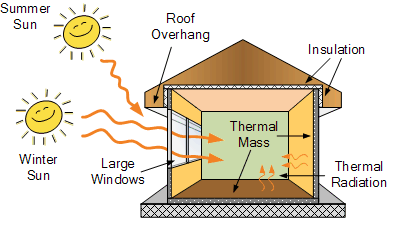
Passive Solar house plan
Passive Solar house plan provides the most cost effective means of day-lighting and solar heating and cooling of the house by utilizing and controlling the sun’s heat without using any additional mechanical or electrical devices.
There is an erroneous belief that using solar energy for your home means you need solar panels on your roof, converter and other technological gadgets. While the Solar Residential System planning does need these items, solar energy can also be harnessed through proper passive solar house design. To minimize energy use passive solar home takes advantage of the building’s site, climate of its location and materials. Well-designed passive solar house plan reduce heating and cooling costs through energy-efficient strategies. The passive solar home design to heat and cool your home can be both environmentally friendly and cost effective. In many cases, by passive solar heating your heating costs can be reduced to less than half the cost of heating a typical home!
For those aiming for the ultimate in efficiency, optional solar panels can still be incorporated—mounted on the roof, ground, or even a garage—to push the home toward net zero energy performance. This hybrid approach combines the innate advantages of passive solar design with the power-generating capability of active solar systems, maximizing both comfort and sustainability.
It’s worth noting that while passive solar design doesn’t require solar panels, some homeowners opt to add them—whether on the roof, ground, or even a detached garage—to push their home closer to net zero energy performance. This optional upgrade, combined with the fundamental principles of passive solar design, can further reduce dependence on traditional energy sources and maximize savings.
In fact, studies show that anywhere from 20% to 90% of a home’s heat can come passively from the sun—without significantly increasing cooling needs during the summer. This means that with thoughtful design, you can enjoy a remarkably comfortable and energy-efficient home, all while reducing reliance on mechanical systems and saving money year after year.
Why Focus on Energy Efficiency First?
Before integrating passive solar features into your new build or renovation, it’s essential to address your home’s overall energy efficiency. Think of it as building a sturdy foundation before adding the finishing touches—a well-insulated, airtight, and efficiently designed home makes the benefits of passive solar design significantly more impactful.
Optimizing energy efficiency means your house will naturally require less heating and cooling, allowing passive solar strategies (like south-facing windows, thermal mass, and smart shading) to do more with less. Simple upgrades such as improved insulation, high-performance windows, and air-sealing are often the most cost-effective ways to lower energy bills and make your home comfortable year-round—even before the first sunbeam is harnessed.
If you’re updating an existing home, it’s wise to start with an energy audit. This helps pinpoint areas where insulation, weatherization, or other efficiency upgrades will have the greatest impact. By addressing these basics first, any solar features you add—be they passive or active—will perform at their very best, maximizing both your comfort and your savings.
The basics of passive solar house plan
Passive solar energy system refers to the use of the sun’s energy for heating and cooling of living spaces by exposure to the sun. Basically, in a passive solar home, the heat energy from sunlight is captured, stored and transmitted or released directly during the winter months, and minimizes the overheating effects of solar radiation through shading or generating air flows with convection ventilation during hot summer days. In order to take full advantage of solar energy in this way, well designed passive solar house plans are needed. In such planning the windows, walls, and floors of passive solar buildings are designed to collect, store, and distribute solar energy in the form of heat in the winter and reject solar heat in the summer. Unlike active solar heating systems, passive solar house design does not make use of additional mechanical or electrical devices, such as pumps, fans, or electrical controls for using the solar energy.
In passive solar house plan south facing windows, walls, and floors are made to collect heat as the sun shines and to retain it in materials that store heat, known as thermal mass. A properly designed passive solar home provides daylight all the year and comfort during the cooling season through carefully designed overhangs and reflective coatings on windows, exterior walls, and roofs. The above passive solar house design is done in such a way that the solar heat-flow is by natural means, such as radiation, convection, and conduction, and the thermal storage is in the structure itself. Thus, passive solar heating and cooling can save electricity bills significantly.
Understanding the Passive Solar Fraction
When planning a passive solar home, you’ll often hear the term “passive solar fraction”—but what does it actually mean, and why does it matter? Simply put, the passive solar fraction refers to the percentage of your home’s heating needs that is supplied by passive solar design rather than mechanical systems.
This is a key concept because it helps you measure how effectively your house design is harnessing free solar energy. The higher the passive solar fraction, the more your home naturally stays warm in winter—with less reliance on furnaces or heat pumps—which translates into lower energy bills and a smaller carbon footprint.
Several factors influence this fraction:
- Window Area (Glazing): More south-facing glass allows more sunlight (and thus heat) inside.
- Thermal Mass: Materials like tile, brick, concrete, or even water tanks inside the home store that heat and slowly release it when temperatures drop.
- Climate Considerations: The best ratio of window to thermal mass will depend on whether you’re designing for a cold, overcast region like Seattle or a sunny, dry climate like Albuquerque.
- Shading and Insulation: Well-designed overhangs and high-quality insulation prevent overheating in summer and minimize heat loss in winter.
In short, maximizing your home’s passive solar fraction is about finding the right balance for your location and needs—so your space stays comfortable, efficient, and bright all year round.
Choosing the Right Site for Passive Solar Success
Selecting an ideal site is a crucial first step when designing a passive solar home. To fully benefit from the sun’s warmth, the south side of your future house should remain open to sunlight—not just now, but for decades to come. Be strategic: consider how nearby vegetation could change over time, since today’s sapling might someday become a shade-casting giant. Similarly, keep in mind future neighborhood development—an apartment complex popping up to your south could cast a long shadow, literally and figuratively.
If your local regulations guarantee solar access, that’s a bonus. But if not, look for a lot that extends more from north to south, and position your home toward the northern edge. This provides more breathing room on the south side for sunlight and helps prevent future shading mishaps. Thoughtful site selection lays the groundwork for passive solar features to work to their full potential—augmenting comfort and savings for many years to come.
Additional Design Considerations for Different Climates
Designing a passive solar home isn’t a one-size-fits-all affair—success depends on tailoring features to local climate conditions and making informed choices about key building elements.
A well-rounded approach considers factors such as:
- Insulation and Air Sealing: It’s not just about keeping the cold out in winter. In hot climates, robust insulation and meticulous air sealing are just as essential for keeping unwanted heat at bay and ensuring interior comfort all year.
- Thoughtful Window Strategies: The size, placement, and glazing properties of your windows can make or break your passive solar plan. For colder regions, maximizing south-facing windows helps with winter heat gain, while in warmer areas, smaller or well-shaded windows prevent summertime overheating.
- Thermal Mass Placement: Materials that store and slowly release heat—like concrete, brick, or stone—work best when positioned where they catch winter sun, but don’t become sun-baked radiators during the summer. This means assessing thermal mass needs based on how hot or cold your climate gets.
- Seasonal Shading Solutions: Overhangs are a classic, but don’t overlook modern options like adjustable awnings, functional shutters, or even a vine-covered pergola. Clever landscaping—think leafy trees or tall shrubs—can provide vital shade in summer while letting low winter sun pour in once the branches go bare.
Recommended Insulation Values for Passive Solar Homes
When it comes to ensuring year-round comfort and efficiency in a passive solar home, insulation plays a starring role—both in keeping desired warmth in during winter and unwanted heat out during summer. But what targets should you aim for?
Here are some general minimum guidelines to help your home perform its best:
- Walls: Shoot for a minimum of R-19 to R-24 insulation in exterior walls. For panelized systems like structural insulated panels (SIPs), 6-inch thick walls often provide about R-24, giving you robust thermal protection.
- Roofs: Aim for at least R-31 in your roof assembly. An 8-inch SIP roof panel or properly layered batt or loose-fill insulation can meet or exceed this target.
- Slab-on-Grade Floors: If your home uses a concrete slab foundation—especially with radiant floor heating—don’t forget the edges. Apply perimeter-edge insulation to minimize heat loss and maximize the effectiveness of your thermal mass.
Opting for these levels (or better) helps to create a shell that complements passive solar strategies, ensuring your home holds onto its hard-earned comfort no matter what the forecast brings.
While it might seem like a lot to juggle, climate-aware design pays dividends through lower energy bills and more consistent comfort. If you’re new to passive solar or planning a major renovation, it’s worth consulting with an architect or designer experienced in site-specific passive solar tactics. Their expertise can help you navigate local variables, from sweltering desert afternoons to chilly northern mornings, so every ounce of sunlight is put to good use.
Why Mechanical Ventilation Matters in Airtight Passive Solar Homes
When you build a tightly sealed, highly insulated passive solar home, fresh air doesn’t sneak in around the edges the way it does with older houses. That’s great for energy savings—but what about indoor air quality? Without a steady source of fresh air, you risk trapping moisture, odors, and even indoor pollutants inside.
That’s where mechanical ventilation systems—like energy recovery ventilators (ERVs) and heat recovery ventilators (HRVs)—come into play. These smart devices bring in fresh outdoor air while exhausting stale indoor air, all while capturing heat from the outgoing air to keep energy costs low. So, you don’t have to choose between a cozy, efficient home and healthy, breathable air. Thoughtful integration of mechanical ventilation ensures your indoor environment stays comfortable, safe, and efficient—no matter how airtight your passive solar home becomes.
Foundation and Exterior Wall Specifications
A passive solar home’s performance starts with a solid foundation—literally. Most designs rely on traditional basement or walkout foundations, providing both stability and an opportunity to integrate thermal mass for improved temperature regulation. Homeowners exploring options can also request alternatives, such as slab-on-grade or crawl space foundations, depending on their site and preferences.
As for the exterior walls, 2×6 wood framing is a common standard, lending enough depth to achieve higher insulation values (typically R-19 to R-24 or better with dense-pack cellulose, fiberglass batts, or closed-cell spray foam). If you’re aiming for an even tighter or more robust envelope, alternative wall assemblies like insulated concrete forms (ICFs) or advanced SIPs are worth considering, and many designers can tailor wall types to fit your energy goals and climate needs.
Understanding Indirect Gain: The Trombe Wall Approach
Another ingenious passive solar design strategy is the use of indirect gain systems, with the Trombe wall being the most well-known example. In this setup, a thick masonry wall—usually built along the home’s south-facing side—acts as a thermal reservoir, sitting just behind a layer of glass mounted a short distance in front of the wall. This unique arrangement allows sunlight to pass through the glass and be absorbed by the dark-colored surface of the masonry wall.
Here’s how it works:
- During sunny winter days, solar rays filter through the glass, warming the surface of the Trombe wall.
- The wall then gradually stores this heat energy in its dense mass.
- Over the course of several hours, the stored warmth migrates slowly through the wall itself, eventually radiating into the home’s interior spaces.
This natural time delay means the heat absorbed during the day is released into your living areas during the evening—right when you need it most. Because the system harnesses processes like conduction and radiation, the need for mechanical assistance like fans or pumps is eliminated, supporting both energy savings and simplicity. Indirect gain features like Trombe walls can be seamlessly integrated with other passive solar design elements, enhancing overall thermal comfort and efficiency in your home.
Isolated Gain: Sunspaces and Solariums
One standout approach in passive solar design is the isolated gain system, most commonly seen in the form of sunspaces or solariums. Think of these as bright, glass-enclosed rooms that soak up the sun’s warmth and can be closed off from the rest of the house with doors or windows.
Unlike traditional greenhouses—which are specifically built for optimal plant growth—sunspaces are versatile additions that serve several key purposes:
- Supplemental Heat: During cooler months, a sunspace can act as a natural heater. By collecting solar energy through its south-facing windows and storing it in thermal mass (like concrete floors or masonry), it helps warm adjacent living spaces, especially when interior doors or vents are opened as needed.
- Bright Gathering Area: Beyond practical heating, sunspaces make for inviting, light-filled nooks—perfect for reading, relaxing, or sipping your morning coffee as you soak in the winter sun.
- Plant-Friendly Environment: While they aren’t optimized as fully controlled greenhouses, sunspaces can still support indoor gardening—herbs, potted citrus trees, or flowering plants can thrive here, especially when the space is designed to balance temperature swings.
It’s important to note that optimizing for all three functions—heat, gathering, and gardening—requires thoughtful design choices, as prioritizing one can impact the others. For example, maximizing thermal mass for heating may limit your ability to grow delicate plants, while focusing solely on plant health might mean less stored heat for the home.
With the right balance, though, an isolated gain design not only boosts your home’s comfort and efficiency, but adds a little piece of sunlit sanctuary you can enjoy all year round.
Architectural Styles in Passive Solar House Plans
Passive solar house plans are remarkably versatile and can be adapted to suit a wide variety of architectural styles. Whether your taste leans toward the rustic charm of a country farmhouse, the clean lines and large open spaces of a contemporary build, or the cozy retreat feel of a mountain cabin, passive solar principles can be thoughtfully woven into the design.
For example, a classic Craftsman bungalow can feature south-facing picture windows and generous overhangs, while a modernist home might use expansive glass walls coupled with concrete or stone flooring to maximize thermal mass. Even traditional Victorian or Mediterranean homes can be updated to incorporate passive solar elements—think thick masonry walls, arched fly-ash brickwork, or deep porches that double as shading devices. The flexibility of passive solar strategies means homeowners aren’t limited by style; rather, functionality and aesthetics can go hand in hand.
In fact, passive solar house plans are often created by blending the ideas and preferences of homeowners with the best practices in energy-efficient design. Customization is straightforward—whether you’re working from scratch or adapting an existing plan, modern design tools like Computer Aided Design (CAD) make it easier than ever to tailor passive solar elements to individual needs and site conditions. You can start with a base plan and adjust window orientation, wall thickness, or roof overhangs, or even combine features from different styles to create a home that’s truly your own.
From Frank Lloyd Wright’s Prairie-style openness to Scandinavian minimalism and earth-sheltered designs inspired by architects like Malcolm Wells, passive solar isn’t limited to a single architectural genre. The goal remains: maximize efficiency without sacrificing the personality or visual appeal of your home.
How Sun-Inspired Homes Foster a Connection with Nature
A sun-inspired home thoughtfully integrates natural light and warmth into daily living, creating an environment that feels closely attuned to the rhythms of the outdoors. By positioning windows to capture sunlight from multiple directions, these homes invite the changing patterns of daylight—not just from the south, but also from the east and west—into every room. This means you’ll witness golden morning sun in the kitchen, afternoon radiance in the living spaces, and soft evening glow in quiet corners—all without flipping a single switch.
Beyond just letting in the light, sun-inspired homes often blur the boundary between inside and out with features like wide picture windows, glass doors, and views that frame the landscape. The result? Every glimpse outside—a stretch of meadow, a stand of pines, or even a city park—becomes a living artwork, helping occupants feel grounded and connected to their surroundings year-round.
Natural materials, such as exposed stone, timber, or polished concrete flooring, often serve as thermal mass while also echoing the textures and tones found in nature. This continual interplay of sunlight, shadow, and organic elements not only enhances comfort and efficiency but also brings a restorative sense of place—one where occupants feel truly connected to both their home and the wider natural world.
Crafting Your Sun-Inspired Home: A Collaborative Approach
Creating a personalized, sun-inspired home is a highly collaborative process. Homeowners typically start by sharing their vision, lifestyle needs, and inspirations—whether that’s an affinity for mid-century modern, rustic timber frames, or Scandinavian simplicity. Architects then guide the design process, blending these preferences with passive solar principles to create a custom plan.
Thanks to modern tools like Computer Aided Design (CAD), ideas and revisions can be visualized and refined together. This digital flexibility allows for quick adjustments in window placement, overhang depth, or floor plan orientation to tailor each element to both sun patterns and personal style. For those who prefer a ready-to-build solution, many designs can be constructed from existing blueprints, or “construction prints,” which are modified as needed to suit the climate and site features.
Collaboration ensures the resulting home feels uniquely yours—maximizing energy efficiency while reflecting your taste and daily routines.
A Real-World Example: The Western Solar Farmhouse
To see these principles in action, let’s take a closer look at the “Western Solar Farmhouse.” Designed to harmonize with its environment, this home demonstrates just how seamlessly passive solar features can be woven into a timeless, regionally inspired style.
The heart of the Western Solar Farmhouse centers around a spacious great room, enhanced with a dramatic vaulted gable roof that feels both airy and inviting. Flanking this central space are rooms and porches tucked beneath lower, hipped roofs. Much like the welcoming wraparound porches of classic plantation homes, these sheltered outdoor spaces can fully encircle the house—providing cooling shade in summer, protected transitions between indoors and out, and the potential for flexible “outdoor” rooms.
Special Features that Enhance Everyday Living
Beyond its sun-smart layout, the Western Solar Farmhouse includes practical features that make daily routines smoother and more comfortable. A laundry area is conveniently located on the main level, making chores accessible without endless trips up and down the stairs. The master suite is thoughtfully placed on the first floor as well, offering single-level living for homeowners seeking long-term accessibility and privacy.
Inside, the design thoughtfully maximizes solar gain by placing large, south-facing windows along the length of the great room. These expansive glass panes act as collectors, soaking up the sun’s warmth during colder months and infusing the main living areas with natural light. In some versions, the southern porch is enclosed as a bright sunroom—offering a comfortable spot to bask in winter rays while helping to heat the home.
Room placement is also tailored to the rhythms of sunlight and the nuances of local climate. For example, bedrooms are often arranged along the east side, where they benefit from cooler temperatures and gentle morning sunlight—ideal for peaceful, sunlit wakeups. Kitchens and utility spaces may be located on the west, keeping the warmer afternoon sun at bay.
Thoughtful Connections to the Outdoors
The farmhouse plan doesn’t just celebrate sunlight inside—it also makes the most of outdoor views and easy transitions to nature. The kitchen, great room, and master suite are all oriented to capture expansive views to the backyard, with both the great room and master suite enjoying direct access to the rear deck through graceful French doors. This seamless indoor-outdoor flow invites everything from relaxed morning coffee on the deck to lively gatherings that spill outside in warm weather.
Upstairs, a guest suite is designed with its own private balcony—perfect for taking in backyard vistas or enjoying a quiet retreat above the main living spaces. These generous connections to the outdoors ensure that every corner of the home feels attuned to its site, with daily life unfolding in harmony with sun, shade, and landscape.
Thermal mass is cleverly incorporated using materials like stone or tile flooring, which absorb and slowly release heat captured during the day. A central fireplace or woodstove (serving as both family hearth and supplemental heat source) anchors the main gathering space, echoing the tradition of multifunctional design.
Adaptation to the specific site remains key. For narrower lots or unique orientations, adjustments might include increasing south-facing glazing or tweaking room locations to suit both sun angles and the homeowners’ routines. The result is a home that requires little mechanical heating or cooling, using passive solar energy and, if desired, wood heat to stay comfortable all year. With additions such as solar water heating and photovoltaic panels, the Western Solar Farmhouse can even achieve full energy independence, blending modern sustainability with classic architectural character.
Roof Pitch Details
To balance both form and function, the Western Solar Farmhouse employs a thoughtfully varied roof profile. The soaring central gable features a gentle 3:12 pitch—striking an elegant silhouette and allowing for high ceilings and spacious transom windows to usher in natural light. Extending from the main body, the surrounding porch roofs are designed with a subtler 1.5:12 slope. This lower pitch creates broad overhangs that shield the home from summer sun while reinforcing the inviting, wraparound character reminiscent of classic farmstead architecture.
Together, these rooflines not only define the home’s welcoming shape, but also serve passive solar goals by optimizing shade, maximizing daylight, and ensuring the house remains cozy through shifting seasons.
Basic elements needed in passive solar house design
To be effective, passive solar house design needs the following basic elements to make the best use of passive solar energy:
- Properly oriented windows;
- Thermal mass;
- Distribution mechanisms;
- Control strategies;
Properly oriented windows: Properly-oriented, large size south-facing windows to collect sun’s heat energy from sunlight;
Thermal mass: ‘High Thermal mass’ building components (dense materials that retain or store the heat produced by sunlight) such as stone, brick, concrete or ceramic tile forming the walls, floors, or partitions that sit in the direct path of sunlight for absorption and storage of heat energy from sunlight.
In addition to leveraging high thermal mass, more and more designers and builders are embracing green building principles to reduce environmental impact. This includes using steel studs and engineered lumber products that make use of materials that would otherwise become waste. Many are also turning to composite decking made from recycled plastics, further integrating sustainability into construction practices. By combining thoughtful material choices with strategic use of thermal mass, homes can maximize energy efficiency while minimizing their ecological footprint;
Water-Filled Containers as Thermal Storage
Another approach to storing solar heat in passive homes involves water-filled containers placed inside living spaces. These containers act much like the stone or concrete surfaces used for thermal mass, soaking up the sun’s warmth during the day and gradually releasing it as temperatures drop at night.
Water’s high heat storage capacity means it can hold about twice as much warmth as an equivalent volume of masonry, making it a highly efficient option for moderating indoor temperatures. Homeowners may integrate these containers in the form of decorative columns, built-in benches, or even artistic features that double as thermal reservoirs.
However, using water for thermal storage does come with its own considerations. Because water is heavy, it’s essential to ensure the building’s structure can support the extra weight—especially if you’re retrofitting an existing home. But when incorporated thoughtfully, water-filled containers offer a flexible, sustainable way to enhance passive solar performance, often without major renovations.
Distribution mechanisms: For distribution of the stored solar heat energy back to the different living areas of the building during the winter months, through the mechanisms of natural heat transfer modes i.e. conduction, convection and radiation;
Control strategies: For controlling the overheating effects of solar radiation through roof overhangs or shading or generating air flows with convection ventilation during hot summer months;
In addition to these core elements, many modern passive solar homes incorporate sustainable building materials that further reduce environmental impact. Designers and builders increasingly favor engineered lumber products that make use of materials which would otherwise be wasted, as well as composite decking made from recycled plastics. These practices align with the broader principles of Green Building, helping to create homes that are not only energy efficient but also environmentally responsible.
Using Recycled and Engineered Materials in Passive Solar Homes
In addition to thoughtful placement and thermal mass, many passive solar homes gain further efficiency by incorporating recycled or engineered building materials. For example, steel studs—made from recycled steel—offer a durable and sustainable alternative to traditional wood framing and can help reduce the depletion of forests. Similarly, engineered lumber, such as laminated veneer lumber (LVL) or-oriented strand board (OSB), makes use of fast-growing trees and wood scraps that might otherwise be discarded, reducing waste.
Other eco-friendly materials commonly found in passive solar design include:
- Composite decking made from recycled plastics, which not only reuses materials that might end up in landfills but also provides longevity and low maintenance;
- Insulation products containing recycled denim, cellulose (from post-consumer paper), or glass;
- Reused bricks or reclaimed wood in thermal mass walls or interior finishes.
By selecting these materials, passive solar homes not only tap into the sun for comfort and energy savings, but also further shrink their environmental footprint by diverting waste and making use of sustainable alternatives. This holistic approach strengthens the environmental benefits that are at the heart of passive solar design.
Expertise Needed for Designing Low-Energy, High-Performance Homes
When it comes to planning and building low-energy, high-performance homes, the right combination of expertise can make all the difference. An experienced architect or designer should bring a deep understanding of:
- Passive solar design strategies that maximize southern exposure and thermal mass;
- Local climate considerations to tailor solutions for heating, cooling, and daylighting;
- Practical knowledge of green building certifications such as LEED or ENERGY STAR;
- Familiarity with sustainable materials like recycled steel studs, composite decking, and engineered lumber from fast-growing or reclaimed sources.
Professionals with decades of hands-on experience in energy-efficient home design can guide you in optimizing floor plans, orienting the home for the best light and views, and balancing performance with aesthetics—all while working within your budget. Their expertise ensures your investment yields not only impressive energy savings but a healthy and comfortable living environment for years to come.
Experience to Look for in a Passive Solar Home Designer
When seeking an architect or designer for a low-energy, high-performance home, it’s essential to choose someone with a solid track record in passive solar and sustainable design. Look for professionals who have:
- Several years of hands-on experience with passive solar projects,
- Expertise in incorporating thermal mass, high-performance windows, and advanced insulation techniques,
- Demonstrated understanding of building science principles—such as heat transfer, solar orientation, and indoor air quality,
- Familiarity with selecting and sourcing recycled, reclaimed, or engineered materials (like steel studs from recycled content or composite decking made from plastics),
- A portfolio that showcases homes designed to minimize energy consumption and environmental impact,
- Knowledge of the latest green building certifications, such as LEED or Energy Star.
Choosing a designer with these qualifications ensures your home will be optimized for comfort, durability, and efficiency—making the most of both passive solar energy and sustainable building practices.
Passive Solar house plan – major considerations
You can harness solar energy to heat and cool your home through passive solar home design. The three major options for utilizing solar energy in passive solar house plan are, day-lighting, passive solar heating and passive cooling.
Adapting House Plans for Wall Thickness and South-Glass Percentage
Customizing a passive solar house plan to fit specific wall thicknesses and optimize the amount of south-facing glass is a straightforward, collaborative process. Typically, you’ll begin by working with an experienced local architect, builder, or a certified Passive House consultant. These professionals are skilled at refining plans to ensure that structural elements, like thicker walls needed for enhanced insulation, are integrated seamlessly.
The steps often look like this:
Assessment: First, the design professional reviews the chosen plan and evaluates the local climate, building codes, and your insulation goals.
Wall Thickness Adjustments: The professional adjusts wall sections and foundation details in the building plans to reflect your preferred construction methods, whether that’s advanced framing, insulated concrete forms, or structural insulated panels.
South Glass Calculation: They then determine the optimal percentage of south-facing glass for your location, balancing solar gain for winter heating with summer shading to prevent overheating. This often involves energy modeling software to simulate performance.
Plan Modifications: With these calculations in hand, the construction drawings are revised—window openings are resized, framing adjusted, and any necessary structural reinforcements are detailed.
Verification: A Passive House rater or energy consultant may run further simulations or provide certification input to ensure that changes meet performance goals and standards such as those set by the Passive House Institute US (PHIUS) or similar organizations.
By tailoring your plans in this way, you can ensure your home reaches its energy efficiency targets—without compromising on comfort or style. These design adjustments, when undertaken early in the planning process with the right professionals, lead to a home that’s uniquely suited to its site and climate, while also maximizing long-term energy savings.
Day-lighting
Day-lighting is the controlled admission of natural sunlight and diffuse skylight—into a building to illuminate building’s interior rather than relying solely on electric lighting during the day. Successful day-lighting can provide substantial energy saving, reduce building peak loads, increase visibility, and improve overall lighting quality. Climate and geographical position, as well as building type, use and orientation, are big factors in designing a successfully day-lit building.
A good day-lighting system in passive solar house plan takes several factors into consideration such as,
- The general orientation and planning of areas to be lit;
- Location, form and dimensions of the apertures and openings through which the daylight will pass;
- Choosing the shape and size of windows and a mix of window types depending on the building’s orientation;
- Choosing the glazing and shading systems;
- Placement and orientation of room surfaces so that reflectance values for room surfaces are kept as high as possible;
- Location of movable or permanent objects which provide protection from excessive light or glare;
Passive solar heating
Passive solar heating, on its most basic level, works like this – rays from the sun enter a building through properly oriented windows and get the heat energy absorbed by the masonry floors and/or walls that have a high thermal mass. ‘Thermal mass’ can be defined as a material’s ability to absorb, store and release heat. High thermal mass include materials that are dense, such as stone, brick, concrete or ceramic tile. These materials absorb and store the solar heat during the period of time that the sun shines on them. As the air cools at night, the absorbed heat slowly releases into the building throughout the night-time and maintains a comfortable temperature.
But effective passive solar heating incorporates a range of design strategies, each tailored to the needs of the building and its occupants. Let’s break down the most common approaches:
Direct Gain
In a direct gain system, sunlight streams through south-facing windows and lands directly on interior thermal mass—think concrete floors, brick walls, or ceramic tile surfaces. These elements soak up the sun’s warmth during the day and gradually release that stored heat as the air cools at night, helping to keep indoor temperatures steady and comfortable. Some creative homeowners even use water-filled containers as thermal mass, since water stores about twice as much heat per cubic foot as masonry. However, water storage requires sturdy structural support, and is best integrated with careful planning.
Indirect Gain (Trombe Wall)
An indirect-gain design places the thermal mass—typically a thick masonry wall—just inside the south-facing glazing, separating it from the main living area. The classic example is the Trombe wall: an 8- to 16-inch thick masonry wall painted a dark color, with glass mounted just outside it. Solar heat passes through the glass, is absorbed by the wall, and then slowly migrates inward, radiating warmth into the living space hours later (about one hour per inch of wall thickness). This time delay helps even out temperature swings, releasing heat from the day into the evening.
Isolated Gain (Sunspaces)
The isolated-gain approach uses attached sunspaces—sometimes called sunrooms, solar rooms, or solariums—that can be closed off from the rest of the house. These spaces collect and store solar heat, which can then be shared with the main living areas as needed. Sunspaces aren’t just for lounging; they can also support plant growth or provide a bright, cheerful place to relax. However, balancing these various functions requires careful design and sometimes a few compromises.
Passive cooling
The cooling system in passive solar home design focuses on heat gain control and heat dissipation in a building in order to improve the indoor thermal comfort during summer months with almost no energy consumption. Specially, utilizing passive cooling strategies like shading, generating air flows with convection ventilation and air cooling can reduce the demand for mechanical cooling while maintaining thermal comfort. Shading devices, fixed or adjustable, reduce solar radiation. We can shade a building by natural vegetation and by using special glazing in windows. External heat gain can also be minimized by good insulation, reduced window size and by the use of reflective materials in the walls and roof. A well designed overhang also can shade south facing windows from the high summer sun, while still allowing the low winter sun to shine in and provide welcome solar heating. Thermal mass is also used in a passive cooling design to absorb heat and moderate internal temperature rise on hot days. During the night, thermal mass can be cooled using ventilation, allowing it to be ready the next day to absorb heat again.
At their simplest, passive solar cooling systems include overhangs or shades on south facing windows, shade trees, thermal mass and cross ventilation.
The Role of Auxiliary Systems in Passive Solar Homes
Even with a well-designed passive solar system, there will be times—think long stretches of overcast winter days or sudden heat waves—when the sun alone can’t keep your home perfectly comfortable. That’s where auxiliary heating and cooling systems come in. Rather than being the main source of temperature control, these systems act as a reliable backup. Their job is to fill in the gaps, operating only when absolutely necessary to maintain your preferred indoor climate.
For instance, a small, high-efficiency heat pump or a compact wood stove can provide supplemental warmth during particularly cloudy spells. On the cooling front, ceiling fans or a strategically placed mini-split AC unit can help moderate peak temperatures without undoing all your passive design efforts. You can also boost summertime comfort by encouraging natural airflow throughout the house. Interior windows, doors, and transoms can be positioned to facilitate convective air movement, allowing cooler breezes to flow from one room to another. In winter, simply reversing your ceiling fans helps distribute warm air more evenly, eliminating cold spots and making your auxiliary heating even more effective. These simple, low-energy measures work hand-in-hand with your passive solar strategies, ensuring backup systems remain just that—backup, not the star of the show. The key is to size these auxiliary systems for efficiency—since your passive solar design is doing the heavy lifting most of the time, the backup systems won’t need to be oversized, saving you money on both installation and ongoing energy use.
Exploring Auxiliary Heating Options
One particularly effective approach for auxiliary heating is radiant floor heating. This system circulates hot water through tubing beneath your floors, delivering comfortable, even warmth throughout the space. While the upfront cost of installing radiant floors is higher than more conventional systems, the payoff comes in the form of improved efficiency and comfort. Radiant systems typically use natural gas or propane boilers, but you can also opt for solar thermal collectors or wood-fired boilers to heat the water, depending on your preferences and resources.
Beyond radiant floors, you might consider a woodstove for both warmth and ambiance, a solar water heater to supplement your needs, or even a geothermal heating and cooling system for maximum year-round efficiency. If space or budget is tight, a small, conventional HVAC system can also do the trick—just remember, it won’t need to work nearly as hard as it would in a typical, non-passive home.
Less Is More with Passive Solar Design
No matter which auxiliary system you choose, you’ll find that your energy consumption remains far lower than in a standard home. That’s the beauty of passive solar design: the structure itself does most of the work, so your backup systems only step in when absolutely necessary. The result is a home that’s not only comfortable and resilient, but also cost-effective and energy efficient throughout the year.
Tailoring Auxiliary Systems to Your Climate
In cool or moderate climates, you might find that your passive solar house doesn’t need air conditioning at all. Simply relying on natural nighttime ventilation—opening windows when outdoor temperatures dip below your indoor comfort level—can flush out the day’s heat and keep things pleasant by morning. In homes with limited opportunities for cross-ventilation, a whole-house fan is a straightforward solution to boost airflow and cooling.
For those living in hotter or drier regions, passive measures may sometimes need a little extra help. An evaporative cooler, for example, can provide effective and energy-efficient supplemental cooling when temperatures soar.
By letting passive strategies handle the bulk of your heating and cooling, and deploying auxiliary systems only as needed, you’ll enjoy year-round comfort—without compromising your home’s efficiency or environmental goals.
Sunspaces vs. Greenhouses in Passive Solar Design
While both sunspaces and greenhouses harness sunlight, their intended uses set them apart in passive solar home design. A sunspace—sometimes called a sunroom or solarium—is designed primarily to boost your home’s comfort and energy efficiency. These spaces capture solar heat, add a bright area for relaxing or casual living, and may provide a place for plants, but with a different focus from a dedicated greenhouse.
The main distinctions are:
- Purpose: Sunspaces are primarily an extension of your living environment, meant to provide additional heat to your home and offer a comfortable, sunlit room. Greenhouses, by contrast, prioritize optimal conditions for growing plants, often resulting in much higher humidity and temperature swings that aren’t as comfortable for people.
- Design Considerations: Sunspaces are usually integrated with features like operable windows, insulated doors, and careful placement to channel or contain heat as needed for the living space. Greenhouses maximize solar exposure for plant growth but are less concerned with insulation or comfort—think glass walls and ceilings with little attention to retaining collected heat for people.
- Compromises: It is tempting to use a sunspace for all purposes, but blending plant-growing needs with year-round living comfort means making trade-offs. For instance, the temperature and humidity levels that boost plant growth might not be as pleasant for lounging with your morning coffee or as effective in stabilizing indoor temperatures.
In summary, while both make the most of the sun’s energy, a sunspace is designed for people’s comfort and supplemental heating, whereas a greenhouse is optimized for nurturing plants. If your goal is a cozy and energy-smart home addition, tailor your sunspace accordingly rather than building a greenhouse and hoping it serves both purposes effectively.
Size and Layout Options for Passive Solar Homes
Passive solar home designs are flexible and can be adapted to a range of households and site conditions. Whether you’re envisioning a cozy cottage or a spacious family retreat, there’s a plan to suit nearly every need. Whether you are looking for a small cottage or a large family home, energy modeling and thoughtful design allow for open, warm, and comfortable living spaces that maximize both comfort and efficiency.
Square Footage: Passive solar homes can range from efficient small footprints of around 900 square feet up to expansive homes with over 4,000 square feet. The size you choose will often depend on your family’s needs, your budget, and the climate where you’ll be building. Many homeowners are drawn to right-sized, small footprints for lower construction costs and more sustainable living, while others opt for larger layouts to accommodate growing families or multi-generational households.
This flexibility in size and configuration allows passive solar homes to be tailored for a variety of lifestyles and sustainability goals.
Square Footage Breakdown
To give you a clearer sense of how space can be distributed in a typical passive solar design, here’s an example breakdown:
- Total Heated Area: 1,588 sq. Ft.
>1st Floor: 1,208 sq. Ft.
>2nd Floor: 380 sq. Ft.
Of course, these proportions are just one way to organize your living space; many designs offer a blend of open-concept living areas, cozy private nooks, and flexible-use rooms.
- Bedrooms: Most plans offer a variety of bedroom options, from compact two-bedroom layouts perfect for couples or small families, to homes with five or more bedrooms designed for larger households or multi-generational living. Some designs even provide flexible bonus rooms that can serve as offices, guest rooms, or studios.
- Bathrooms: Similarly, bathroom counts can be tailored. Choices typically begin with simple one-bath plans for smaller homes, and scale up to homes with four or more baths, ensuring everyone has the comfort and privacy needed. Many mid-sized passive solar homes feature layouts with two bedrooms and three full bathrooms, striking a practical balance between convenience and spaciousness.
- Stories: Passive solar homes can be single-story for ease of access and efficient heating and cooling, or multiple stories to maximize a smaller site footprint and provide scenic views. Split-level and lofted configurations are also possible, depending on your site’s characteristics and your preferences.
With so much versatility in layout and size, passive solar homes can be designed to fit nearly any site and lifestyle—whether you’re building a modest weekend retreat or a full-time family residence.
No matter the scale or complexity, planning your passive solar home means considering more than just square footage and room count. Optimizing the layout for your site’s unique views, sun exposure, and local climate can help you make the most of natural light and heat while keeping energy bills low. Thoughtful design also takes into account your family’s lifestyle and future needs—whether that means extra space for a growing household, dedicated work-from-home areas, or flexible guest accommodations.
By combining energy modeling with careful consideration of site and family needs, passive solar homes can deliver inviting and highly functional spaces—no matter the size or style you choose.
Customizing Your Home for Your Family and Site
Building a home is often the largest investment your family will ever make, so it makes sense to consider how passive solar design can help you get the most from that investment. With careful planning, you can optimize the size, space, layout, and orientation to capture the best views, make the most efficient use of your lot, and maximize your comfort through every season. It’s not just about square footage; it’s about designing a home that fits your lifestyle, your site, and your climate—while still keeping your budget in mind.
So, whether you’re dreaming of a compact, energy-smart bungalow or a sprawling solar-powered home for your extended family, passive solar design principles can be adapted to nearly any size or configuration. Careful planning at this stage doesn’t just improve comfort and efficiency—it helps protect your investment and ensures your home stays enjoyable and functional for years to come.
Impact of Home Size and Footprint on Cost and Sustainability
Choosing a smaller or appropriately sized home offers significant benefits when it comes to efficiency and environmental impact. Reduced square footage generally leads to lower construction costs, reduced energy requirements for heating and cooling, and a smaller materials footprint. This streamlined approach not only makes homes more affordable up front, but also decreases long-term utility bills and ongoing maintenance needs.
From a sustainability standpoint, smaller homes mean less land disturbance, fewer resources consumed, and a lighter carbon footprint. Whether you opt for a modest cottage or a thoughtfully sized multi-bedroom home, carefully considering the size and layout helps foster both economic and environmental responsibility.
Customizing and Adapting Passive Solar House Plans
Passive solar house plans offer a remarkable level of flexibility, making it easy to adapt your home to your location, lifestyle, and even personal aesthetics. Whether you’re building from scratch or modifying an existing design, there are several ways to personalize your passive solar home.
- Tailored Layouts: Most designs are starting points, ready to be reconfigured to suit your specific needs—think adjusting wall thickness to enhance insulation, reworking the placement or number of windows to optimize solar gain, or changing interior layouts to fit your family’s daily routines.
- Energy Performance Tweaks: If you’re shooting for ultra-low utility bills or even “net zero” status, plans can be adapted to integrate renewable energy features such as photovoltaic or solar thermal panels. Advanced insulation and window options—like triple glazing from brands such as Andersen or Marvin—can also be factored in for increased efficiency.
- Design Collaboration: Working with an architect or design professional allows for even further customization. Using Computer-Aided Design (CAD) software, professionals can quickly adjust features like roof angles, south-facing glass proportions, or even material choices (e.g., swapping concrete floors for high-density brick or tile) to optimize thermal mass and comfort.
- Certification and Standards: If you’re interested in building to the rigorous Passive House standard, your plan can often be refined in collaboration with a certified Passive House consultant. This typically involves in-depth energy modeling and potentially varying construction approaches, depending on your climate zone and goals.
- Plan Modifications: Existing blueprint sets can usually be built as-is for simplicity, or you might choose to work with a local professional who can modify them. That way, factors like seismic requirements, local building codes, or unique site characteristics can be addressed without starting from scratch.
With so many options at your fingertips, you can rest assured that a passive solar home is never a one-size-fits-all proposition. Instead, you get a space as unique and sustainable as your vision.
What Are the Dimensions and Ceiling Heights?
When it comes to spatial planning, knowing the exact measurements of your potential home is crucial for both design ambitions and practical needs. For this passive solar home, the layout offers generous proportions to accommodate a variety of household sizes and preferences:
- Overall Footprint: The main structure spans approximately 58 feet in width and 42 feet in depth, providing ample room for open living spaces and flexible layouts—be it communal family areas, cozy nooks, or adaptable work-from-home zones.
- Ceiling Heights: Comfort and openness are prioritized with 8-foot ceilings on both the first and second floors. This not only creates a pleasantly airy feel throughout, but also helps with even daylight distribution and efficient temperature control—crucial elements in any passive solar design.
These dimensions strike a thoughtful balance between spaciousness and energy efficiency, ensuring you can enjoy both comfort and lower operational costs as part of your passive solar home living experience.
What’s Included With Your Passive Solar House Plan
When you purchase a passive solar house plan, you’ll receive a comprehensive package designed to guide your build from the first sketch to the finishing touches. These thoughtfully curated documents take the guesswork out of construction and set you (and your contractors) up for a smooth, successful process.
Here’s what you can typically expect:
- Detailed Floor Plans: Clear, scaled drawings of each floor, showing room layouts, dimensions, door and window placements, and flow—all designed to help you visualize your future living space.
- Elevations: Exterior views from all sides, depicting architectural style, material suggestions, window arrangements, and the intended aesthetic from every angle.
- Roof Plan: Outlines the design, slope, and structure of your roof, crucial for planning solar orientation, water drainage, and even potential solar panel placement.
- Window and Door Schedules: Tabulated details specifying sizes, types, and placements to ensure efficient natural light, ventilation, and seamless solar gain.
- Building Sections: Cross-sectional views that reveal details like ceiling heights, wall constructions, insulation layers, and interactions between floors.
- Interior Details: Notes and drawings of key interior elements—think cabinetry layouts, stair designs, and special features like thermal mass walls or sunspaces.
- Foundation Plans: Tailored suggestions for slab, crawlspace, or basement construction, factoring in structural needs and energy efficiency.
- Framing Plans: Guidance on structural framing for walls, floors, and roof, so builders can ensure safety, code compliance, and lasting durability.
- Electrical Layouts: Diagrams indicating the suggested wiring routes for lighting, outlets, and major appliances—helping electricians plan for both comfort and code adherence.
- General Notes and Specifications: A handy reference section outlining construction best practices, recommended materials, and insulation strategies that support your passive solar goals.
These documents are designed with flexibility in mind, making them easy to customize in collaboration with your builder or architect. So whether you’re a DIY enthusiast or working with a general contractor, you’ll have a complete, user-friendly toolkit to turn your sustainable dream home into reality.
Exploring More Home Plans: Find the Right Fit
If you’re feeling inspired and want to explore additional passive solar home ideas, the good news is there’s a remarkable spectrum of plans available—whether you need a right-sized retreat or space for a bustling household.
Similar Passive Solar and Trending Designs
- Compact and Cozy Retreats: For those seeking a minimalist lifestyle or building on a smaller lot, plans start around 900 to 1,500 square feet with two bedrooms and one or two baths. These spaces are ideal for couples, individuals, or as efficient vacation getaways. Look for flexible layouts with loft-style features, open-concept living spaces, and energy-optimized footprints.
- Family-Friendly Homes: If you need room to spread out, there are plenty of multi-bedroom options with three to five bedrooms, spacious kitchens, and bonus areas for home offices or playrooms. Many trending plans include attached garages, mudrooms, and even second-floor balconies designed to take advantage of southern exposure for passive solar gain.
- Multi-Generational and Larger Homes: For extended families or those wanting future flexibility, you’ll find plans ranging up to 4,000 square feet (or even more). Expect generous suites, multiple baths, and flexible bonus rooms that adapt as needs change—perfect for hosting guests or accommodating aging in place. Some designs feature walk-out basements, dual living areas, or separate entrances for increased privacy.
- Sustainability-First Features: Many current plans emphasize advanced insulation, air sealing, and compatibility with renewable tech, like rooftop solar panels from brands such as Tesla or SunPower. Triple-glazed windows from Andersen or Marvin, and thermal mass materials, are increasingly incorporated as standard options.
- Trending Modern Styles: Beyond traditional or craftsman-inspired homes, there’s a surge in modern, Scandinavian, and mid-century-influenced passive solar plans. These designs often maximize daylight, offer dramatic open interiors, and blend seamlessly with both urban and rural settings.
How to Find the Perfect Plan?
- Prioritize your preferred number of bedrooms, bathrooms, and stories.
- Consider your family’s current and future needs—such as a ground-floor master suite, flex rooms for remote work, or accessible entryways.
- Factor in energy performance features you want to integrate, from solar-ready roof orientation to advanced windows and smart HVAC.
- Work with an architect or designer who uses modern CAD tools for easy customization—adjusting details like overhangs, window placement, or thermal mass to match your site and climate.
No matter your goals, today’s selection of passive solar home plans ensures you can build a space that balances comfort, efficiency, and style—all while reducing your environmental impact for years to come.
What’s Not Included With Your Passive Solar House Plan
While passive solar home plans are packed with the essentials you need to get started, there are a few items that are typically not bundled with your blueprint purchase, so you’ll want to plan ahead for these.
- Architectural or Engineering Stamp: If your local authorities require a professional stamp for permits, you’ll usually need to have the plans reviewed and stamped by a licensed architect or engineer in your area.
- Site-Specific Plans: Since each property is unique, detailed site plans—like grading, landscaping, or driveway layouts—are usually handled locally. Your builder or a local professional can help tailor these to your lot’s conditions and zoning requirements.
- Mechanical System Layouts: While the plans often indicate general locations for equipment, detailed drawings for things like heating, air conditioning, ductwork, or radiant floor systems are typically completed by your HVAC subcontractor to meet your specific needs and site conditions.
- Plumbing Schematics: Exact plumbing runs, pipe sizing, and fixture locations are customarily determined on-site, with your plumber providing the final layouts based on local codes and preferences.
- Energy Calculations: If your jurisdiction calls for specific energy performance documentation or calculations (such as heat loss reports), these are prepared locally—often by your builder, an energy rater, or another design professional familiar with your area’s requirements.
By partnering with local experts, you can ensure your home is designed and finished to both meet code and reflect your exact needs. This collaborative approach helps bring your passive solar home from plan to reality smoothly and seamlessly.
Advantages of passive solar home
- Passive solar home is Eco-friendly. When homeowners harness the power of the sun, they don’t have to rely too much on fossil fuels. As a result, the passive energy system helps in saving the earth’s non-renewable energy resources and reducing greenhouse gasses in the atmosphere;
- Passive solar design also encourages responsible building practices that minimize environmental impact. More and more designers and builders are embracing green building principles—choosing materials that are recycled or engineered to reduce waste, and incorporating elements like composite decking made from recycled plastics. By selecting sustainable materials and designing with energy efficiency in mind, the entire construction process becomes more earth-friendly, supporting the long-term health of our planet;
- Passive solar energy uses an energy source that occurs naturally and is almost always available free of cost. Passive solar home may involve initial costs, but the reduction in utility bills will more than offset the cost in the long run;
- Compared to the equipment needed in active solar energy (such as solar panels, inverters, wires, etc.), the materials required in passive solar house plan is relatively cheap. This is great advantage for homeowners who don’t have a large budget to create an eco-friendly home;
Before I conclude let me also address some of the questions often asked by the people related to passive solar house design.
Frequently Asked Questions
How much does it cost to build a passive solar house?
A Passive solar home can cost between $150 and $500 per square foot depending on the level of finishing materials.
Can you open windows in a passive house?
You can open windows in a passive house whenever you want. However, as with all houses, if windows are left open for longer periods with extreme outdoor temperatures, the inside air temperature will be affected and energy consumption for heating/cooling will increase.
How does passive solar heating work?
For passive solar heating a living space needs to be exposed to sunlight so that the sun’s rays can heat the area. Passive solar house design takes the advantage of how the sun moves throughout the day in order to warm the living spaces, without requiring any mechanical devices or fuel to do so.
What does the house plan cost, and are there helpful add-ons?
If you’re considering purchasing a passive solar house plan, expect the base price for a set of plans to start around $1,500—though exact costs may vary depending on the complexity and features of the design you choose.
Beyond the basic plan, there are optional reports available to help budget your project more accurately:
- Cost to Build Report: For a modest fee (usually under $35), you can get an estimate tailored to your chosen location and build options, giving you a clearer picture of expected expenses before you break ground.
- Cost to Furnish Report: For homeowners wanting a comprehensive view, a detailed furnishing report (typically under $50) estimates what it might take to fully outfit your new eco-friendly space with furniture and fixtures.
These add-ons can streamline your planning process, so you can approach your project with confidence—and fewer surprises down the line.
Are these plans suitable for achieving Net Zero energy standards?
Absolutely. The available home building plans are thoughtfully developed with energy efficiency as a primary focus—making them well-suited for anyone aspiring to build a Net Zero Passive House. Whether you aim to dramatically cut down on utility bills, design for ultra-low energy consumption, or minimize maintenance, these plans provide a strong foundation for meeting—and often exceeding—Net Zero energy goals. With careful attention to orientation, insulation, airtightness, and the strategic use of solar gains, the designs align with best practices established by organizations like the Passive House Institute (PHI) and the U.S. Department of Energy’s Zero Energy Ready Home program.
Of course, reaching Net Zero may also depend on how you adapt the plan to your local climate, install additional renewables like photovoltaic panels, and select high-performance materials. If you’re eager to customize further or need help navigating regional energy codes, working with a certified Passive House consultant or energy modeling professional will help ensure your project meets the strictest energy standards.
Consulting and Review Services for Passive Solar Home Projects
If you’re feeling inspired to create your own passive solar home, but aren’t sure where to start, you’re not alone. Designing an energy-efficient, environmentally friendly home can feel overwhelming, especially when you want to get every detail right from orientation to material choices.
Fortunately, there are plenty of consulting and plan review services available to support your project:
- Passive House Consultants: Certified Passive House consultants (often affiliated with organizations like the Passive House Institute US or Passive House International) offer guidance on everything from site analysis and design optimization to selecting building materials and energy modeling.
- Architectural Design Review: Many architects and building designers now specialize in passive solar and sustainable construction. They can review your plans for daylighting, window placement, insulation, and ventilation, ensuring your home design captures the full benefits of passive solar energy.
- Energy Auditors: Firms like Energy Vanguard or local RESNET-certified energy raters can assess your project’s energy efficiency and provide practical recommendations for improvement.
- Green Building Organizations: Groups such as the U.S. Green Building Council and your local Building Science Association often offer workshops, plan review services, or referrals to experienced consultants in your area.
By consulting with these experts, you can move forward confidently with a design that matches your climate, lifestyle, and sustainability goals—saving energy, time, and costly mistakes down the road.
Modifying Construction Plans with CAD Files
If you’re working with a design professional or looking to customize your passive solar home plans, Computer Aided Design (CAD) files are your friend. These digital files make it straightforward for architects, engineers, or designers to tweak the original blueprints to better fit your local codes, specific site conditions, or personal preferences.
Common adjustments using CAD files include:
- Wall Thickness and Insulation: Construction pros can increase wall thickness to boost insulation values, helping your home meet rigorous energy standards like those set by Passive House Institute US (PHIUS) or similar organizations.
- Window Sizing and Placement: CAD files allow for precise changes to the amount and placement of south-facing glass, ensuring optimal solar gain for your climate and site orientation.
- Floor Plan Adaptations: Whether you want to add a mudroom, rework a kitchen layout, or shift bedroom locations, CAD files enable flexible updates without having to start from scratch.
Best of all, because CAD files are industry standard, nearly any qualified professional—from small local firms to global names like Gensler or HOK—can collaborate on your plans. Whether you’re modifying just a few details or undertaking a more substantial redesign, sharing these files ensures efficient and accurate updates tailored to your project needs.
Related Resources to Elevate Your Passive Solar Project
As you move forward, you might also find it helpful to explore related strategies and resources that complement passive solar design:
- Sunrooms and Sunspaces: These additions can further enhance natural light and provide extra insulation, acting as buffers that help regulate your home’s temperature.
- Energy Efficient Window Coverings: The right shades, blinds, or drapes can significantly improve comfort and reduce heat loss or gain, particularly in climates with extreme seasonal swings.
- Energy-Efficient Landscaping: Strategic placement of trees, shrubs, and other landscape elements can shield your home from harsh winds, offer shade in the summer, and allow winter sunlight to warm your living spaces.
- Natural Ventilation: Thoughtful window placement and operable skylights can encourage cross-ventilation, reducing the need for mechanical cooling and improving indoor air quality.
Strategically placing windows and doors throughout your home allows for effective natural airflow, helping to keep each room comfortable year-round. High vented skylights in vaulted ceilings work especially well, creating a natural “stack-effect cooling”—as warm air rises, it exits through these upper openings, pulling cooler air in from below. Incorporating interior windows, doors, or transoms further promotes convective airflow between spaces, ensuring fresh air circulates throughout the house.
To enhance comfort even more, ceiling fans can be used to move air: mixing warm air during winter months and providing a gentle breeze in summer. This layered approach to ventilation not only supports a healthier indoor environment but can also help lower energy use by reducing reliance on mechanical systems.
Exploring these interconnected approaches will help you create a holistic, adaptable home that works in harmony with its environment—making your passive solar journey even more successful.
Can I build a passive solar home unchanged from a set of construction prints?
Absolutely. Many passive solar home plans are designed to be construction-ready without needing any modifications. You can take a complete set of blueprints directly to your builder and follow them exactly as drawn, resulting in a home that embodies all the key features of passive solar design right out of the box. In fact, you can avoid the time, energy, and cost of custom architectural design by selecting a ready-to-build passive house plan. This approach is especially appealing if your site and lifestyle needs are fairly typical—saving you the hassle of starting from scratch while still delivering a high-performance, energy-efficient home.
Some plans are even tailored to specific lot types or unique site characteristics. For example, you might find a modernist two-bedroom design created specifically for a rear-sloping lot, capturing expansive views while maximizing solar gain. These thoughtful layouts ensure you can make the most of your property’s orientation, topography, and scenery without compromising the core principles of passive solar living.
If you have unique needs or a tricky lot, these plans can also be adjusted with modern design tools like CAD software, allowing you to customize everything from the kitchen layout to window placements. Either way, construction prints from well-established sources—such as design firms specializing in sustainable and energy-efficient homes—make it possible to create a passive solar home efficiently, whether you want to build it as-is or tweak it to fit your vision.
Can I browse passive solar home designs offline?
Absolutely! For those who prefer flipping through pages on the couch or bringing ideas to the coffee table, many publishers and architecture firms offer printed books and downloadable eBooks featuring a wide range of passive solar home designs. Libraries may also carry titles from popular publishers like The Taunton Press or New Society Publishers, which highlight innovative floor plans and sustainable building strategies you can peruse at your leisure—no internet connection required. Whether you opt for a hard copy or a digital version saved to your device, you’ll have plenty of inspiration at your fingertips, whenever and wherever you need it.
Emerging trends in Eco-Friendly and Passive Solar Building Products
Today’s market for eco-friendly and passive solar building materials is evolving quickly, offering homeowners more choices than ever before. Designers and builders are showing a strong preference for products that use recycled or repurposed materials, all with the goal of lowering environmental impact without compromising on performance.
Some notable trends include:
- Sustainable Framing Materials: Steel studs and engineered wood products like LVL (Laminated Veneer Lumber) and Glulam beams are gaining popularity. These options reduce pressure on forests and often use responsibly sourced or recycled content.
- Recycled and Composite Decking: Brands such as Trex and TimberTech create decking boards from a blend of recycled plastics and reclaimed wood fibers. The result is a durable, low-maintenance surface that diverts waste from landfills.
- High-Efficiency Glazing and Insulation: Advances in window technology—like triple-pane glass and low-E coatings—maximize solar heat gain in winter and limit heat loss. Similarly, insulation products such as cellulose or mineral wool, made from recycled paper or slag, improve thermal performance.
Insulation remains a cornerstone of any energy-efficient home, and today’s builders have a growing menu of options beyond standard batts. Structural insulated panels (SIPs) are increasingly popular for their ability to create nearly airtight envelopes—think sandwich panels with a solid foam core and sturdy outer layers of oriented strand board. When installed correctly, SIPs dramatically reduce air leaks, which not only cuts down on wasted energy but also means you’ll want to consider mechanical ventilation (like an energy recovery ventilator) to keep indoor air fresh and healthy.
Other insulation choices include traditional batts, loose-fill products, or sprayed-on foam, each with its own advantages depending on your project and climate. Most energy codes recommend a minimum R-value of R-19 for walls and R-31 for roofs, but many designers opt for even higher performance—6-inch-thick SIP walls (R-24) and 8-inch roof panels (R-31) offer robust thermal protection. And if you’re building on a concrete slab, especially with radiant floor heating, don’t overlook the importance of insulating the slab’s perimeter edge to keep heat where you want it.
- Reflective Roofing and Siding: Cool roofing materials from companies like Owens Corning and CertainTeed reflect more sunlight, keeping buildings cooler in summer and enhancing overall energy efficiency.
- Natural and Low-VOC Finishes: Builders are moving toward paints, sealants, and finishes that contain little or no volatile organic compounds, improving indoor air quality.
These innovations continue to expand year by year, making it easier to design homes that are not only energy efficient but also healthy and sustainable.
How Corrugated Metal Roofing Supports Passive Solar Homes
Among today’s eco-friendly building trends, corrugated metal roofing stands out as a practical choice for passive solar designs. Its distinctive wavy profile isn’t just for show—it actually helps reduce heat transfer to your living space. Because the ridges of the metal touch the roof deck in only a few spots, less heat is conducted through to the interior, keeping your home cooler in the summer months.
Additionally, installing a vented ridge cap with this roofing style promotes natural airflow. Warm air rises and escapes through the upper vents, while cooler air is drawn underneath the roofing, creating a built-in ventilation system. This clever combination of reflective surface and enhanced ventilation means less reliance on mechanical cooling—and lowers energy bills while supporting your home’s overall efficiency and comfort.
Conclusion
To sum up, passive solar house plan is region-specific. This is because each building site has its own weather and temperature patterns, as well as a unique topography that affects heating and cooling. But despite regional differences, there are a handful of strategies at the heart of passive solar house design for best utilization of passive solar energy. The key issues and strategies are:
- Building site and its orientation;
- Shape of the building and its thermal envelope (outer walls, roof, foundation, windows and doors) which prevents heat transfer form interior of a house to its exterior in winter and vice versa in summer;
- Size, type, and location of windows;
- Use of high thermal mass (ability of a material to absorb and store heat energy) materials to moderate interior temperature swings;
- Design of roof overhangs that shade windows and doors; properly sized overhangs are essential for blocking high-angle summer sun while still allowing low winter sunlight to warm interior spaces. In addition to roof overhangs, other strategies for managing heat gain and loss include using features like awnings, operable insulating shutters, trellises, or even low-emissivity blinds to control sunlight and insulate windows as needed. Thoughtful landscaping—such as strategically placed deciduous trees or trellised vines—can also provide shade during the hottest months, keeping interiors cooler. Experienced passive solar designers always consider both summer comfort and winter warmth, carefully tailoring these control measures to the local climate and specific site conditions.
At its core, a well-designed passive solar home harnesses the sun’s natural light and warmth to create bright, comfortable living spaces while connecting you to the outdoors. Thoughtfully placed windows on multiple sides of the house not only maximize daylight, but also help balance heat gain and loss throughout the day and across seasons. By combining optimal orientation, insulation, and thermal mass, passive solar design can dramatically reduce energy bills—sometimes to a fraction of what conventional homes require. In some cases, pairing a passive solar approach with on-site renewable energy systems can even achieve zero net energy use, offering the ultimate in efficiency and independence.
Whether your goal is a modest reduction in energy consumption or reaching the rigorous standard of a Net Zero or Passive House, these foundational principles remain essential. By following a passive solar strategy, you’re not just creating a home that’s energy-efficient and cost-effective, but also one that minimizes maintenance and enhances quality of life. The result is a living environment that’s resilient, comfortable through every season, and closely attuned to its natural surroundings.
These principles ensure that passive solar design is not only adaptable to local conditions, but also capable of delivering long-term comfort, energy savings, and a closer connection to nature.
