How does a grid tied solar system work?
Everything you need to know about Grid Tied Solar system
As the cost of power gets increasingly higher grid tied solar system is becoming the most popular choice for home electricity. Although there are several types to consider, grid tied solar system is currently the most common system for household use in American homes.
Grid tie solar system means it is a solar power setup that is connected to the electrical grid and works without any battery backup equipment. Despite growing interest in battery technologies, most homeowners still opt for installing a grid tie solar setup without any battery on their roofs.
The grid tied solar system offers more than just an opportunity to reduce your carbon footprint. It is the easiest, simplest, and most cost-effective way to harness the sun’s energy. In this post, I am going to explain what a grid tied solar system is, how a grid tie solar system works, and how it is different from other systems, which makes it a popular choice for homeowners.
What is a grid tied solar system?
A grid tie solar system uses solar panels and other components to generate electricity from sunlight while maintaining a connection to the local electricity grid. Backup batteries are not connected to a grid-tied system. If a home or business requires more power than what is available from the solar panels, the required power is imported from the utility grid. On the flip side, when the solar panels produce more energy than your home’s requirement, the excess power is exported to the utility grid and you receive energy credits in exchange for the excess power that is sent to the utility grid.
A grid tied solar system is usually the ideal economical choice for both homes and businesses as it is far less expensive than a self-contained system requiring a battery bank for backup. With this system, you never have to worry about running out of power as long as the grid is running.
What components are needed for making of a grid tied solar system?
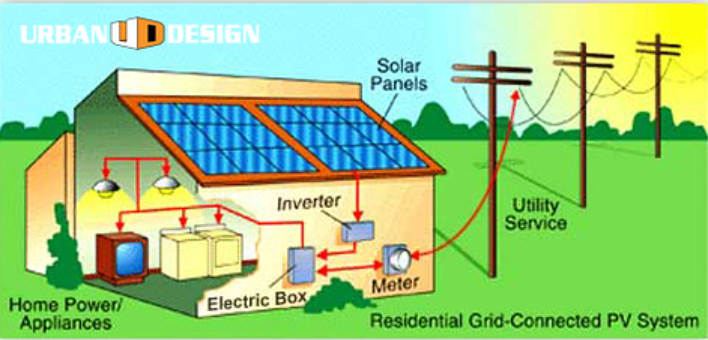
There are three main components involved in the making of a grid tied solar system.
1. Solar panels: The solar panels collect the sun’s energy and produce DC electricity;
2. Grid tie solar inverter: The inverter converts the direct current (DC) power produced by the panels into alternating current (AC) that homes can use and can be sent to the grid;
3. Net energy meter: A bi-directional meter that is used for net metering, checks how much excess power is being sent to the grid and how much is being imported from it to determine monthly billing and credits for the homeowner;
How does a distribution panel work in a solar setup?
After the solar inverter converts DC electricity from your solar panels into usable AC electricity, this energy needs a way to enter your home’s electrical system. That’s where the distribution panel—sometimes called a breaker box or fuse box—comes in.
The distribution panel acts as the central hub that channels the electricity from your solar system to power your household appliances and devices. If your home is using electricity at the same time the panels are generating it, the distribution panel supplies your electrical loads directly. When your solar panels produce more electricity than your home currently needs, the distribution panel routes any surplus back to the utility grid via net metering.
In short, the distribution panel makes sure your solar power is delivered safely and efficiently throughout your home, while also managing the flow of extra energy out to the grid.
How does a grid tied solar system work?
Here’s how the grid tie solar system works:
1. Rooftop solar panels which are made of silicon, a semi-conductive element, absorb energy from the sun and convert it into DC (direct current) electricity. The amount of electricity a panel can generate depends on many factors, including the type of panel, placement of panel, time of day, and temperature; other important considerations include how much sunlight the panels actually receive, the cleanliness of the panels, the installation method, and even the make and model of the panels themselves. Choosing high-quality solar panels and ensuring they are installed in a spot that receives ample sunlight can make a noticeable difference in your system’s overall energy production. Regular cleaning and maintenance also help keep the panels operating at peak efficiency.
To better understand how this works, let’s take a closer look at what makes up a solar panel. Each panel is constructed from several layers, starting with a tough, transparent glass layer on top that lets sunlight pass through while protecting the cells beneath. Beneath the glass lies an antireflective coating and a fine contact grid that maximizes light absorption. The heart of the action happens in the next layers: multiple solar cells made from two layers of semiconductor silicon. When sunlight, in the form of photons, hits these silicon layers, it knocks electrons loose, creating a flow of direct current (DC) electricity. These silicon cells are encased between protective encapsulant layers, with a durable backing layer at the bottom and an aluminum frame around the edges to provide structural support and weather resistance.
2. The grid tie solar inverter takes the DC electricity generated by the solar panels, and converts it into AC electricity to power your home;
3. When the solar panels are producing more electricity than your home’s requirement, the excess energy is sent to the grid. On the other hand, if you are using more energy than the panels produce, you can draw your additional requirements from the grid. That’s where the net energy metering comes in;
4. A bi-directional meter is used for net metering which measures the amount of energy imported and exported out of your home. The homeowners who have invested in solar will generally receive credits for exporting power to the grid, which is often enough to offset their energy bills every month;
You may also like to read: How solar panels work step by step – an easy guide
How compensation for excess solar energy varies by location
The way you’re compensated for exporting extra solar power to the grid depends on where you live. In many states, net metering makes things simple: for every kilowatt-hour (kWh) you send to the grid, you get a credit to pull that same amount back—essentially a one-to-one exchange. This means, if your panels send 50 kWh to the grid during the day, you can use 50 kWh from the grid later, without any extra cost.
However, net metering isn’t available everywhere, and its rules can vary quite a bit. Some states allow net metering only for certain utility companies, or there may be limits on the system size that qualifies. In other areas, instead of full retail credit, you might get paid at a lower “wholesale” or “avoided cost” rate, meaning the value of the electricity you send out is worth less than what you’d pay to buy it back.
A handful of states, New York included, have developed their own approaches. For example, New York uses what’s called the VDER Value Stack, a system that assigns a fluctuating value to your exported solar based on factors like time, location, and how much the grid needs energy at that moment. As a result, credits for the extra energy you produce may be higher or lower, depending on when and where it’s sent to the grid.
Understanding your local net metering or compensation policy is key, as it directly affects your solar savings or payback period. Checking with your local utility or state energy office will give you the most up-to-date details.
How grid tied solar systems are different from other systems
There are three basic types of solar power systems,
- Grid tied solar system;
- Off-grid solar system;
- Hybrid system or backup power system;
An off-grid solar system is a self-contained system and not linked to the electrical grid like a grid tied system. This system produces all its own electricity and requires a battery bank to store the excess energy the panels produce to provide backup power during the night time or during long stretches of time without sunlight.
Key components of an off-grid solar system include:
- Solar panels: These collect sunlight and produce DC electricity, similar to grid-tied systems. Off-grid setups often use either traditional rooftop panels or ground-mounted arrays for greater flexibility in placement.
- Battery bank: Vital for off-grid living, batteries store surplus energy generated during sunny periods. Common options include lead-acid and lithium-ion batteries, which ensure you have power at night or during cloudy days.
- Solar charge controller: Positioned between the solar panels and the battery bank, the charge controller prevents the batteries from being overcharged, extending their lifespan and ensuring system safety.
- Off-grid inverter: This device converts the DC electricity stored in batteries into AC electricity that home appliances can use. Unlike grid-tied inverters, off-grid inverters don’t synchronize with the utility grid, since there isn’t one!
- Additional DC disconnect: For maintenance and safety, off-grid systems include an extra DC disconnect switch between the battery bank and the inverter. This allows you to safely isolate parts of the system when needed.
- Backup generator (optional): Because off-grid systems are completely independent, many homeowners choose to include a backup gas or diesel generator as an extra layer of security for extended periods of low sunlight.
This combination of components allows an off-grid solar system to operate independently, making it ideal for remote locations or anyone seeking true energy self-sufficiency.
Off-grid systems are commonly used in remote locations—think cabins in the woods, rural homes, or anywhere the utility grid doesn’t reach. Because you’re not connected to the grid, you’re completely self-reliant, but this also means you need to be prepared for all your energy needs, rain or shine. To ensure a steady supply of electricity, off-grid systems generally combine solar panels, a significant amount of battery storage, and, often, a backup generator (like a gas-powered unit) for those especially cloudy days or high usage periods.
Key Components of Off-Grid Solar Systems
- Solar panels, racking, and wiring: Just like grid-tied systems, off-grid setups use solar panels and mounting gear. In rural settings, ground-mounted arrays are common.
- Battery bank: Stores the electricity generated during the day for use at night or when solar production is low. Battery systems can be lead-acid or lithium-ion, depending on your needs and budget.
- Solar charge controller: Sits between the panels and the battery bank to prevent overcharging and extend battery life.
- Off-grid inverter: Converts DC electricity from the batteries into usable AC electricity for your appliances.
- Additional DC disconnect: Provides an extra layer of safety between the battery bank and the inverter, useful for maintenance and protection.
- Backup generator (optional): Many off-grid homes keep a generator as a failsafe for extended cloudy weather or unexpected power demands.
Considerations When Going Off-Grid
While off-grid systems offer independence and are essential for homes beyond the reach of power lines, they come with higher upfront costs—mainly because of the batteries. Off-grid installations can run significantly more expensive than their grid-tied counterparts. Additionally, living off-grid requires a shift in energy habits. Homeowners need to be mindful of their energy use, monitor battery levels, and occasionally make do with less power during extended cloudy periods.
The hybrid system or backup power system is tied to the electrical grid and thus can both send electricity to it and draw electricity from it like the grid tied system. However, this system also has batteries to store electricity to provide backup power during emergencies. The hybrid system allows homeowners to power their homes not only during overcast days or the night but also when there is an energy blackout of the grid.
Off-grid solar systems
Off-grid systems are commonly found in remote locations such as cabins or rural properties where grid electricity simply isn’t available. These setups rely solely on solar panels, a battery bank for storage, and often a backup generator for those cloudy stretches when the sun just won’t cooperate. Because you’re not connected to the grid, you’re completely energy independent—but that also means you need to keep a close eye on your energy use and be ready to make lifestyle adjustments. Off-grid systems are typically more expensive due to the high upfront cost of batteries and backup equipment, and installation can be more complex.
Pros:
- Provides electricity where no grid access exists
- Offers complete self-reliance
Cons:
- Significant upfront costs, mainly due to batteries
- Requires conscious energy management and lifestyle changes
The hybrid system or backup power system is tied to the electrical grid and thus can both send electricity to it and draw electricity from it like the grid tied system. However, this system also has batteries to store electricity to provide backup power during emergencies. The hybrid system allows homeowners to power their homes not only during overcast days or the night but also when there is an energy blackout of the grid.
How does a hybrid (solar-plus-storage) system work?
Hybrid solar systems combine the best of both grid-tied and off-grid setups. The solar panels are connected to batteries as well as the utility grid, offering greater flexibility and reliability. These systems are often called “solar-plus-storage” because the batteries can store excess electricity produced during the day for use at night, during cloudy weather, or whenever your solar panels aren’t generating enough power.
This setup is especially helpful in areas that experience frequent grid outages or where full retail net metering isn’t available. With batteries, your solar system can keep your home running even when the grid is down—something a standard grid-tied system can’t do. Plus, by using stored energy during peak times or when utility rates are highest, you can maximize your use of clean energy and potentially save even more on your electricity bills.
However, it’s important to note that while batteries offer these advantages, they are also the most expensive component of a solar system. As a result, the upfront cost of a hybrid system is higher than a simple grid-tied system, and the financial payback period may be longer depending on your local incentives and utility rates.
Hybrid solar systems
Hybrid systems combine the best of both worlds by being connected to the grid while also including battery storage. This means you can use solar power when the sun is shining, draw from your batteries when it’s not, and still access the grid when needed. If there’s a blackout, your battery kicks in to keep the essentials running. Hybrid systems are a great option for those who want energy independence and backup power, especially in areas with unreliable grid service or frequent outages. However, since batteries are still a costly component, hybrid systems usually come at a higher price point than simple grid-tied setups.
Pros:
- Provides backup power during outages
- Increases energy independence
- Can help save on electricity bills if battery incentives are available
Cons:
- More expensive than grid-tied systems
- Not always the best financial choice depending on local incentives and electricity rates
Whereas, in a grid tied system the homeowners cannot access electricity during overcast days or the night if there is a grid power outage. Moreover, a grid tie solar system will automatically shut off when the grid goes down to prevent energy from back feeding into the grid to keep utility workers safe.
A grid tied solar system is the most common and straightforward option for most homeowners. These systems connect directly to the utility grid, allowing you to use solar energy when it’s available and rely on the grid when it’s not. Any excess electricity your panels generate is sent back to the grid, often earning you credits through a process called net metering, which can help offset your energy costs. Grid tied systems don’t include batteries, which keeps costs down and maintenance simple. However, if there’s a grid outage, your solar system will automatically shut off to protect utility workers—so you won’t have power until the grid comes back online.
Pros:
- Most cost-effective way to go solar
- Least amount of equipment and maintenance
- Can maximize savings in areas with net metering
Cons:
- No backup power during grid outages
- Dependent on utility policies for net metering
The grid tied solar system however is by far, the most cost-effective way to go solar because it doesn’t include batteries which are the most expensive component of any solar system.
You may also like to read this related post: Off Grid Power System for homes using Solar power
Other Solar Options Beyond Rooftop Panels
Rooftop panels aren’t the only way to harness solar power for your home. If your roof isn’t ideal—or you simply want to maximize every sunbeam—there are a few other innovative solar solutions you can consider:
- Ground-Mounted Solar Systems:
These systems are installed directly on your property and can be positioned for optimal sunlight, often generating more power than panels limited by roof angles or shade. - Solar Trees:
Taking inspiration from nature, solar trees are artistic, vertical structures that hold solar panels aloft, making efficient use of limited ground space while adding a modern and eye-catching installation to your yard. - Solar Canopies and Carports:
Not only do these provide shade for your cars or outdoor areas, but they also produce clean energy—think of them as a practical upgrade for driveways, patios, or parking lots.
Whether you’re installing panels on your roof, ground, or even in the form of a solar tree, you can work with your installer to design a system that offsets all or a large portion of your energy usage. The key is to produce enough electricity when the sun is shining to cover your needs—even at night or on cloudy days. Extra electricity generated during sunny hours can be sent back to the grid, allowing you to draw power whenever it’s needed. This means you’ll have access to electricity regardless of the weather or time of day, as long as the utility grid is up and running.
Exploring these alternatives can ensure you make the most of your property’s solar potential, no matter your space or style.
What equipment is used in a hybrid solar system?
A hybrid solar system combines the essentials of grid tied setups with battery backup to offer flexibility and peace of mind during outages. Here’s a breakdown of the main components involved:
- Solar panels, mounting, and wiring: Like other systems, hybrid solar begins with rooftop solar panels—the workhorses that capture sunlight and generate DC electricity. Mounting hardware and wiring keep everything securely connected.
- Hybrid inverter: Unlike a standard grid tied inverter, a hybrid inverter smoothly manages power from solar panels, home batteries, and the grid. In many cases, the inverter is built directly into the battery for streamlined installation.
What does a hybrid inverter do?
Solar panels generate DC (direct current) electricity, but your home and the grid use AC (alternating current) power. The hybrid inverter is the bridge—it converts DC to usable AC for your lights, appliances, and EV chargers. Plus, it works both ways: it can convert stored battery power back into AC, or even manage sending excess solar energy to the grid.
Types of inverters in hybrid systems
There are a couple of main inverter setups you might encounter:
- String inverters: About the size of a shoebox, these are typically installed near your solar panels (but not on them). If you have a larger system, you may need more than one.
- Microinverters: These compact devices are installed directly beneath each solar panel, allowing for more granular control and potentially better performance in shaded or complex roof scenarios. With microinverters, each panel gets its own dedicated inverter.
Which type you need depends on your system’s size, layout, and shading conditions—but in hybrid systems, the inverter’s main role is to keep everything seamlessly connected: sun, storage, and the grid.
- Battery bank: This is the standout feature of a hybrid system. The battery stores excess solar energy for use at night or if there’s a grid outage. Lithium-ion batteries, such as those from Tesla Powerwall, LG Chem, or BYD, are popular choices because they are compact, reliable, and require little maintenance.
- Charge controller: To keep batteries healthy, a charge controller regulates voltage and prevents overcharging, thereby extending battery lifespan.
- DC disconnect switch: Safety is key—a disconnect switch makes it possible to isolate the battery from the inverter and the rest of the system during maintenance or in case of emergencies.
- Upgraded metering: Depending on your utility, you may need a new or additional electric meter to correctly measure both the electricity you draw and the energy you send back to the grid.
These components work seamlessly so you can maximize your energy independence, lower your reliance on the grid, and keep critical appliances running, even when the utility goes down.
Benefits and Drawbacks of Hybrid Solar Systems
Let’s take a closer look at what makes hybrid solar systems unique—their advantages as well as the challenges to consider before choosing this setup for your home.
Benefits
- Reliable Backup Power: Hybrid systems stand out for their ability to keep your lights on even during blackouts, thanks to their built-in battery storage. This means you’re protected from power cuts and grid outages.
- Greater Energy Independence: With the combination of solar panels, batteries, and grid connectivity, you’re less reliant on your utility provider and can make the most of your self-generated solar electricity—even after the sun goes down.
- Smoother Energy Management: These systems help you maximize your solar savings by allowing you to store surplus electricity during the day and use it later when demand (and electricity prices) spike.
Drawbacks - Higher Upfront Cost: Adding batteries to your solar setup does increase the total investment significantly, with batteries often being the most expensive part of the system after the panels themselves.
- Maintenance and Lifespan: Batteries require occasional maintenance and, unlike solar panels, need to be replaced every few years, which adds to long-term costs.
- Not Always Cost-Effective: Depending on your local electricity rates, available incentives, and how often you experience power outages, a hybrid system might not always offer the best payback compared to a grid tie system.
By understanding both the benefits and potential downsides, you can decide if the flexibility and peace of mind of a hybrid solar system are worth the trade-offs for your household.
Pros and Cons of grid tied solar system
Here’re the pros and cons of a grid tie solar system:
Pros
1. Can draw power from the grid when solar panels not generating enough power;
2. Lower installation cost and easier to maintain because it doesn’t include batteries or any form of energy storage to store solar power;
3. Most cost-effective way to go solar as it doesn’t include expensive battery backup equipment;
4. The excess electricity exported to the grid is often enough to offset the electricity used from the grid during the night or cloudy days;
5. Quick return on investment as the typical payback period for the system is 4 to 6 years;
Cons:
1. No backup power because grid tie solar doesn’t include battery backup equipment and the system is solely dependent on the grid to work;
2. When there is a grid power failure, the system automatically shuts down to prevent energy from back feeding into the grid to keep utility workers safe;
Frequently asked questions
Before I conclude let me also address some of the related questions often asked by potential home solar investors.
What is a grid tied solar system?
A grid tied solar system uses solar panels to generate electricity from sunlight while maintaining a connection to the local electricity grid. Such a system generates power for the home and it sends any excess power it generates, into the grid.
How much does a grid tie solar system cost?
The cost of a solar grid tie system depends upon the system size, where it is located, and the available tax credits offered by the state. The cost of a 4Kw grid tie solar system, which should power a 2,000 square-foot home with average energy usage, is about $9,000 after deducting current federal solar tax credits. However, a bigger system costs more which can go up to $30,000 for a big 16Kw system.
How much does an off-grid solar panel system cost?
The cost of going off-grid with solar is significantly higher than installing a grid tied system. On average, a complete off-grid solar setup will range from $50,000 to $65,000 or more—primarily due to the need for a large battery bank to store excess energy for use at night and during cloudy periods. In fact, batteries can easily account for $20,000 or more of the total, especially if you plan to power major appliances around the clock.
While some homeowners consider taking the DIY approach to save on installation costs, it’s important to understand that setting up an off-grid solar system is a complex—and potentially risky—task. Proper sizing, safe electrical work, and system integration require both technical skill and strict adherence to safety standards. If you’re not experienced in electrical installations, it’s best to consult with a certified solar installer to ensure both safety and optimal performance.
Is grid tied solar worth it?
A grid tied solar system is the ideal economical choice for both homes and businesses as it is the most cost-effective way to harness the sun’s energy. Moreover, the homeowners who have invested in solar receive credits for exporting excess power to the grid, which is often enough to offset their energy bills every month.
Which is better grid tied or off-grid?
A grid tied system is usually a better choice for homeowners who live in close proximity to the electrical grid as it is far less expensive than a self-contained system.
Off-grid system, on the other hand, has the added cost of an expensive battery bank to store the excess energy the panels produce to provide backup power during the night time or during long stretches of time without sunlight. This system is, therefore, better for remote locations where the cost of extending power lines from the electrical grid is considerably high.
Pros:
- Provides electricity where there is no grid access, making it ideal for cabins, rural properties, and locations far from utility lines.
- Offers complete self-reliance, as your power needs are met independently of the utility company.
Cons:
- Off-grid systems are very expensive, primarily due to the high cost of batteries and backup components.
- Living off-grid often requires lifestyle adjustments to manage energy use carefully, especially during periods of low sunlight.
If you live in an area where grid access is unavailable or prohibitively costly, the off-grid solution can be a practical—if pricey—path to energy independence.
It’s important to note, however, that off-grid solar systems are not for the faint of heart. They require a commitment to a lifestyle that includes monitoring your own power usage and maintaining your energy system. Off-grid setups are often chosen out of necessity—such as in rural areas, cabins, or solar-powered tiny homes, where grid access simply isn’t available. For those looking for an environmentally-friendly retreat or a self-sufficient tiny home, off-grid solar can be a feasible option due to their lower overall energy demands.
Keep in mind, too, that going off-grid isn’t always legal or straightforward in some places. In certain regions, local regulations may prohibit or restrict disconnecting from the grid if utility service is available nearby, making it essential to check your area’s rules before considering an off-grid lifestyle.
How much do hybrid solar systems cost?
The cost of a hybrid solar system—which pairs traditional solar panels with battery storage—can be a major factor in your decision-making process. Hybrid systems tend to be more expensive than standard grid-tied setups due to the inclusion of batteries for energy storage.
As a ballpark figure, a typical hybrid solar system for a home will start around $20,000 and can go upwards of $56,000 or more, depending on your energy needs, the system size, and the type of battery you select. For example, a Tesla Powerwall battery typically costs about $14,000 to install, while premium options like the Generac PWRcell may be closer to $18,000 installed. These numbers add to the overall cost of your solar installation.
Keep in mind, however, that hybrid solar systems benefit from federal solar tax credits—currently at 30%—as well as potential state and local incentives that can help substantially reduce out-of-pocket costs. Here’s a general breakdown of hybrid solar system costs based on system size (before and after the federal tax credit):
- 4 kW system: $26,000 (before credit) / ~$18,200 (after credit)
- 6 kW system: $32,000 (before credit) / ~$22,400 (after credit)
- 8 kW system: $38,000 (before credit) / ~$26,600 (after credit)
- 10 kW system: $44,000 (before credit) / ~$30,800 (after credit)
- 12 kW system: $50,000 (before credit) / ~$35,000 (after credit)
- 14 kW system: $56,000 (before credit) / ~$39,200 (after credit)
Actual costs can vary based on battery brand, installation complexity, your home’s location, and available incentives. If you’re considering a hybrid system, it’s a good idea to compare available rebates (like those offered for Tesla Powerwall and Generac PWRcell), review your energy usage, and weigh the extra investment against the benefits of backup power and increased energy independence.
Conclusion
One of the biggest decisions the homeowners have to make is whether to install a standard grid tied solar system, an Off-grid solar system with battery backup, or a hybrid solar system.
After going through this post it should be clear now why the grid tie solar system tends to be the most popular choice for residential applications. It is the easiest, simplest, and most cost-effective way to harness the sun’s energy. This system is virtually maintenance-free and far less expensive than a self-contained battery backup system, and you never have to worry about running out of power as long as the grid is running, even during the darkest times of the year.
That said, there are situations where a different type of solar setup might make sense:
- Hybrid systems (solar plus battery storage) can be a smart option if you experience frequent power outages or if you’re looking to maximize your energy independence. With a hybrid system, you can use stored solar energy during blackouts and reduce your reliance on the grid.
- Off-grid systems are typically best suited for remote locations—think mountain cabins or rural properties—where connecting to the local utility is either too costly or impractical. While these systems offer complete independence from the grid, they require a significant investment in batteries and system management.
Ultimately, the best solar system for your home depends on your location, energy needs, and personal preferences. Consulting with local solar professionals can help you determine the most practical and cost-effective solution for your unique situation.
