Steps for switching to Solar residential system.
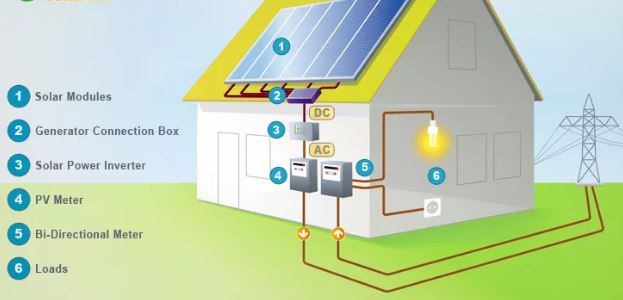
A planning guide for setting up Solar Residential System
More homeowners across the USA are currently going for the home solar system instead of fossil-fueled electricity. The main motivation behind the transition to solar residential system is to reduce long-term energy costs while minimizing carbon emissions in a time of global climate change.
Clean, renewable, and affordable, solar energy is clearly the energy of the future as witnessed by its rapid growth throughout North America, Europe, China, and even India. According to a report, solar power capacity has expanded by nearly 30% in 2017 and this whopping growth is also continuing at present. This is mostly due to improvements in the efficiency and lower cost of solar panels for homes. The type of solar panels required for home solar system (residential photovoltaic systems) would have cost more than $50,000 a decade ago. With the advent of new technology, the prices of solar panels for home have dropped about 60% in the last few years. Today, the average upfront cost of a 6 KW solar panel system, one of the common sizes of solar panels for home, is around $20,000 before you factor in the federal solar tax credit discount. With this rapidly falling price, switching to a solar residential system can dramatically reduce your energy bill, if you can do your homework for solar system planning for your home ahead of time. In this connection, you can also go through this article – Are solar panels worth it?
Solar system planning guide
Here’re the steps to follow for switching over to a Solar residential system:
1. Study your home’s energy efficiency
For making solar system planning for a home you need to study first your energy use and implement a few low-cost efficiency measures for potential efficiency upgrades. You can explore the following resources to upgrade the energy efficiency of your home.
- A home energy audit should be your first priority before solar system planning for homes. It can help you to understand the whole picture of your home’s energy use, the areas where there are scopes of saving energy, and what steps need to be taken to improve the energy efficiency of your home;
- Go for high-efficiency home appliances;
- Change over to energy-efficient lighting systems (such as LED lights);
2. Study solar energy potential at your home location
The first consideration before solar system planning for your home is to assess the solar energy potential (i.e. solar irradiation levels) at your home’s geographical location i.e. how much of the sun’s energy reaches the location. Being closer to the equator is generally better when it comes to using solar panels. But other factors also need consideration. Your home’s orientation is also an equally important factor. For rooftop arrays, a south-facing roof without trees or other objects obstructing sunlight maximizes the availability of solar energy. You can refer to the website of the National Renewable Energy Laboratory (NREL) which provides maps and data detailing solar information including solar energy potential (solar irradiation levels) for specific locations within the U.S.
Apart from the above information about solar residential systems, there are several other things that need consideration for your particular home solar system. For that, you need to work directly with a solar system installer who can provide an accurate assessment of your solar potential as well as detailed recommendations, estimates, and equipment expertise.
Choosing the Right Solar Installer for Your Home
Selecting a solar installer is one of the most important steps in your solar journey, and it’s worth taking the time to do your due diligence. After all, a well-installed solar system can deliver decades of clean energy, while a poor installation can become a source of frustration and unexpected costs.
Here are some tips to help you choose the right solar installer:
- Seek out experienced professionals: Look for companies with a solid track record and experience specifically in residential solar installations. Read through customer reviews, check their websites, and ask for recommendations from neighbors who’ve made the switch to solar.
- Check for proper certifications: Reputable installers should have relevant certifications. In the U.S., look for credentials from the North American Board of Certified Energy Practitioners (NABCEP) or similar recognized organizations.
- Request and compare quotes: Don’t hesitate to get multiple quotes. Reliable installers will conduct a site visit and provide thorough proposals, including expected energy output, equipment details, costs, and estimated savings.
- Evaluate equipment options: Different installers may suggest different brands (like SunPower, LG, or Q CELLS) for panels and inverters. Review their efficiency ratings, warranty terms, and product lifespans to ensure you’re getting quality equipment.
- Understand warranties and service commitments: Ask about both product and workmanship warranties. Long-term warranties—often 20–25 years for panels and 10 or more years for inverters—can give you peace of mind.
- Ask about financing and incentives: A knowledgeable installer should be able to guide you through available incentives, rebates, and financing options, explaining how to make the most of programs like the federal solar tax credit.
Taking these steps now can help ensure that your solar investment performs optimally for years to come.
Should you add Solar Panels when replacing your roof?
If you’re already planning to replace your roof, it’s an ideal opportunity to consider installing solar panels at the same time. Coordinating these projects can help you avoid extra costs down the road—removing and reinstalling panels after a new roof can become an unnecessary expense if you don’t plan ahead.
Teaming up your roof replacement with a solar installation has a few key advantages:
- Cost Savings: Bundling the work means you’ll only pay for labor and permitting once, rather than twice.
- Seamless Installation: The solar installer can work directly with your roofer to ensure mounting systems are correctly integrated with your new roof, reducing the risk of leaks or roof damage.
- Maximized Roof Life: Since most quality solar panels last 25 years or more, pairing them with a new roof ensures you won’t have to take them down for routine roofing maintenance anytime soon.
So, if your shingles are nearing the end of their lifespan or you’re already budgeting for a roof replacement, now’s the time to get quotes from both roofing and solar professionals. This keeps your project efficient—and your home ready for decades of low-cost, clean energy.
3. Examine the available options for home solar system
Find below the major options available to homeowners for a home solar system. Examine these solar options for residential homes to assess their suitability depending on your needs and how much you want to invest in a solar power system.
a. Purchasing your own solar panels for home
Purchasing your own solar panels for home is the best option if you want to maximize the financial benefits of installing solar panels, take advantage of tax credits, and increase the market value of your home. You can take the help of the solar installer who will connect your solar panel system to the grid, and receive an interconnection permit from the utility for you.
When home solar system generates more power than the homeowner’s requirement, the owner can sell the excess electricity to the grid, and when his electricity needs exceed the capacity of the solar panel system, the homeowner can draw energy from the grid as usual.
This process is commonly referred to as net metering. Net metering is an arrangement between solar system owners and their utility company, allowing homeowners to receive compensation—often in the form of bill credits—for any surplus power their solar panels send back to the electricity grid. While the concept originated in the 1990s when electric meters would simply spin backward, today’s programs can be more complex and depend on local policies.
It’s important to check with your local electric utility to understand current net metering policies in your area. Key things to consider include whether net metering is available, the size of systems that qualify, eligible customer types, how credits are calculated, and how they appear on your bill. These policies can vary widely by state and utility provider, so doing a bit of homework up front will help you maximize your solar investment and understand exactly how your energy savings will be calculated.
You may also like to read this related post: How solar panels work step by step
Understanding how Solar Panels generate electricity
Solar panels for homes most commonly use photovoltaics (PV) to convert sunlight into electricity. These are the familiar panels you see on rooftops and in open fields. When sunlight hits the PV panels, tiny particles of light—called photons—are absorbed by the solar cells. This process creates an electric field across the cell’s layers, causing electricity to flow. It’s a clean, straightforward process that lets you generate your own renewable power right from your rooftop.
For those curious about other solar technologies, there is also concentrating solar power (CSP). However, CSP uses mirrors to focus sunlight onto receivers to create heat, which is then used to generate electricity—typically in large-scale, utility-run power plants. This method isn’t designed for residential use, so home solar systems almost always rely on PV panels.
Understanding these basic technologies can help you make an informed choice when considering your options for going solar.
b. Participating in Community (shared) solar program
Despite a rooftop solar market that has grown by leaps and bounds over the last decade, the majority of American households are unable to go for the solar residential system through the traditional rooftop model because they rent or have shaded or unsuitable roofs, or live in apartments.
If you’re unable to host a rooftop system there is another option i.e. to invest in a Community (or shared) solar program. The primary purpose of the community program is to allow members of a community the opportunity to share the benefits of solar power even if they cannot or prefer not to install solar panels on their property. Project participants benefit from the electricity generated by the community solar farm, which costs less than the price they would ordinarily pay to their utility. The community home solar system may be owned by utilities, a solar developer, non-profit entities, or multiple community members.
If you are unable or do not want to install a solar panel system at your home or property or if you do not want to take responsibility for the repair and maintenance of the system you can consider going for a community or shared solar program.
c. Exploring cooperative Solar purchasing
Yet another pathway for homeowners to tap into solar power is by joining a cooperative solar purchasing program. These programs, often organized by local nonprofits, community groups, or solar advocacy organizations (think groups like Solar United Neighbors or local green energy collectives), bring together a group of interested households—sometimes dozens, sometimes even hundreds—to purchase solar systems in bulk.
Here’s how it typically works: The cooperative negotiates with solar installers on behalf of its members to secure group discounts. By leveraging the buying power of a larger group, participants can often access lower prices on equipment, installation, and sometimes even extended warranties. The process usually involves informational sessions, group decision-making on the installer selection, and technical guidance to ensure each homeowner’s system is tailored to their needs.
This approach is ideal if you’re looking for a hassle-free way to join forces with neighbors, save on upfront costs, and demystify the sometimes complex process of going solar. Not only do you benefit from collective expertise, but you’re also part of a supportive network during installation and beyond.
If managing your own solar installation or committing to a shared community solar project feels like too much, joining a cooperative might be an attractive, cost-effective middle ground.
d. Going for Solar Lease
Solar leasing has become the most popular way of helping homeowners reap the benefits of solar energy. It gives you the same dependable power as solar ownership, but with the added benefits of a professionally managed and maintained system.
When you talk about solar leases in the US you are typically talking about a contract where a solar company agrees to fund the installation of solar panels for a solar residential system on homeowner’s roof and charge him a monthly fee for the electricity these panels generate. This fee is calculated using the estimated amount of electricity the system will produce in exchange for the right to use the solar panel system on the homeowner’s property. This amount is often less than the homeowner’s original electricity bill.
e. Going for Solar Power Purchase Agreement (PPA)
A solar PPA or Power Purchase Agreement is similar to a solar lease in that the solar panels remain owned by the third-party investors rather than the homeowners, during the term of the agreement.
A solar Power Purchase Agreement (PPA) is a financial agreement between a developer and a homeowner under which the developer arranges for the design, required permits, finance, and installation of the solar residential system on the homeowner’s property at practically no upfront cost. The developer sells the power generated over the life of the system to the host customer at a fixed per-unit rate ( per kWh) that is normally lower than the local utility’s retail rate. This lower electricity price serves to offset the homeowner’s purchase of electricity from the grid at a higher rate while the developer earns from the sale of electricity as well as any tax credits and other incentives generated from the system. These PPAs typically range from 10 to 25 years and the developer remains responsible for the operation and maintenance of the solar panel system for the duration of the agreement. At the end of the contract term, the consumer can extend the term of the agreement or remove the system from his property or choose to buy back the solar panel system from the developer.
f. Can you install solar panels yourself?
If you’re handy and enjoy tackling home improvement projects, you might be tempted to install solar panels on your own. While DIY solar kits are available, most homeowners find that hiring a qualified solar professional is the safer and more reliable route. Certified installers—such as those accredited by the North American Board of Certified Energy Practitioners (NABCEP)—bring expertise that ensures your system is installed safely, correctly, and up to code. They’re not only familiar with local permitting requirements and utility connections, but they also have access to high-quality panels and hardware.
DIY installations can lead to costly mistakes or even void warranties, and any errors in the setup could impact your system’s performance or longevity. In addition, some rebate programs and tax credits may only be available if your system is installed by a licensed professional. Unless you have advanced electrical and roofing skills, it’s wise to engage an experienced installer to maximize your investment and avoid headaches down the road.
g. Smart shopping tips for Solar Panels
Getting the most out of your solar investment means shopping wisely. There’s more to buying solar panels than picking a shiny brand or jumping at the lowest price you spot online. Here are a few key tips to make sure you’re making an informed decision:
- Compare Multiple Quotes: Don’t settle for the first offer you get. Reach out to several reputable installers—like Sunrun, Tesla, or your local solar providers—to compare prices, warranties, system sizes, and installation timelines. This helps you understand what’s standard in your area and can often give you leverage to negotiate better pricing or perks.
- Check Credentials and Reviews: Make sure your installer is licensed, insured, and has NABCEP (North American Board of Certified Energy Practitioners) certification or similar. Take time to read authentic reviews on platforms like SolarReviews or the Better Business Bureau to get a sense of their reputation.
- Understand Warranties: Solar panels typically come with two warranties—one for performance (often 25 years) and another for equipment (typically 10–12 years). Don’t be shy to dig into the details. Ask questions such as: Who’s responsible for repair or replacement? What’s the process if something fails?
- Clarify Financing Options: Explore all available options—cash purchase, solar loan, lease, or PPA—and make sure you know how each impacts your upfront costs, long-term savings, and system ownership. Remember, offers that sound too good to be true often come with trade-offs.
- Review All Contracts Carefully: Before signing anything, read every page. Watch out for hidden fees, escalator clauses (annual increases in payments), and clear terms around system removal or buyout options.
- Ask About Local Incentives: Inquire about available tax credits, utility rebates, or state-specific programs. Reliable installers will help you navigate these incentives to slash your total system cost.
By keeping these pointers in mind, you’ll be better equipped to make a confident, well-informed solar purchase.
h. What is Solar Plus Storage, and do you need it?
You might be hearing more about “solar plus storage” these days—and with good reason. Pairing energy storage (usually in the form of solar batteries) with your solar panel system allows you to bank the extra electricity your panels generate during the day and use it whenever you need—be it at night, during a cloudy afternoon, or even in a power outage.
Storage solutions such as those from Tesla (Powerwall), LG, and Sonnen give homeowners a reliable backup supply, making your solar system even more resilient. Instead of sending all your surplus power back to the grid, a battery lets you keep it on hand for tasks like running the dishwasher after sundown, powering your home during an outage, or managing your energy use during peak utility rate times.
Is storage necessary for everyone? Not always. If your utility offers generous net metering, you might not see immediate savings with a battery. However, for those wanting extra security or to further reduce reliance on the grid, solar plus storage can bring real peace of mind. Ask your installer if battery storage fits your situation—and your budget.
i. Considering Battery Storage for Your Solar Energy System
Adding battery storage to your solar setup is an option worth considering, especially if you want to maximize your energy independence or prepare for power outages. With a battery, you can store excess energy generated during sunny hours and use it later—at night, on cloudy days, or when the grid goes down.
Battery storage might make sense if:
- You live in an area prone to frequent outages and value backup power.
- Your local utility uses time-of-use rates, charging more during peak hours.
- You’d like to further decrease your reliance on utility-supplied electricity.
Keep in mind, however, that batteries add to the upfront cost and may require additional space or modifications. Some popular options on the market include the Tesla Powerwall, LG Chem RESU, and Enphase Encharge, among others.
Before making a decision, it’s wise to weigh the pros and cons, factoring in the additional cost versus your goals for resilience and energy savings. Many homeowners find that combining solar panels with battery storage offers greater control over energy use, but for others, a standard grid-tied system is sufficient.
4. Estimate your energy requirement
The most important step in solar system planning for your home is to figure out how much solar power you need annually from your system. This will help your solar installer to determine the type and appropriate size for your system. The easiest way to know your energy needs is to look at your monthly energy bill and estimate your daily consumption. You could also calculate your energy consumption by knowing the average watts of each device you use and for how many hours you will be using them on average. Some utilities also offer tools that can help you with this review.
5. Explore the solar financing options
Homeowners have different financial options to select from when deciding to go for a residential solar system. In general, a purchased solar system for home can be installed at a lower total cost than installing a system using Solar Lease, or Power Purchase Agreement (PPA). This is because, in these cases, the homeowner will not be eligible for the tax benefits as he will not be the owner of the home solar system.
Federal Government wants you to use clean energy. To incentivize you to make the move, they’re giving 26% back as a TAX CREDIT in 2022, and 22% back in 2023.
Exploring Solar Incentives and State Programs
Beyond federal incentives, many states and even local governments offer additional rebates, grants, and tax breaks for going solar—sometimes enough to tip the scales in favor of installing your own system. These programs can vary widely depending on where you live, so it’s important to check what’s available in your specific area.
A great starting point is , the Database of State Incentives for Renewables & Efficiency. Just enter your zip code, and you’ll get a comprehensive list of financial incentives and regulatory policies that apply to your home. An experienced local installer can also help you navigate and claim relevant state and local incentives, along with federal tax credits like the ITC.
If you want to dive deeper into the nitty-gritty of state and federal solar policies, including detailed explanations of incentives and tax breaks, check out resources such as the Solar Power in Your Community guidebook from N.C. State University’s Clean Energy Technology Center.
You can also explore the available solar financing options by visiting the https://www.energy.gov/eere/solar/homeowner-s-guide-going-solar.
You can also explore the available solar financing options by visiting the website – Homeowner’s Guide to Going Solar.
6. Is there a tool to help calculate the value of a solar PV system for home appraisal purposes?
Absolutely! If you’re looking to accurately determine how much your residential solar PV system adds to your home’s value, there are specialized appraisal tools available. These tools use industry-accepted methodologies to calculate the income and energy production value of your solar setup, making the process smoother for both buyers and sellers.
For best results, be sure to request that your real estate appraiser uses one of these tools—such as PV Value®—to assess your system. By incorporating data like your system size, location, and local utility rates, these tools provide a fair market estimate that can give you a clearer picture of your system’s contribution to your property’s value.
This way, you can be confident you’re capturing the true financial benefit of your solar investment during the home appraisal process.
Frequently asked questions
Before I conclude let me also address some of the queries often made by prospective homeowners, wishing to install a Solar residential system.
Which solar panel is better – mono-crystalline or poly-crystalline?
Mono-crystalline solar panels are a little more expensive than poly-crystalline panels. Although both panels generate the same amount of electricity, panels made of mono-crystalline silicon are comparatively more space-efficient.
How does the efficiency of solar panels matter?
Solar cell efficiency is referred to as the percentage of energy in the form of sunlight that is converted into usable electricity by each solar cell. This means that by using high-efficiency solar cells (mono/poly cells) more power can be generated with fewer solar panels requiring much less roof space. On the other hand with low-efficiency cells (amorphous cells) more number of solar panels will be needed, which will require more roof space, to produce the same amount of power as high-efficiency modules. In other words, low-efficiency cells will reduce the maximum power output capacity of your rooftop.
Is a high-efficiency solar panel a must for home?
Solar panel efficiency is not the sole factor to determine which panels are right for your home. Whether you will go for the most efficient solar panel or not depends entirely on your available roof space. If you have limited roof space, going for more costly high-efficiency solar panels would be a better option. On the other hand, you may not need the costly high-efficiency panels if you have enough roof space to accommodate less efficient but cheaper panels.
How much do solar panels cost?
The cost of installation of solar panels depends on how much electricity you are going to use daily. Residential solar panels are usually sized at 3kW to 8kW and can cost anywhere from $10,000 and $28,000 in total installation costs.
How many solar panels does it take to run a house?
The average home in the U.S. uses about 10,000 kWh of electricity per year. You’d need around 28-34 solar panels to generate enough energy to power your house if you use an average 250-watt solar panel.
How long do solar panels last?
According to the Federal Trade Commission, the average life of Solar panels is about 20 years. However, with proper maintenance, the panels may even run for more than 40 years.
Do solar panels need servicing?
The Solar PV system needs little maintenance besides keeping them relatively clean which rainwater normally does for you.
What is the difference between photovoltaics (PV) and concentrating solar power (CSP)?
While exploring solar energy options for your home, you might encounter two main types of solar technologies: photovoltaics (PV) and concentrating solar power (CSP). It’s important to know the differences, especially if you’re deciding what makes sense for a typical residential setup.
- Photovoltaics (PV): These are the classic solar panels you’ve seen on rooftops in neighborhoods from San Diego to Syracuse. PV panels work by converting sunlight directly into electricity using semiconductor cells—usually made from silicon. When sunlight hits these cells, it generates a flow of electricity, which can then power your household appliances, electronics, or even your favorite summer smoothie blender.
- Concentrating Solar Power (CSP): CSP, on the other hand, is usually reserved for enormous, utility-scale projects out in the desert or other sunny, open spaces. Instead of panels, CSP systems use mirrors or lenses to focus sunlight onto a small area, turning the concentrated energy into heat. This heat is then used, typically via a turbine, to generate electricity. It’s a bit like using a magnifying glass to light a campfire, but on a much larger (and far more sophisticated) scale.
The bottom line? For homeowners, PV panels are by far the more practical and widely used choice—CSP is a technology you’re more likely to see featured in engineering documentaries than on your own rooftop.
Are there legal protections for installing solar panels if my home is part of a Homeowners’ Association (HOA)?
Fortunately, many states have recognized the importance of supporting homeowners who wish to go solar, and have put “solar access laws” in place to help. These laws generally prevent HOAs from outright banning the installation of solar panels, though you may still need to submit an installation request or follow certain guidelines. The specifics can vary widely—California, for example, has particularly robust protections under its Solar Rights Act, while other states may have their own rules about aesthetic restrictions or approval processes.
It’s wise to check both your local state laws and your HOA’s covenants before proceeding. Most of the time, as long as your installation meets reasonable design standards, your right to harness solar power will be protected. If you’re ever in doubt, resources like the Solar Rights Alliance or your state’s homeowner protection agencies can provide state-specific guidance.
Do homes with solar panels sell faster than those without?
Yes, research suggests that homes equipped with solar panels often attract buyers more quickly than those without solar power. For example, studies from California have shown that properties with solar energy systems or other energy-efficient features generally spend fewer days on the market compared to similar homes relying solely on traditional electricity. This can be appealing for homeowners looking to maximize both their property’s value and its overall marketability.
Is solar energy safe for residential use?
Safety is one of the primary concerns for any homeowner considering new technology, and solar energy systems are no exception. Fortunately, modern solar panels are designed to be very safe for residential use. Every panel sold for home installation must pass strict international safety tests, and qualified installers ensure that your system complies with local building, electrical, and fire codes. During installation, your system will also be inspected by a certified professional, so you can rest easy knowing everything is up to code.
Solar panels themselves are manufactured with a durable encapsulant—think of it as a sturdy protective layer, much like the safety glass on your car windshield. This not only shields the panel from weather but also prevents any chemicals from leaking out. Even in the rare event a panel gets damaged, studies have shown that any potential exposure to materials like lead or cadmium would be far below the acceptable safety thresholds set for residential environments.
In summary, when installed and maintained properly, solar energy systems are a reliable and safe choice for powering your home.
You may also like to read: Off Grid Solar Power System for homes
Conclusion
On going through the solar system planning guide, switching over to home solar may seem to be a difficult task. But it is important to remember that transition to solar residential system is a long-term investment.
In many geographical locations, residential solar systems are a good choice from a financial perspective, particularly due to the rapidly falling price of solar panels for home. Apart from savings on electricity bills, homeowners may wish to install a home Solar system to avoid future potential fluctuations in energy costs as the cost of non-renewable energy sources continues to increase. Moreover, solar residential system help in “Eco-friendly” living, which eventually improves the quality of life of the inhabitants.
You may also like to read this post: Passive Solar House Plan

JamesSlawl
Dec 17. 2018
The solar installer will connect the system to the grid, and receive an interconnection permit from the utility. When the PV system generates more power than the homeowner requires, the customer is often able to sell excess electricity to the grid, and when the homeowner s electricity needs exceeds the capacity of the system, the home draws energy from the grid as usual. Learn more about grid-connected home energy systems .
radharenu ganguly
Jan 24. 2019
Hi James,
Thanks for stopping by and your valuable comments.
Chris Pederson
May 11. 2021
I didn’t know that solar leasing was a thing until now, let alone that I can use it to get the benefits of solar energy. I’d love to lower my electric bill each month. Leasing solar panels could be a good way to pay for them while also making money back by not using electricity from somewhere else.
Chance Cook
Jul 14. 2021
Thanks for reminding me that solar panels are a long-term investment. My wife thinks the initial price will be too much. But I think I can convince her if we break it up over time.
Solar Medix
Jul 20. 2021
Hello, Thanks for sharing this blog. this is very helpfull for me . if you want any help regarding Snow Guard Installation then contact with Solar Medix.
Mia Evans
Aug 24. 2021
Thanks for pointing out that the most important step to having solar power is to figure out how much power you need. I guess I really need to hire professionals now that I want solar panels for my home. It’s because we need ways to reduce our bills now that they have doubled starting this year.
radharenu ganguly
Aug 24. 2021
Hi Evans
Thanks for your comments. Switching over to Solar is definitely going to help you.
Solar Medix
Sep 08. 2021
Hello, thanks for sharing this blog. this is very helpfull for me. if you want any help regarding solar company in nj then contact with Solar Medix.
Access Doors and Panels
Oct 07. 2021
I like the helpful info you supply for your articles. Thanks for sharing a smart thought.
David Campbell
Oct 13. 2021
Wow!! Amazing blog. you are really a great writer. your solar panel procedure is really great. Solar panel installation is important for saving money and the environment.
Ray A. Gary
Oct 14. 2021
You are really a good writer. your solar panel procedure is really Awsome. Solar panel installation is important for saving money and the environment.
Millie Hue
Jan 15. 2022
It’s interesting to know that there are tax credits and an increase in the market value of a house. I guess I have been convinced to really get residential solar panels now aside from saving up money from electricity bills. It was my initial reason because I noticed how the bills have been steadily increasing for the past year, so I thought it would be best for us to invest in something that cab benefit us in the long term.
David Campbell
Jan 18. 2022
We love what we do at Unrivaled Solar. We are excited to help the planet while saving you money! Get in touch with us today, and one of our amazing consultants will reach out to you! Join us in going solar and Take the Power Back!