The leased line for internet connectivity.
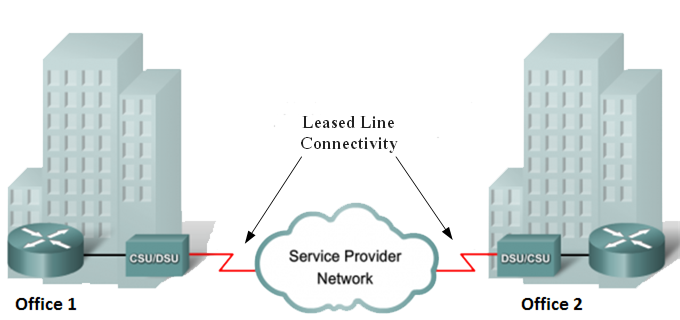
What is an Internet leased line?
Internet leased line, which may be referred to as a dedicated line interconnecting two or more locations for private data and voice communication, is believed to be one of the most beneficial options for businesses. Here in this post, I am going to give all the facts one needs to know about leased lines, which may help to decide for those looking to upgrade their connectivity.
Before I discuss other details about the leased line connection let’s first look into what is leased line.
What is Internet leased line and how it works?
A leased line is a dedicated bidirectional communication channel between two or more locations, given by the service provider according to a commercial contract. It is sometimes also called a private connection.
A dedicated internet leased line can offer internet speeds up to 10 Gbps (Gigabits per second) with the same download and upload speeds and are un-contended i.e. not shared with other users. Unlike standard internet connections whose bandwidth is shared amongst the users of the local area, a dedicated internet leased line can be accessed by you only to your predetermined bandwidth. Since a leased line connection does not allow third-party communications, you are assured of a given level of quality of service.
An internet leased line uses fiber optic technology which is most capable of reaching the best deliverable speeds and bandwidth. It works by transmitting pulses of light over a fiber optic cable and the data packet which is being transmitted travels at the speed of light.
Normally a leased line has a fixed monthly fee which primarily depends upon the distance between the end points and the speed of the circuit.
Dedicated Internet Access (DIA) and Its Connection to Leased Lines
You might have come across the term Dedicated Internet Access (often abbreviated as DIA) while considering internet options for your business. But what exactly does it mean, and how does it relate to a leased line?
In simple terms, Dedicated Internet Access is a service that provides your business with an exclusive, direct internet connection. Unlike standard broadband, which is shared amongst many users in your area (think rush hour traffic jams), DIA ensures your data takes the express lane—no competing with your neighbors for bandwidth.
This is where leased lines enter the picture. A leased line is the physical channel that delivers DIA to your premises. With technologies like fibre optic cables and Ethernet, a leased line forms a private bridge between your location and the wider internet. This bridge remains exclusively yours, guaranteeing that your allocated speed—whether that’s 100 Mbps or a blazing 10 Gbps—is available around the clock.
The benefits? Since the connection is not shared, network slowdowns during peak times become a thing of the past. Symmetrical speeds (equal upload and download rates) also mean smooth sailing for tasks like video calls, large file transfers, or running cloud-based applications.
Many businesses, especially those that rely on constant connectivity or have remote offices to link, opt for DIA delivered via leased lines for these reasons. It’s a level of reassurance and performance few standard internet connections can match.
How does a leased line support cloud computing and VoIP services?
A major advantage of using an internet leased line is its symmetrical bandwidth and reliable connectivity, which makes it especially well-suited for cloud computing and VoIP (Voice over Internet Protocol) services. Since leased lines provide identical upload and download speeds, businesses can easily run bandwidth-intensive applications — like real-time collaboration tools or cloud-based storage — without experiencing bottlenecks or inconsistent performance.
For organizations constantly accessing cloud platforms or moving large amounts of data to and from services such as AWS, Google Cloud, or Microsoft Azure, the dedicated nature of a leased line ensures traffic isn’t competing with that of neighboring users. This means teams can synchronize files, back up data, and work on remote desktops with minimum delay and maximum stability.
The same holds true for VoIP services. Whether you’re running business telephony systems or participating in high-definition video calls, clear and uninterrupted voice quality depends on low latency and stable, predictable bandwidth. A leased line significantly reduces issues like dropouts and echoes because it isn’t affected by the traffic peaks or congestion that can occur with standard broadband connections.
In short, if your business relies heavily on seamless access to cloud apps or voice communications, a leased line offers the consistency, speed, and peace of mind needed for critical everyday operations.
Can a leased line connection be upgraded if business needs change?
Absolutely. One of the main advantages of an internet leased line is its flexibility to scale with your business. If your organization grows or your data demands spike, you can easily increase your bandwidth—usually with minimal fuss and a quick call to your service provider. The process typically just involves a contract adjustment and a revised monthly fee based on your new requirements.
Most providers offer a range of speeds, with common bearer lines at 100 Mbps or 1 Gbps, so you can choose a tier that matches your needs both now and in the future. Many businesses appreciate that they don’t have to overhaul their entire network or lay new cables when it’s time to upgrade; you simply opt for higher capacity and your provider adjusts the line accordingly.
This scalability ensures that your leased line continues to deliver the consistent, dedicated performance your business relies on, even as your requirements evolve.
Understanding Bearer Speed vs. Line Speed in Leased Line Connections
One important aspect to consider when evaluating an internet leased line is how speed is presented—often you’ll come across terms like “bearer speed” and “line speed,” typically shown as something like 30/100 Mbps. But what do these numbers actually mean?
- Line speed refers to the specific bandwidth you have contracted with your provider. This is the maximum speed—both for uploads and downloads—that your connection is set to run at. For example, if you have a 30 Mbps line, that’s the maximum speed you’ll experience consistently.
- Bearer speed, on the other hand, represents the full capacity of the physical fiber link installed at your premises. Continuing our earlier example, if your connection is delivered over a 100 Mbps bearer, that means your hardware and cabling can technically handle up to 100 Mbps—but your actual service (the line speed) is set at 30 Mbps.
The advantage here is flexibility and future-proofing. Should you need to increase your bandwidth later (say, upgrade to 50 Mbps), this can often be done quickly without any new installation, since your bearer already supports higher speeds. Both bearer and line speeds are symmetrical, meaning you’ll get the same rate for uploading as for downloading, unlike typical broadband connections.
Understanding these distinctions will help you match your business’s current needs while allowing room for growth—without the headache of fresh cabling or major infrastructure changes.
What factors should be considered when choosing a leased line provider?
Selecting a leased line provider isn’t just about ticking the price box—it’s about ensuring your business gets the reliability, flexibility, and support it needs to thrive. Here are some key points to weigh when making your choice:
- Network Coverage and Infrastructure: Make sure the provider’s network reach matches your locations. For multi-site businesses or offices in less central areas, the provider’s existing infrastructure (fiber footprint, points of presence, core partnerships with established carriers) can influence both performance and installation timelines.
- Service Reliability and SLAs: Check for robust guarantees around uptime and repair targets. Providers like BT, Vodafone, and Colt often publicize their service level agreements (SLAs)—look for a minimum 99.9% uptime and clearly defined fix times in case of outage.
- Bandwidth Options and Scalability: Your needs today may not be your needs next year. Opt for providers who offer a range of bandwidth packages, easy upgrades, and clear explanations of bearer vs. Line speed so you’re not boxed in as your business grows.
- Customer Support: When things go sideways, responsive support becomes invaluable. Probe beyond marketing claims; ask about real 24/7 support, escalation procedures, and dedicated account management. Reviews and testimonials—especially from firms relying on leased lines for mission-critical operations—can be telling.
- Reputation and Trustworthiness: Evaluate the provider’s track record in the market, industry certifications (like ISO or MEF compliance), and reviews from similar organizations. Have they delivered for others whose demands mirror your own?
- Total Cost of Ownership: While price is always a factor, investigate any hidden fees—like installation, hardware, or early termination—and weigh them against service guarantees, flexibility, and bundled extras (DDoS protection, managed routers, etc).
Taking time to compare offerings, consult with peers, and clarify exactly what’s included in your contract ensures your business gets a leased line that isn’t just fast…but is also future-proof and dependable.
Options for Managing Your Leased Line Connection: Self-Managed vs. Fully Managed Services
When it comes to managing your leased line, businesses typically have two main paths: handling everything in-house or opting for a fully managed service from their provider.
- Self-Managed (Wires-Only) Leased Lines:
If your organization has capable IT staff and prefers complete control over the setup, configuration, and ongoing monitoring of your network, a self-managed—often called “wires-only”—lease line might be the best fit. This approach gives your team the flexibility to customize the network to suit business-specific requirements, adjust settings as needs evolve, and troubleshoot issues directly. Companies with robust in-house expertise often appreciate the granular level of control this model provides. - Managed Leased Line Services:
On the other hand, if your business prefers to focus on core activities, or doesn’t have the resources for proactive network management, a fully managed leased line service can offer significant peace of mind. With this arrangement, your provider takes on responsibilities like 24/7 monitoring, network optimization, and technical support. This ensures issues are identified and resolved swiftly—often before they impact performance. Many managed services also include SLAs (Service Level Agreements) guaranteeing uptime and rapid response.
Choosing between self-managed and managed options largely comes down to your organization’s internal capabilities and the level of support you want. Some providers even allow you to flex between models as your needs change, making it easier to adapt over time.
What are the different types of leased lines?
Types of Internet leased lines can be divided into three categories, Fiber, DSL, and MPLS.
Fiber Leased Lines
Fiber leased lines provide a completely un-contended or dedicated symmetric data connection by sending pulses of light over a fiber optic cable. This means that the connection which is coming directly from the service provider, is not shared with other users and comes with identical download and upload speeds. Almost all leased lines use fiber for the major part of the channel. Of all the types of leased lines, fiber leased lines provide the fastest possible speeds which go up to 10 Gbps.
Full Fibre (Ethernet Access Direct/Fibre Ethernet)
Full fibre, also known as Ethernet Access Direct or Fibre Ethernet, refers to an internet leased line that relies entirely on optical fibre to deliver a dedicated connection straight from your organisation to your Internet Service Provider (ISP). Think of it as having your own private lane on the information highway—no competing with neighbours for bandwidth, and no speed drops during peak hours.
Advantages of Full Fibre:
- Consistent High Speeds: Full fibre solutions support symmetrical bandwidth (equal upload and download speeds) up to 1 Gbps or higher, making them ideal for data-heavy applications, video conferencing, large file transfers, and cloud services.
- Reliability: With dedicated infrastructure, you’re far less likely to experience downtime or slowdowns due to external congestion. Full fibre connections are often praised for their robust Service Level Agreements (SLAs) and minimal latency.
- Future-Proof Infrastructure: Optical fibre is less prone to interference or signal degradation compared to copper, and it’s capable of supporting even greater speeds as needs grow.
- Security: Since the connection isn’t shared with others and data travels directly between endpoints, the risk of third-party eavesdropping or packet sniffing is significantly reduced.
- Business Continuity: Many providers offer rapid failover and redundancy features, meaning your connection is less likely to drop out unexpectedly—a must-have for mission-critical operations.
While full fibre is generally the most premium and costly leased line type available, it’s well worth considering if your business depends on fast, uninterrupted, and secure internet access.
DSL Leased Lines
Digital Subscriber Line (DSL) provides low-bandwidth leased lines. Unlike other leased lines which are non-contended i.e. not shared with others and have symmetrical upload and download speeds, DSL connections are contended and have unequal download and upload speeds. Moreover, as you go further from your provider, DSL speeds drop considerably which means everyone may not get the desired speed via a DSL leased line. However, a symmetric alternative to Asymmetric DSL (ADSL) called SDSL, is available, which offers higher upload speed than standard ADSL
MPLS Leased Lines
Multi-Protocol Label Switching or MPLS leased lines are becoming more and more popular right now as it is a lot faster compared to the traditional Internet Protocol (IP) routing from source to destination. It uses a technology that encapsulates the data, adds one or more labels to it, and transfers the data packets based on those labels. Such labeling of data ensures that the time-sensitive data is given priority for transmission over data that can put up with delays. MPLS essentially acts as a built-in map for data.
Ethernet over FTTC (EoFTTC): What Sets It Apart?
Among the different leased line options available, Ethernet over FTTC—often shortened to EoFTTC—has carved out a niche by combining the advantages of fibre and copper technologies. But what exactly is it, and how does it compare to other leased lines?
EoFTTC uses fiber optic cables to deliver high-speed connectivity from the exchange to your local street cabinet and then leverages traditional copper cables to connect the cabinet to your premises. This hybrid approach helps to keep costs down compared to full-fiber leased lines like Ethernet over Fibre but still offers many benefits valued by businesses.
Key characteristics of EoFTTC:
- Cost-effective: EoFTTC is generally less expensive than dedicated full-fiber leased lines, making it attractive for smaller businesses requiring high-speed, reliable internet without the premium price tag.
- Symmetric Speeds (generally): Upload and download speeds are often similar; however, in some cases, the actual download speeds might outpace upload speeds due to copper’s limitations.
- Performance variability by distance: The farther your business is from the street cabinet, the more likely you are to see speed fluctuations—a consideration if rock-solid performance is a must.
- Widespread availability: Since EoFTTC leverages existing infrastructure, it’s available in more locations than pure fibre leased lines, though not universally.
In summary, Ethernet over FTTC serves as a middle ground—offering much of the performance and symmetry of higher-end leased lines, but with greater affordability and potentially broader coverage. For many businesses, especially those not requiring ultra-high bandwidth or those watching their budgets, it can represent an optimal blend of technology and value.
What is Ethernet in the First Mile (EFM) and how does it work?
Ethernet in the First Mile, often abbreviated as EFM, is a type of leased line technology that provides business-class connectivity using multiple copper wires rather than fiber alone. Sometimes referred to as “Ethernet over Copper”, EFM essentially bridges the gap where fiber isn’t available, making it an excellent option for companies in locations without local fibre cabinets.
EFM works by bundling several pairs of standard copper telephone wires together to form a single, robust data connection. If one pair experiences issues, the system automatically reroutes traffic over the remaining pairs—bringing much-needed resilience and continuity. This aggregation method allows EFM connections to be far more reliable than traditional single-line DSL services.
Although the maximum speeds of EFM are generally lower compared to full-fiber leased lines, especially as distance from the exchange increases, it offers symmetrical upload and download speeds—a critical feature for modern business applications such as VoIP, cloud computing, and secure file transfers. EFM services typically come packaged with strict Service Level Agreements (SLAs), ensuring dedicated bandwidth, uptime guarantees, and business-grade support.
Ultimately, EFM is an attractive option for businesses requiring dedicated connectivity and high reliability but may be constrained by location or budget, offering a pragmatic alternative where fiber-based leased lines are out of reach.
Leased line vs Broadband
What is the difference between broadband and leased line is one of the questions often asked by people looking to upgrade their internet connections. The two major differences between an internet leased line connection and a broadband connection are,
1. A leased Line is a solely private channel, providing a dedicated connection between your premises and the service provider’s local exchange. With a leased line, there is no contention with other users which means you will not have speed fluctuations in the leased line.
Whereas broadband is a public shared connection meaning you have to share your bandwidth with users of the local area around you which can slow down your internet speeds considerably, particularly at peak times;
2. A leased line has fixed bandwidth and offers identical upload and download speeds.
This is in contrast to broadband which has variable bandwidth and asymmetrical download and upload speeds;
Internet leased line connection – advantages and disadvantages
Most businesses today rely on the Internet for their day-to-day operation. For efficient functioning, they, therefore, need a reliable and secure internet connection that will not fluctuate and give consistent reliable service. A leased line, which provides a dedicated channel with no contention from others, is believed to be one of the most beneficial options for businesses in most cases.
Businesses that particularly benefit from an internet leased line are those with high data transfer requirements. For instance, companies making extensive use of Software as a Service (SaaS) or cloud-based applications depend on steady and predictable bandwidth to maintain productivity and ensure seamless access to critical tools. Similarly, enterprises involved in frequent data transfers—such as financial services, e-commerce, and digital platforms—require a dedicated, streamlined connection to support complex application infrastructures without lag or interruption.
Additionally, organizations that rely on VoIP (Voice over Internet Protocol) services for calls find leased lines advantageous. The symmetrical upload and download speeds of a leased line help maintain high-quality, reliable voice connections, reducing dropped calls and improving overall communication.
Let’s look into the advantages and disadvantages of leased lines which may be helpful for those, considering upgrading their connectivity.
Advantages of Internet leased line
Here are the major advantages of a dedicated internet line.
1. Get un-contented bandwidth
Unlike standard internet connections whose bandwidth is shared amongst the users of the local area, a fiber leased line features a dedicated or un-contented bandwidth connection i.e. only you have access to your predetermined bandwidth and there is no scope of speed fluctuations particularly at peak times;
2. Provides a symmetric connection
Fiber leased lines provide a symmetric connection which means you get an internet connection that provides equal download and upload speeds. With a symmetrical connection, you can upload and download large amounts of data at the same time without any loss of speed;
3. Provides high internet speeds.
Of all the types of leased lines, fiber leased lines provide the highest speeds which enables businesses to transfer data more quickly and reliably. The internet speed of a more cost-effective fiber leased line starts from as little as 10 Mbps, going up to an extremely high speed of 10 Gbps;
4. High network availability
A fiber leased line is the perfect solution for a stable and resilient internet connection needed for business continuity. You are assured of a given level of quality with a leased line connection as it does not carry any third-party communications. Nearly 100% network availability is normally guaranteed by all reputable leased line providers. In effect, this means that you should rarely, if ever, experience any internet downtime.
Thanks to its dedicated optical fibre infrastructure, a leased line ensures seamless and uninterrupted connectivity, making it ideal for businesses that need continuous access to online services, cloud applications, or high-definition video streaming. The connection is set up exclusively for your organization, with no sharing of bandwidth with neighbouring users, so you enjoy consistent, symmetrical speeds for both uploads and downloads—often ranging from 1 Mbps all the way up to 10 Gbps with select providers.
Moreover, businesses leveraging leased lines benefit from robust security, as the dedicated connection sharply reduces the risk of data breaches or unwanted network intrusion. Because you don’t share bandwidth with other customers, you have more certainty over the availability and integrity of your internet access. For organizations with critical locations or sensitive data, it’s also possible to order diverse circuits—an extra layer of protection that helps safeguard against fibre breaks or disruptions in the “last mile” of connectivity.
The strong, stable signals and minimal disruptions make it easier for teams to collaborate across locations, access cloud resources, and transfer large volumes of data quickly and reliably.
In summary, the high network availability of a fiber leased line supports critical business operations by providing a highly secure, always-on, and high-speed internet connection that few other connectivity solutions can match.
5. Highest level of customer support
With a leased line you can expect a high level of customer support from any reliable leased line provider. Unlike many broadband services, fiber leased line connections always come with a service level agreement (SLA) which guarantees quick resolution of major connectivity issues. You are assured of round-the-clock instant customer service, in addition to, monitoring and resolving issues related to your network.
Comparing Leased Lines and Broadband at a Glance
To further clarify the distinction, here’s a quick side-by-side comparison of leased lines and broadband:
Leased Line Broadband Connection Type Uncontended point-to-point connection Contended line sharing bandwidth with multiple usersBandwidth Symmetrical, guaranteed (up to 10 Gbps) Asymmetrical, varies (up to 1 Gbps/220 Mbps) Reliability SLAs for maximum uptime and rapid fault fixes “Best endeavours” support, often copper-based Cost Installation and maintenance are pricier Cheaper, leverages existing fibre/copper networks Time to Deploy 30–90 days (new install) 7–14 days Disadvantages of Internet leased line
Disadvantages of Internet leased line
The main disadvantages of a fiber leased line are as follows:
1. High cost of connectivity
Because of its several advantages as mentioned above a fiber leased line connection, with its cost of installation combined with monthly rental fees, is considerably more expensive than other connection alternatives, such as ADSL or traditional broadband connection.
2. Longer installation time
Connecting your premises to the leased line provider’s network can be a lengthy process. Installation of a fiber leased line can take up to 12 weeks as it involves installation of a completely new line. Whereas ADSL or traditional broadband connection typically takes up to 3 weeks only for installation as it can utilize a pre-existing network available in the area.
Nevertheless, if there is already an existing Internet leased line in your area, the installation would typically take between 6-8 weeks.
3. Availability and Installation Complexity
While leased lines deliver unrivaled speed and dedicated bandwidth, setting one up can be a complex and time-consuming process. Installation often requires dedicated optical fibre cabling, which might not be readily available in all areas—particularly in rural or less-developed locations. Arranging for new infrastructure can lead to longer waiting periods compared to the near-instant activation of standard broadband connections.
4. Over-provisioning for Small Businesses
The high level of bandwidth and symmetrical speeds leased lines offer are sometimes more than what small or medium-sized enterprises need. This can result in paying for excess capacity, making it a less cost-effective solution for organizations whose requirements don’t demand such robust performance.
5. Potential Disruptions
Although leased lines are known for their seamless connectivity and minimal disruptions, they are not entirely immune to occasional service interruptions. Physical damage to fibre cables—caused by construction work or severe weather, for example—can still lead to outages, and repairs may take longer due to the dedicated nature of the service.
6. Specialized Support Costs
Maintaining the security and performance of a leased line often requires specialized IT support, which can further add to operational expenses. Businesses must account for these ongoing costs alongside the initial outlay.
While fiber leased lines are prized for their reliability, speed, and security, these drawbacks make it important for organizations to weigh their specific needs and resources before making the investment.
You may also like to read this post: My internet keeps disconnecting every few minutes
Conclusion
After going through the details given in the post about leased line connection it would be evident that investing in a fiber leased line is a beneficial option for businesses in most cases. A dedicated internet leased line is probably a perfect solution for your business if a stable and resilient internet connection backed by a Service Level Agreement (SLA) is critical for its productive and profitable business continuity.
Consider whether your organization depends on:
- Extensive use of software as a service (SaaS) platforms or frequent interaction with cloud-based applications (such as Salesforce, Microsoft 365, or AWS).
- Fast, large-scale data transfers—for example, if you’re in financial services, run an e-commerce platform, or manage complex application infrastructures that require consistent high-speed connectivity.
- Reliable VoIP services or cloud telephony, where symmetrical upload and download speeds are essential for clear, uninterrupted communication.
If any of these points apply, a leased line can provide the dedicated bandwidth and reliability that standard broadband simply can’t match.
However, if a stable and secure internet connection is not that critical for your business, then a standard DSL broadband connection may be the best alternative to a dedicated line at a much lower cost.

subhajit mahato
Jun 03. 2022
informative blog post, i have been using microtalk Internet leased line glad to say that Microtalk provides best service as far i have used.
Souvik Paul
Jun 03. 2022
nice blog, lots of information provide about internet leased line
subhajit
Jul 05. 2022
Informative blog post, i have been using Microtalk Internet Lease Line glad to say that Microtalk provides best service as far i have used.