How electricity is produced?
Where does Electricity come from?
When you flip a light switch or plug in your computer to a power source you can start using electricity. But you are so accustomed to it that you have hardly ever stopped to think – where does electricity come from and how it makes way from its generating point to your home.
In this post I am going to explain how electricity is produced and how do we get electricity in our homes to help you to understand – where does our electricity come from. But before that let me first explain – what is electricity.
Why bother about where our electricity comes from?
Let’s face it—flipping a switch and instantly filling a room with light feels like magic. But behind that everyday miracle is a fascinating story worth knowing. Understanding the journey of electricity is not just for engineers or hardcore tech geeks—it’s for anyone who’s ever cursed during a blackout or wondered what those looming smokestacks and spinning wind turbines actually do.
Here’s why it matters:
Awareness = Empowerment: When you know where your electricity comes from, you start appreciating the behind-the-scenes work that brings power to your home. It puts you a step ahead—no more feeling clueless during those dinner table debates about “going green” or “energy independence.”
Better Choices: Knowledge about electricity sources—whether it’s coal, natural gas, hydropower, solar, or wind—lets you make smarter decisions, be it for your own energy use, picking an energy provider, or supporting policies for cleaner power.
Saving Energy (and Money): Grasping the path electricity takes—from huge power stations to your plug socket—can inspire you to use it a bit more wisely. That usually leads to a lighter electricity bill and a slightly happier planet.
Being Prepared: When you know the basics of how electricity gets to your home, you’re less likely to panic when the power flickers or goes out. You’ve got the context to troubleshoot, report issues accurately, or just avoid tripping over furniture in the dark.
So, before we roll up our sleeves and get into the nuts and bolts of how electrons journey from power plants to your charging cable, let’s begin by answering—what exactly is electricity?
The Role of Electricity in Daily Life
It’s easy to take electricity for granted, but if you really pause to think about it, nearly every facet of our day depends on it. From the moment your alarm clock jolts you awake to the late-night glow of your bedside lamp, electricity is working quietly behind the scenes. It keeps your phone charged, fuels your morning coffee machine, powers subway trains, and keeps city lights twinkling after sunset.
At home, electricity brings warmth (or blissful air conditioning), helps you whip up meals more quickly than ever before, and provides endless entertainment—think of your television, laptop, or gaming console. In modern society, workplaces simply couldn’t function without reliable electric power. Hospitals perform lifesaving surgeries, factories churn out products, and offices hum with computers, all thanks to a steady current of electricity.
In short, electricity isn’t just a convenience—it’s the beating heart of our technology-driven world, weaving through nearly everything we do and use, making our modern way of life possible.
Why Is the Demand for Electricity on the Rise?
So, what’s behind our ever-growing appetite for electricity? It’s more than just an extra phone or tablet at home. As life gets busier and societies continue to develop, the beat of electricity underpins even more parts of our day.
First off, millions of people around the globe are still gaining access to reliable electricity for the very first time. Imagine how transformative that is—from lighting up a rural classroom to powering a refrigerator in a remote village. As access expands, so does demand.
But that’s just the beginning. There’s a big push to move away from fossil fuels—think coal and gas—to fight climate change and clear the air. This means we’re leaning harder on electricity for things that used to run on oil or gas: electric cars instead of gas guzzlers, electric heat pumps instead of oil furnaces, and even factories swapping out their old fuel sources for cleaner, electric-powered machines.
That switch isn’t just about going green. It’s about bringing cleaner air to our cities, reducing our carbon footprint, and ultimately making sure there’s an Earth left for future generations. The transition to things like solar, wind, hydro, and even nuclear means more of our everyday gadgets, cars, and industries are running on electrons instead of fumes.
So, with more people plugging in and more things running on clean electricity, the demand isn’t just going up—it’s powering ahead at full speed.
The Challenges of Powering a Global Society
Of course, meeting the world’s growing hunger for electricity isn’t all smooth sailing. If anything, supplying reliable electricity to everyone on the planet is a bit like juggling flaming bowling pins—there are a lot of moving parts, and dropping one can have serious consequences.
Let’s zoom out for a minute. Almost a billion people today still live without consistent access to electricity. That’s a huge barrier to everything from basic healthcare and education to economic opportunity. As more communities connect to the grid, demand naturally rises, but so does the pressure to make sure that power is clean, affordable, and always available.
Moving Away from Fossil Fuels
Historically, a lot of electricity came from coal, oil, and natural gas plants. The big problem? These fuels aren’t just dirty—they have unpredictable price swings and often have to be shipped vast distances, introducing supply headaches and geopolitical drama. When prices for these fuels spike, so do electricity bills. And then there’s the environmental bill: fossil fuel plants are notorious for pumping out carbon dioxide and other greenhouse gases, stoking climate change and contributing to air pollution.
Why Cutting Greenhouse Gas Emissions from Power Matters
Here’s the crux of it: if we keep generating electricity the same old way—by burning fossil fuels like coal, oil, and gas—we’re not just cranking out power, but also unleashing massive amounts of carbon dioxide and other climate-warming gases into the air. All that extra carbon has a way of trapping heat in our atmosphere, which leads to rising global temperatures, weird weather, and climate-related headaches nobody wants to deal with (flooded cities, charred forests, or droughts straight out of a post-apocalyptic movie, anyone?).
But it doesn’t stop at the planet’s thermostat. These emissions also clog up the air in our cities, making it tough to breathe, especially for those with asthma or other respiratory issues. So, making the switch to cleaner, low-carbon energy sources is about more than just hitting international climate goals. It’s about making our air fresher, our environment safer, and our future a whole lot brighter for everyone plugging in—now and decades from now.
Renewable Energy: Bright Spots and Bumpy Patches
Enter renewables like wind, solar, and small-scale hydroelectric power. They’re superstars for keeping greenhouse gas emissions low over their lifecycles. The catch is, Mother Nature isn’t always on our schedule. The wind doesn’t always blow, the sun doesn’t always shine (especially if your panels are under a layer of dust or a stubborn cloud bank), and so the power they generate can swing wildly from one moment to the next.
This unpredictability means we still need backup systems, usually gas power plants, poised to kick in when renewables can’t keep up. And while natural gas burns cleaner than coal, its extraction and transport can leak methane—a greenhouse gas far more potent than carbon dioxide.
Stirring in Biomass and Land Constraints
How about using plant matter, aka biomass, for fuel? It sounds green, but producing and moving all that plant material can sometimes consume as much—or more—energy than it generates. Plus, carbon emissions from burning biomass can take a century or more to be naturally absorbed, which isn’t exactly a quick fix.
Don’t forget land use, either. Wind farms and solar arrays need huge swaths of real estate—plenty of which competes with farmland, wildlife habitat, or just the places people want to live. Not everyone is thrilled to see hundreds of spinning turbines or acres of solar panels dotting the landscape.
The Storage Squeeze
If only we could tuck away sunny afternoons and blustery nights in a battery for later use! In reality, even our largest battery installations can’t store enough energy to handle days or weeks without wind or sun. That means reliable around-the-clock electricity still depends on having other power sources as backup, perpetuating our reliance on fossil fuels—at least for now.
Put it all together, and you get a tangled web of technical hurdles, economic constraints, environmental trade-offs, and social challenges. Ensuring that the lights stay on everywhere, for everyone, without cooking the planet, is one electrifying puzzle.
What is electricity?
To put it in basic terms, electricity is the flow of electrons through a conductor. A voltage “pushes” the electrons through the conductor to create electric current. Electrons are negatively charged sub-atomic particles. If one of these electrons is freed from an atom and forced to move, electricity is produced. The electrons in the outermost orbit of an atom require the least amount of force to be freed from the atom. When free electrons find new atoms on the way to latch onto, they throw out an electron from the new atom and the process begins all over again, producing an electric current. The electrons can move freely through copper metal, and hence copper is a great conductor of electricity.
Now let’s see where does our electricity come from and how does it reach our homes.
Where does electricity come from
If we are to know the basics of where does electricity come from we need to know first how electricity is produced and made to flow from one place to another and what are the fuel sources used by the power companies to produce this electricity.
How electricity is produced?
Electricity is a secondary energy source, meaning, it is generated from the conversion of primary sources of energy. Energy from these primary sources is eventually converted into electricity in power generating plants. These primary energy sources can be nonrenewable or renewable.
The nonrenewable energy sources are mainly fossil fuels (coal, crude oil and natural gas) and renewable sources are mainly solar, wind and hydro. At present in all countries including United States, the main source of electricity is fossil fuels, which is bad for the environment and also harmful to human health. Burning fossil fuels releases carbon dioxide, which adds to the greenhouse effect and increases global warming. Currently electricity production in the US is about 60% from fossil fuels.
The use of safer, more sustainable, and environment-friendly renewable sources for producing electricity, has not been that widespread as yet. However, because of severe impact of fossil fuels on our environment and health as mentioned above, the consumers in recent years have had an increasing interest in renewable energy sources like solar and wind that don’t harm the earth. It is, therefore, expected that we will see an increase in the use of renewable energy sources like wind and solar power in the coming days. In fact, at present about 20% of electricity produced in USA is already from renewable energy sources.
While renewable energy sources are generally cleaner, greener, and, in many cases, cheaper, there are still challenges to relying on them entirely. Sometimes, there simply isn’t enough renewable electricity being generated to meet the country’s needs—like when the sun isn’t shining or the wind isn’t blowing. That means, for now, we also need to depend on non-renewable sources, which tend to be more costly and damaging to the environment.
The transition towards renewables is picking up pace as technology improves and the demand for cleaner energy grows, but at present, our electricity supply still relies heavily on fossil fuels, with renewables filling in a growing, but not yet dominant, share.
How do wind and solar power generate electricity?
Wind and solar power work by harnessing natural forces to create electricity without adding much to greenhouse gas emissions. In the case of wind power, large turbines are set up in windy locations. When the wind blows, it pushes the blades of the turbine, which spin a shaft connected to a generator that produces electricity. Solar power works a little differently—solar panels, often seen on rooftops or in large solar farms, use sunlight to excite electrons in silicon cells, creating a flow of electrical current.
However, there’s one important catch: both wind and solar depend entirely on the weather. Solar panels only generate electricity when the sun is shining, and even then, factors like clouds, the time of day, or accumulated dust on the panels can affect their output. Similarly, wind turbines only work when the wind blows just right—too little or too much wind, and the turbines can’t produce power.
Currently, wind supplies about 4-5% of the world’s electricity, while solar provides roughly 1-2%. These percentages are small compared to fossil fuels, but as technology improves and costs continue to fall, renewables like wind and solar are poised to play a more prominent role in the global energy mix.
What challenges are associated with the production and use of biomass for electricity?
While biomass might sound like a promising alternative to fossil fuels—it’s natural, renewable, and can turn everything from wood chips to kitchen scraps into usable energy—it comes with its own set of hurdles.
First, the process of growing, harvesting, and transporting biomass materials takes a surprising amount of energy. Sometimes, the energy required to create biomass fuel can actually outweigh the amount of electricity produced, defeating the purpose of clean energy in the first place. In some cases, the emissions released during biomass production and transportation can rival, or even exceed, those of traditional fossil fuels.
Another challenge is the impact on the environment and local ecosystems. Transforming land for biomass crops (like planting acres of trees just for fuel or burning waste) can affect biodiversity, contribute to deforestation, and put pressure on water resources. There’s also the issue of timing: when biomass is burned, it releases carbon dioxide into the atmosphere, and it can take decades—or even longer—for newly planted trees to absorb all that carbon back.
Finally, just like with coal plants, burning biomass can contribute to local air pollution. Tiny particles and pollutants released can affect air quality and may pose health risks to nearby communities.
Despite its renewable nature, biomass isn’t a simple, one-size-fits-all green solution. Its adoption must be weighed carefully against its environmental footprint and long-term sustainability.
How electricity is generated from primary energy sources?
Now let’s see how electricity is produced from primary energy sources. The potential energy of the primary energy resources is converted into mechanical or thermal energy in the power plants. This thermal energy or heat source is used to boil water which produces steam. The steam, thus produced, is then forced under pressure through pipes to turn the blades inside a turbine. The turbine blades are attached to a shaft that spins when the blades begin to move. The spinning turbine causes large magnets to turn within copper wire coils inside a machine called generator. This movement of the magnets causes electrons in the copper wires to flow from one place to another, creating electrical current and producing electricity.
How electricity is generated from primary energy sources, can be explained in simple terms as follows:
- Electricity is produced in a coal-fired power plant, using the energy of steam;
- Electricity is produced at nuclear power plant, using the heat energy unlocked by splitting apart uranium atoms. This heat energy produces steam by heating water, that spins a turbine to generate electricity;
- Electricity is produced in a hydro power plant, using the kinetic energy of the running or falling water behind the dam that spins a turbine connected to a generator. The water in the dam is mainly collected from the rain;
- A wind farm produces electricity by spinning the blades of a turbine connected to a generator. The energy that turns the blades of the turbine comes from the kinetic energy of the Wind that blows;
- Solar panels (solar cells) when exposed to sunlight produces electricity directly from the energy of the Sun;
How much waste does nuclear power produce, and what happens to it?
One of the interesting facts about nuclear power is that it packs a huge punch when it comes to energy output versus waste produced. Since uranium is so energy-rich, a relatively tiny amount goes a long way. To put things in perspective: one kilogram of uranium can generate as much electricity as about a tonne of coal, but the waste left behind is surprisingly minimal.
For an average person’s electricity use over an entire year, a nuclear reactor produces roughly 500 grams of waste—about the size of a common soda can. Out of this, only a tiny fraction (just a few grams) is actually the used nuclear fuel that requires special handling. That’s less than the weight of a single sheet of paper!
Managing this waste responsibly is a priority in the nuclear industry. There are a couple of well-established strategies in use. Some facilities opt for direct, secure storage of the used fuel deep underground, while others recycle parts of the spent fuel to generate even more electricity. This recycling process not only makes better use of the available resources but also helps minimize the long-term volume of waste requiring isolation.
So, while nuclear energy does create waste, the quantities are remarkably small, and advanced systems are in place to handle it with care, keeping safety and the environment in mind.
How do coal, gas, and oil power plants generate electricity?
Let’s break down how traditional power plants—like those fueled by coal, oil, and natural gas—do their job. In these plants, the process starts by burning the fuel (coal, oil, or natural gas) to produce heat. This heat is then used to boil water, turning it into high-pressure steam. The steam rushes through pipes and strikes the blades of a turbine, causing it to spin—much like a pinwheel on a windy day.
As the turbine spins, it’s connected to a generator, where magnets and copper coils do their magic, converting the spinning motion into electrical energy. Some gas-powered plants use hot gases directly to spin the turbine, and in advanced versions called combined cycle plants, they use both hot gases and steam to squeeze out more electricity from the same amount of fuel.
Whether it’s coal, oil, or natural gas, the basic idea involves burning fuel to make steam (or hot gases), which then drives turbines and ultimately produces the electricity that powers our homes and businesses.
How is hydroelectric power generated, and how much does it contribute globally?
Hydroelectric power is created by harnessing the energy of moving water—most commonly from rivers or reservoirs held back by dams. In a typical hydroelectric plant, massive volumes of water are stored behind a dam, and when released, the force of the falling or flowing water spins turbines, which then drive generators to produce electricity. There are also run-of-the-river plants, which generate power from the natural flow of rivers without large reservoirs.
Although hydroelectricity is a reliable and low-carbon way to generate electricity, the number of new suitable locations for large dams is limited since most major river sites have already been developed. Despite this, hydropower currently supplies around 16% of the world’s total electricity, making it one of the most significant renewable energy sources in global production.
Biomass Power Generation: Turning Organic Matter into Electricity
Biomass plants work much like traditional fossil fuel power stations, but with one key difference—they burn organic materials such as wood pellets, agricultural waste, specially grown energy crops, or even household waste instead of coal or gas. In simple terms, the process involves burning these biomass fuels to heat water, producing steam. This steam spins a turbine, which then powers a generator to make electricity, following the same basic steps outlined earlier for other primary energy sources.
At present, biomass provides about 2-3% of the world’s electricity. Countries like the UK, Sweden, and the United States have adopted biomass technology, often as part of their efforts to reduce reliance on coal. For example, some power stations have switched to partially or fully using imported wood pellets or local organic waste instead of fossil fuels.
However, while using biomass can help reuse waste and lower certain emissions, it’s important to note the process is not without challenges:
- Growing, harvesting, and transporting biomass can require significant energy—sometimes approaching the energy produced.
- Burning biomass releases carbon dioxide. It can take many years for new plants or trees to absorb this carbon, which means biomass is not always as “carbon neutral” as it might seem in the short term.
- There are additional environmental concerns, such as impacts on land use, biodiversity, and air quality.
So, while biomass is a small but growing source of cleaner energy, it requires careful management to make sure it offers true benefits over conventional fossil fuels.
Reliability and Affordability of Nuclear Energy
Nuclear power plants are well known for their reliability. Unlike solar or wind—which depend on the weather and time of day—nuclear plants can operate continuously, day and night, through every season. Most facilities are designed to run for long stretches—often months—without any need for interruption. On top of that, many nuclear plants in the U.S. Can keep generating electricity for 60 years or more with proper maintenance and upgrades, making them a steady source of power.
When it comes to affordability, nuclear energy is often one of the most cost-effective options over the lifetime of a plant, thanks to its long operational lifespan and stable output. While building a nuclear plant can be expensive upfront compared to some renewables, the steady flow of large-scale electricity—without fluctuating fuel costs—means the cost per unit of energy (kWh) tends to be competitive, especially when spread out over decades.
This combination of dependable, around-the-clock output and long-term cost stability is why nuclear remains a key part of the energy mix in many countries, even as we push for more renewables.
Environmental Benefits and Drawbacks of Nuclear Power
Nuclear power stands out as one of the cleaner sources of electricity when compared to fossil fuels. Unlike coal or natural gas plants, nuclear reactors do not release greenhouse gases during their electricity generation process. This means nuclear power helps reduce the overall carbon footprint, making it an environmentally-friendly choice for producing large amounts of electricity without contributing to air pollution or global warming. Countries like France have successfully relied on nuclear energy to meet a significant portion of their electricity needs while keeping emissions low.
Another notable advantage is the sheer efficiency of nuclear fuel. A small amount of uranium contains a tremendous amount of energy—just one kilogram of uranium can yield as much energy as about a ton of coal. As a result, nuclear plants generate a relatively small volume of waste compared to the vast amounts of waste produced by burning fossil fuels. For perspective, the waste produced to meet one person’s annual electricity needs from nuclear power would easily fit within a soda can. Only a tiny portion of that is highly radioactive used fuel.
However, the environmental story of nuclear energy isn’t entirely worry-free. While it doesn’t contribute to air pollution, nuclear power does produce radioactive waste, which is hazardous and requires careful, long-term management. The storage and disposal of this waste remain a complex issue, as it needs to be securely contained for many years to prevent any risk to people and the environment. Furthermore, despite strong safety protocols, accidents at nuclear power plants—though rare—can have severe and lasting effects on both ecosystems and nearby communities, as seen in historical incidents.
Despite these drawbacks, nuclear power plants are extremely reliable, operating continuously for months at a time, day or night, unaffected by weather or seasonal changes. This consistent output adds stability to the electricity grid, backing up more intermittent renewable sources such as solar and wind.
In summary, nuclear power offers substantial environmental advantages in terms of low emissions and efficient energy production, but it also brings challenges related to waste management and the potential risks associated with accidents or leaks.
What are the safety risks associated with hydroelectric power?
While hydroelectric power is often praised for being cleaner and producing no direct greenhouse gas emissions, it does have its own set of safety risks that are important to consider.
Dams and Reservoirs:
Large hydroelectric plants typically rely on massive dams that hold back huge amounts of water. If a dam were to fail—whether due to natural disaster, engineering error, or simply old age—the resulting flood can be catastrophic for communities and the environment downstream. For example, history has sadly shown us that dam collapses can lead to significant loss of life and major destruction of homes, farms, and ecosystems.
Environmental Impact:
Building reservoirs for these dams doesn’t just flood forests or valleys—it also displaces entire communities and alters local wildlife habitats. The sheer scale of moving water, soil, and people to make way for a project can sometimes outweigh the environmental benefits of clean energy production.
Accident Statistics:
While hydroelectric power avoids the immediate dangers of radioactive materials or explosions, major accidents involving dam failures have been historically deadly. In fact, among the different types of energy production, serious hydroelectric accidents have resulted in some of the highest recorded fatalities. Examples include tragic dam bursts in several countries, where tens of thousands lost their lives.
Long-term Impact:
It’s also worth noting that changes made to river flow and water temperature downstream from a dam can have lingering effects on fish populations and farming communities. Even without any kind of accident, these shifts put additional stress on people and local wildlife who depend on the river’s natural cycle.
So, even though hydropower is a cleaner alternative, it’s essential to weigh these safety and environmental risks along with the benefits, especially when considering the future development of large dam projects.
While hydroelectric power plants are often celebrated for generating clean and renewable electricity, it’s important to look at the bigger picture—especially when it comes to very large dams.
Building a massive hydroelectric dam usually means creating a giant reservoir by flooding a wide area of land behind the dam. This can lead to several environmental issues:
- Impact on Ecosystems: Flooding large areas disrupts natural habitats, affecting plants, animals, and entire ecosystems that once thrived there.
- Changes to Rivers: The natural flow of rivers is altered, which can affect fish populations, water quality, and the health of the river downstream.
- Climate Concerns: Although hydropower reduces carbon emissions, reservoirs sometimes release methane—a potent greenhouse gas—as organic material decomposes underwater.
On the social side, these projects can have a huge effect on local communities:
- Relocation of People: Building large dams often forces thousands—or even millions—of people to leave their homes. For example, China’s massive Three Gorges Dam displaced over a million people as the reservoir area expanded.
- Loss of Farmland and Cultural Sites: Productive lands and historically significant locations may end up underwater.
Safety is also a major consideration. While rare, dam failures can have devastating consequences. The collapse of the Banqiao Dam in China’s Henan Province, for instance, resulted in a tragic loss of life and widespread destruction.
So, while hydropower is widely used—supplying about 16% of the world’s electricity as of 2017—it’s not without its trade-offs. Balancing the benefits of clean energy with the environmental and human costs remains a complex challenge.
Environmental and Health Impacts of Biomass Power Generation
While biomass power plants generate electricity using organic materials—such as wood chips, agricultural waste, or even household waste—their environmental impact is not always as green as it might seem at first glance.
- High Energy Input and Emissions: Producing and transporting biomass fuel often requires a significant amount of energy. In some cases, the total energy consumed can rival or even exceed the energy produced by burning the biomass itself. As a result, the greenhouse gas emissions from biomass can sometimes match or even surpass those from burning fossil fuels, especially if the entire lifecycle is considered. Moreover, when trees or other plants are used as fuel, the carbon dioxide released during combustion may take decades—or even longer—to be reabsorbed by new growth, potentially causing a temporary increase in atmospheric CO₂ levels.
- Land Use and Ecological Impact: Large-scale biomass production can have a considerable impact on land use. Growing crops or sourcing wood specifically for energy may compete with food production, disrupt natural habitats, or lead to deforestation if not managed sustainably. This can have cascading effects on biodiversity and soil health, further complicating biomass’s green credentials.
- Air Pollution and Health Risks: When biomass is burned for electricity, it can release pollutants such as particulate matter and other harmful compounds into the air, much like traditional coal plants. Communities living near biomass plants may experience increased air quality concerns, which can lead to respiratory and other health issues.
In summary, while biomass offers a potential renewable alternative to traditional fossil fuels, it comes with a complex set of environmental and health trade-offs that must be considered carefully—especially as we look to cleaner, healthier solutions for our future energy needs.
How does electricity get to our homes?
Now that we know where does electricity come from, let’s see next, how this electricity makes it’s way from power plant to our homes?
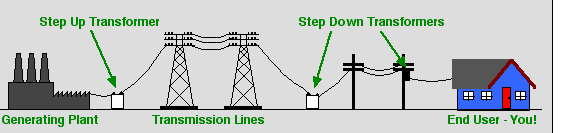
The entire process of taking power to our homes can be broken into three simple stages – generation, transmission, and distribution.
Once the electricity is generated as explained above, it flows through conductors/cables to reach the step-up transformers in the nearby switchyard where the voltage of the electric power is stepped up so that the electricity can travel long distances through transmission lines/grid without much power loss.
If you’ve ever driven or walked through the countryside, you’ve probably noticed those tall metal structures marching across fields and hills. These are called pylons, and they play a crucial role in the journey of electricity from the power station to your home.
A pylon, also known as a transmission tower, is a large steel framework designed to support overhead power lines. Its main job is to carry high-voltage electricity safely across long distances, often traversing vast stretches of land—fields, valleys, and even rivers. By elevating the power lines well above the ground, pylons help keep the lines away from people, buildings, and trees, which reduces the risk of accidental contact and ensures reliable delivery of electricity.
You’ll often see these steel giants linked together in long chains, forming the backbone of the electricity transmission network. Their design makes them stable in all kinds of weather, from gale-force winds in Texas to winter snowstorms in Vermont. Without pylons, it would be practically impossible to transport large amounts of electricity efficiently over the hundreds of miles between generation sites and the neighborhoods where we use it.
But the electricity doesn’t get to your house directly from the transmission grid. It first moves down to the distribution lines which carry the power at a lower voltage than the transmission lines. This lowering of voltage is done at a distribution substation through step-down transformers in order to begin the process of sending power to your home.
Think of the transmission network as a system of giant highways moving electricity swiftly across long distances. But just as highways don’t run through every neighborhood, the electricity needs to exit onto “local roads”—these are the distribution networks. Distribution networks connect the main transmission “motorways” to homes, schools, and businesses, making sure power actually reaches where it’s needed.
The distribution lines that carry the electricity, on reaching your neighborhood, pass through another local transformer, usually mounted on poles, that reduces the voltage further to finally make the power safe for use for your home.
So, thanks to this careful step-by-step process—first stepping down the voltage at a distribution substation, then again at transformers closer to your street—electricity arrives at just the right strength to safely power your lights, refrigerator, and phone charger.
With these steps, electricity is delivered efficiently and safely from distant power plants right to your light switches and appliances at home.
How Do Students Explain the Journey of Electricity?
If you were to ask a group of curious fourth and fifth graders to walk you through how electricity gets from the power plant all the way to your bedside lamp, you’d probably get a lively step-by-step tour. Picture a coastal classroom in San Diego, California—students mapping out the path with the kind of energy and excitement only kids can muster.
The students might add that nuclear power plants are among the most reliable out there—able to operate for sixty years or more, humming along regardless of whether it’s a blazing summer in Arizona or a stormy night in Maine.
They might start with the source—the power plant—describing how fuel or sunlight is used to create electricity. Some students would mention the big turbines spinning to get things going, while others explain how water, wind, or even the heat from splitting atoms can get the job done. They’d describe how power plants use different sources—like burning fuel, capturing sunlight, or harnessing the force of falling water—to spin those turbines.
And when it comes to nuclear power, a few students might excitedly point out that splitting atoms (a process called nuclear fission) produces a lot of heat, which creates steam to turn the turbines—no greenhouse gases in sight during the process, making it a cleaner source of electricity. In fact, they might share that nuclear energy supplies a significant chunk of our electricity worldwide, all without contributing to air pollution.
Nuclear Power: More Than Meets the Eye
If you pressed these budding scientists for more details, you might hear fascinating facts: nuclear reactors can run for months on end, reliably churning out electricity no matter the weather or time of day. They’d tell you that nuclear plants rely on uranium, a fuel so energy-dense that just one kilogram can produce as much electricity as a whole tonne of coal. Because of this, nuclear plants generate only a tiny amount of waste—enough to fit in a soda can to power a single person for an entire year, with just a sliver of that being the used nuclear fuel itself (about as much as a sheet of paper). And thanks to clever recycling and storage methods, even that small amount is carefully managed.
All in all, whether it’s the familiar hum of a natural gas plant or the quiet efficiency of a nuclear reactor, students would agree: the journey of electricity begins with a remarkable mix of science, engineering, and just a bit of everyday magic.
From there, you’d likely hear about those towering transmission lines (the same ones striding across valleys and highways) carrying high-voltage electricity far and wide. The students would note how these lines are held up by strong steel pylons so the power stays safe and away from trees and buildings. Then, as the electricity gets closer to homes, they’d explain how it transitions from these ‘super highways’ to local neighborhood lines—kind of like turning off the interstate and merging onto smaller roads.
Finally, a few students would chime in about the transformers—the devices that bring the voltage down to a safe level before the electricity enters our homes. With lots of hand gestures and perhaps some doodles, they’d highlight how, after this long journey, the electricity is finally ready for use, powering up everything from the refrigerator to the family computer.
How is electricity demand and supply managed to ensure reliability?
You might wonder, with so many homes and businesses using electricity day and night, how do we make sure there’s always enough power when you flip the switch? The answer lies in a careful balancing act managed every second of every day.
Electricity supply and demand must always be matched; if more power is needed, generators must produce more, and if less is required, production is dialed back. This is where electricity system operators come in. Using advanced monitoring technology, they continuously track how much electricity is being used and how much is being generated all across the grid.
Keeping the Lights On: How the Grid Stays Balanced Every moment of every day, people are switching on lights, plugging in phones, or powering up everything from factories to coffee makers. Because we’re all using electricity in different ways—and at different times—it’s the job of system operators to make sure there’s always enough electricity available, right when you need it. Think of them as the conductors of a vast, invisible orchestra, ensuring that supply and demand are always in harmony.
If extra energy is needed (during a hot summer afternoon when everyone cranks up their air conditioners, for example), operators can bring additional power plants online or tap into stored energy from sources like hydroelectric reservoirs or large battery systems developed by companies such as Tesla. Conversely, if demand drops, some generators are temporarily turned down or taken offline to prevent waste.
This real-time adjustment ensures you have a reliable flow of electricity—whether it’s for your evening cup of tea or that late-night movie marathon—no matter where you live or what time it is.
What does “balancing the grid” mean and why is it important?
When we talk about “balancing the grid,” we’re really talking about making sure that the exact amount of electricity being generated matches the amount we’re all using at any given moment. Imagine it like a giant tug-of-war, where power plants and renewable energy sources are constantly adjusting their output to match what people are using in their homes, workplaces, and everywhere in between.
If too much or too little electricity is supplied compared to what’s being used, the whole system could become unstable—and nobody wants the lights to suddenly go out! That’s why specialized operators, using advanced technology and real-time data, carefully monitor and tweak the flow of electricity every second of the day. This balancing act ensures that whenever you flip a switch, charge your phone, or turn on your favorite appliance, the electricity you need is there—safely and reliably.
How do investments in the electricity network help support a low carbon future?
A portion of your electricity bill goes toward maintaining and upgrading the complex web of wires, substations, and transformers that keep the lights on. But, more importantly, these investments are crucial for our transition to a cleaner, low carbon future.
By funding improvements and innovation in the electricity network, we make it possible for more renewable energy sources—like wind farms in Texas or solar parks in Arizona—to connect to the grid and deliver power reliably. Modernizing the network also means new technologies can be integrated more easily, such as battery storage and smart meters, which help balance supply and demand during changes in weather or usage.
Investing in the grid ensures it can handle the unique challenges posed by renewables. Unlike a traditional coal plant, solar and wind energy can fluctuate, so the network must be more flexible and resilient. These upgrades help reduce power interruptions and allow for faster recovery if outages do occur, all while supporting our collective move away from fossil fuels toward greener energy sources.
How does electrification help decarbonize transport, heat, and industry?
Electrification is a game-changer in the drive to cut carbon emissions across the board—not just in power generation, but in sectors like transport, heating, and heavy industry that have traditionally relied on fossil fuels. By shifting cars, buses, and even freight vehicles over to electric power, we can take advantage of cleaner energy sources, whether that’s wind rolling across the plains or solar panels soaking up the desert sun.
When buildings and factories switch from burning gas or oil to using electric heating systems—think heat pumps rather than boilers—they also tap into the growing supply of low-carbon electricity. Even in industry, more processes are switching over to electric alternatives, reducing the need for coal, oil, or gas.
But it’s not all smooth sailing: because electricity can’t be easily stored on a large scale, renewables like wind and solar need backup when the sun isn’t shining or the wind isn’t blowing. While battery storage is advancing, even the biggest batteries today can’t cover days—let alone weeks—of low renewable generation. That’s where backup sources like gas plants still come in, helping ensure a steady flow of electricity. However, burning natural gas isn’t without consequences: it releases significant amounts of carbon dioxide, and methane can leak during extraction and transport—both potent greenhouse gases that contribute to climate change.
The more we electrify, and the greener our electricity becomes, the more progress we make in shrinking our carbon footprint—not just when we turn on the lights, but in how we move, keep warm, and produce everyday goods. This interconnected approach is at the heart of building a truly sustainable, low-carbon future for everyone.
Where does your money go?
To put it into perspective, about £20 of the average annual household bill goes toward operating and maintaining the electricity transmission network itself. Meanwhile, around £100 each year is directed to your local distributor. This not only helps reduce the likelihood and length of power cuts, but also ensures there’s support for customers during outages. On top of that, these funds fuel continued investment and innovation—helping the electricity network adapt and prepare for a low carbon energy future.
So, while the wires and poles might not be something you think about every day, the investments behind them are working hard to keep your power reliable, resilient, and cleaner for years to come.
What is the role of energy suppliers in providing electricity to consumers?
After electricity travels through the intricate maze of generation, transmission, and distribution, there’s one more essential player before it reaches your light switches—energy suppliers. These companies act as the middlemen between you and the electricity network.
Here’s what energy suppliers do:
- Purchase Power: They buy electricity in bulk from power generators (like those wind farms, solar parks, or even big coal and nuclear plants we discussed earlier).
- Set Tariffs: Energy suppliers determine how much you pay for your electricity usage, often offering different plans or rates based on your preferences or needs.
- Billing and Customer Service: They’re the ones who send you your monthly bill, manage your account, and handle your queries or service requests.
Unlike the folks running the power plants or managing the power lines, energy suppliers focus on customer service and pricing. You’re free to shop around and switch to a different supplier if you find a better deal, much like choosing between different internet or cell phone companies. This competition is intended to encourage competitive pricing and better service for everyone.
With the role of energy suppliers explained, let’s look at some commonly asked questions about where our electricity comes from and which forms of energy are most efficient.
How do energy suppliers purchase and sell electricity?
Once electricity is generated and ready to be distributed, energy suppliers play a crucial role in delivering it to our homes. But how exactly does that work?
Energy suppliers act as intermediaries between the power plants (where electricity is generated) and the end users (that’s us). Here’s what happens:
- Buying Electricity: Suppliers purchase large volumes of electricity from electricity generators—companies running power plants or wind and solar farms. This is usually done on a wholesale electricity market, where prices can fluctuate throughout the day based on supply and demand.
- Setting Tariffs: After purchasing electricity in bulk, suppliers set the rates, known as tariffs, that customers pay for the power they use at home.
- Selling to Homes and Businesses: We, as consumers, buy electricity from suppliers—not directly from the power plants. Suppliers handle the logistics, billing, and customer service.
- Choice and Competition: In many places—including much of the USA and countries like the UK—you’re free to choose your energy supplier. Companies such as Constellation, Direct Energy, Octopus Energy, and EDF Energy offer different plans and pricing, allowing you to shop around for the best deal or the greenest energy source.
In short, energy suppliers ensure electricity moves from the wholesale markets right into the everyday lives of households and businesses. They manage the practical side of sourcing the power, delivering it reliably, and taking care of billing and service for their customers.
How much electricity goes straight to the distribution network?
Not all electricity generated heads out first on the high-voltage transmission lines. In fact, about 29% of the electricity produced is connected directly to the local distribution network, bypassing the main transmission grid altogether. This is often referred to as embedded generation, and includes sources like some wind farms, rooftop solar power systems, and smaller hydro plants. These generators supply power right into the neighborhood grids, supporting local demand and reducing the load on larger transmission networks.
Is it safe to live near a substation?
A common concern that often comes up is whether it’s safe to live near an electrical substation. Substations are crucial parts of our power distribution system—they step down high-voltage electricity to lower voltages suitable for homes and businesses. But because they’re part of our local neighborhoods, questions about health and safety are understandable.
Let’s clear up a few things:
- Electromagnetic fields (EMF): Substations, like most electrical equipment, emit low levels of electromagnetic fields. However, according to organizations such as the World Health Organization and the U.S. Environmental Protection Agency, there is currently no conclusive evidence that living near substations causes adverse health effects. The levels of EMF found at residential distances are typically well below international safety guidelines.
- Noise and aesthetics: Some people notice a low humming sound from substations, but modern facilities are generally designed to keep noise and visual impact to a minimum. Local authorities and utility companies follow regulations regarding placement and safety measures.
- Physical safety: Substations are fenced, locked, and clearly marked with warning signs to prevent unauthorized access, ensuring the safety of people living nearby. It’s important to always respect these barriers and never try to enter a substation area.
In short, living near a substation is generally considered safe as long as you avoid direct contact with the equipment and follow posted warnings. Safety standards and regulations are designed to keep risks to a minimum for surrounding communities.
What is embedded generation in electricity distribution?
Another question that often comes up is about “embedded generation”—what exactly does this term mean? Simply put, embedded generation refers to electricity produced by smaller power sources, such as solar farms, wind turbines, or local hydro plants, that are connected directly to the distribution network instead of the main transmission grid.
In fact, nearly 29% of our electricity is generated this way. These types of power sources are located closer to the homes and businesses they serve, allowing electricity to reach end users more efficiently. Embedded generation helps support the grid, lowers transmission losses, and encourages the use of renewable energy in local communities.
Who manages the poles, cables, and substations in your area?
When it comes to the network of poles, cables, and substations that bring electricity into our neighborhoods, these are overseen by local distribution companies. Each region has its own company responsible for maintaining and operating this “last mile” delivery system. These companies, known as distribution network operators, ensure that electricity—after stepping down in voltage—is safely delivered right up to our doorsteps. If you’re curious about who manages the electricity infrastructure in your area, a quick search with your postcode will reveal the name of the responsible company. They’re the ones you’ll contact about outages or any local power maintenance concerns.
How is support provided to customers during power cuts?
When a power cut happens, your local distribution company plays a central role in getting things back to normal as quickly and safely as possible. Part of your electricity bill goes toward funding these efforts. This support takes many forms:
- Prompt response teams: Trained engineers are dispatched to identify faults and restore power, working around the clock to minimize outages.
- Customer updates: Many companies offer real-time updates via text alerts, apps, or their websites, keeping you informed about the cause of the outage and the estimated time for restoration.
- Support for vulnerable customers: Special provisions are often in place for those who need extra help during outages, such as the elderly, people with medical needs, or families with young children. For example, utility companies might offer priority repair services or provide temporary solutions like portable generators.
- Community assistance: In widespread events—like severe weather—companies often set up local support centers or work with organizations such as the Red Cross to provide warmth, phone charging, and other essentials.
Ultimately, the goal is not just to restore power quickly, but also to provide clear information and practical help to households until everything is back up and running.
Frequently asked questions
Now that I have explained the basics of how electricity is generated and how do we get electricity in our homes let me also address to some of the related questions often asked by the people.
How do students learn about energy in real-life scenarios?
One engaging way to see how kids learn about energy is to visit a local classroom—or better yet, to see what happens when students discuss these topics in person. For example, in some San Diego elementary schools, teachers ask their 4th and 5th grade students to trace the journey of electricity from distant power plants all the way to the outlets in their own homes. The class might brainstorm how electricity could travel from a hydroelectric dam, across miles of overhead lines, into neighborhood substations, and finally into their classrooms where it powers lights and computers.
Practical activities make things click for young learners. Teachers often use hands-on demonstrations, like building simple circuits with batteries, wires, and light bulbs or simulating power grid challenges using classroom models. Some schools coordinate special science days where students role-play as energy detectives, tracing the source of the power that runs their classroom gadgets. They might also take field trips to local substations or renewable energy installations, giving them a chance to ask experts firsthand about how the system works.
Hearing students talk about what they’ve seen and learned—such as identifying solar panels on nearby rooftops or mapping out the journey electricity takes to reach their home—shows just how much these real-world examples spark curiosity and understanding. By connecting textbook concepts to their everyday lives, students build a deeper, lasting grasp of how energy powers their world.
Where does most of our electricity come from?
According to the U.S. Energy Information Administration as of 2019, most of the nation’s electricity was produced from natural gas and coal. Electricity is also produced from renewable sources like biomass, wind, geothermal, and solar power.
What is the best form of energy?
The most efficient forms of energy are hydro-thermal, tidal, wind and solar, which are renewable sources. Solar energy has been found to be the most efficient and effective among these renewable sources for home and commercial use.
How can classroom activities help students understand the journey of electricity?
One of the most effective ways for students to truly grasp how electricity travels from power stations all the way to their homes is through interactive classroom activities and open discussions. By guiding students step-by-step—using maps, diagrams, or even simple models—they can see how power is generated, transported via transmission lines, transformed at substations, and finally delivered through the distribution network.
To help students visualize this journey, teachers often compare the electricity network to a system of roads. The transmission network acts like a country’s motorways, carrying electricity at high voltages over long distances from where it’s generated—such as power plants or renewable sites—to large transmission substations. Here, the electricity is prepared before it travels onward.
Once it reaches a regional area, the distribution network takes over. This part is like the network of local roads that branch off from the motorways, delivering electricity directly into neighborhoods and homes. Distribution substations play a key role here by lowering the voltage to a level that’s safe for everyday use, making sure that the electricity powering your lights and computers is just right.
Breaking down these steps with classroom activities not only helps clarify how electricity gets from its source all the way to their homes, but also shows how different parts of the system—generation, transmission, and distribution—work together to keep the lights on.
For example, teachers might ask students to draw the path electricity takes or build a basic circuit with batteries and wires. These hands-on experiences can make an otherwise invisible process feel much more tangible. Group discussions can also help connect classroom concepts to real-world infrastructure in their own neighborhoods, making the lesson both relevant and memorable.
Encouraging students to share what they know (or think they know!) about how electricity reaches their homes gives teachers a great opportunity to clear up common misconceptions and build from what students already understand. Tying lessons to local examples—like pointing out nearby substations or asking students to find the power lines on their way home—can make the journey of electricity much more “real” for everyone in the room.
How can educators help students understand where electricity comes from?
The best way for educators to help students grasp where electricity really comes from is by breaking down the journey electricity takes—from the power plant all the way to our living rooms—using real-world examples. Bringing in diagrams, hands-on models (think: DIY circuits or small-scale wind turbines), and interactive tours of local substations or power generation sites can make the process come alive.
It helps to connect each stage to something familiar: show how power lines in their neighborhood link to larger grid systems, or use home appliances to demonstrate how electricity flows into daily life. The key is to keep the process as visual, practical, and relatable as possible, so students can trace the entire path electricity takes—making the invisible a bit more real.
How can teachers make the power grid easier to understand for students?
Bringing the electricity story to life in the classroom doesn’t require a degree in electrical engineering—just a little creativity. Here are a few simple ways teachers can help students grasp the journey of electricity from the power plants all the way to their bedside lamp:
Use everyday examples: Ask students to think about what happens when they switch on a light or charge their phone. Trace the electricity’s journey backward—from their home outlets, through neighborhood substations, all the way to a local power station or solar farm.
Draw diagrams together: Visual aids go a long way. Try drawing the path of electricity on the board, starting at generation (think big power plants, wind turbines, or solar panels) and following the lines through transmission towers, substations, and finally into local homes.
Localize the lesson: If possible, research which company manages your region’s power infrastructure, or even visit a nearby substation or community solar project if there’s an opportunity for a field trip.
Discuss renewables: Highlight how embedded generation—like rooftop solar or community wind turbines—is changing the grid and making electricity production more local and sustainable.
With these practical steps, students get a clearer picture of how electricity arrives at their doorstep and why it matters where and how it’s generated. This hands-on, relatable approach helps demystify the process and shows why every flip of the switch connects us to a much larger system.
You may also like to read this post: How does a wind turbine generate electricity
Conclusion
On going through the basics of how electricity is produced and what are the fuel sources used by the power companies for producing electricity, as explained in the post, it should be clear now where does electricity come from and how do we get electricity in our homes.
Currently the main source of energy for producing electricity comes from fossil fuels such as coal, oil and natural gas that pollute our environment with toxins and contribute significantly to the global warming problem. However, fossil fuels are not going to last forever. Fortunately, new technologies that use cleaner energy agents are being developed to reduce our dependence on this polluting energy source in the production of electricity. Most analysts believe that as time passes, safer, more sustainable, and environment-friendly renewable sources of energy, particularly wind and solar, will replace fossil fuels, reducing carbon emissions.
A Closer Look at Fossil Fuels
For over a century, fossil fuels have dominated the world’s electricity generation. Coal and oil plants burn their fuel to create heat, which produces steam to spin massive turbines that make electricity. Natural gas plants operate similarly, using hot gases to drive turbines, and some modern stations, called combined cycle gas turbines (CCGT), cleverly use both gas and steam together to squeeze out even more electricity from the same fuel.
While hydroelectric dams and, since the 1950s, nuclear energy have played their roles, fossil fuels—coal, oil, and natural gas—have remained firmly in the driver’s seat. Despite the strong growth of renewables over the last few decades, fossil-based fuels remain the heavyweight champions of global electricity production. In fact, their grip has barely loosened: in 2017, fossil fuels generated about 64.5% of worldwide electricity, up from 61.9% in 1990. So, even as we cheer on wind farms and solar panels, the reality is that coal, oil, and natural gas are still doing much of the heavy lifting.
These traditional sources have powered homes, factories, and cities around the globe, shaping the way we live and work. Their continued dominance highlights both the scale of the world’s energy needs and the challenge of moving toward cleaner, more sustainable sources.
Despite the strong growth of renewables over the last few decades, fossil-based fuels remain the heavyweight champions of global electricity production. In fact, their grip has barely loosened: in 2017, fossil fuels generated about 64.5% of worldwide electricity, up from 61.9% in 1990. So, even as we cheer on wind farms and solar panels, the reality is that coal, oil, and natural gas are still doing much of the heavy lifting.
These plants have traditionally been popular because they generate electricity reliably over long periods and are generally inexpensive to build. But burning fossil fuels comes at a steep price—releasing large amounts of carbon dioxide, a key driver of climate change, and other pollutants like sulfur and nitrogen oxides that cause acid rain. The impact on human health is sobering; for example, severe air pollution from coal use leads to hundreds of thousands of premature deaths each year in countries like China.
Another challenge: fossil fuel plants require enormous quantities of fuel, often transported over long distances, which can lead to supply issues. Prices for coal, oil, and gas can swing wildly due to shortages or global events, leading to unstable electricity costs for everyone.
The Shift Toward Renewables
As we look to the future, the hope is that wind, solar, and other renewables will take center stage. These cleaner sources are rapidly becoming more efficient and affordable, offering reliable alternatives that don’t pump harmful pollutants into our atmosphere. With continued investment and innovation, the journey toward a cleaner, greener electricity grid is well underway—helping ensure that the electricity powering our lives is as safe and sustainable as possible.
But the story of electricity’s future is about more than swapping out old fuel sources for new ones. Access to reliable electricity remains a fundamental part of human well-being, yet today, about one in seven people worldwide still lack it. As developing regions work to bring power to more homes and businesses, global electricity demand is expected to rise significantly. This means our challenge is twofold: expanding access to electricity while dramatically reducing the greenhouse gas emissions and air pollution that come from traditional energy sources.
The Growing Role of Low-Carbon Energy
Meeting this challenge will require scaling up all low-carbon energy options—not just renewables like wind and solar, but also other technologies that can reliably supply large amounts of power with minimal emissions. Decarbonizing electricity is at the heart of transitioning entire sectors—like transport, heating, and industry—away from fossil fuels. As more vehicles and buildings switch from oil and gas to electric power, the importance of a sustainable, flexible grid only grows.
Looking ahead, the way we generate and consume electricity is set to undergo significant transformation. As renewable energy technologies continue to advance, we can expect a more diversified energy mix. Solar panels and wind turbines are becoming increasingly efficient and affordable, allowing more homes and businesses to produce their own electricity and even feed surplus energy back into the grid.
But how does this electricity reliably reach us? The answer lies in the power grid—a vast network of interconnected electrical components, including generators, transformers, and power lines. This grid acts as the backbone of our entire electrical distribution system, transmitting energy from power plants (whether fossil-fueled or renewable) to neighborhoods, businesses, and ultimately, to the outlets in our homes. So, when you flip a switch, the electrical current has already traveled a long and coordinated journey across this grid to ensure you have a constant and reliable supply.
But what does that journey actually look like?
The Journey of Electricity: From Generation to Your Home
Once electricity is generated, it is first sent to a transmission substation, where the voltage is increased to allow it to travel long distances efficiently. Think of the transmission network as a system of high-speed highways for energy, carrying electricity at extremely high voltages across the country—from remote wind farms and solar arrays to city centers and rural communities alike.
Massive pylons, overhead lines, and sometimes underground cables form the backbone of this network, ensuring that electricity can be moved quickly and safely over great distances. When the electricity nears its destination, it passes through another set of substations where the voltage is lowered, making it safe for use in our homes and businesses.
This intricate, layered system is what makes it possible for energy from diverse sources—solar panels, wind turbines, hydroelectric dams, or even traditional fossil fuel plants—to reliably reach every corner of the country, powering everything from your refrigerator to your smartphone charger.
Additionally, improvements in energy storage—such as better batteries—will help manage the intermittent nature of renewables, ensuring we have power even when the sun isn’t shining or the wind isn’t blowing. The integration of smart grids will make it possible to monitor and adjust electricity usage in real-time, boosting efficiency and reliability.
However, it’s important to understand that renewable energy sources like wind and solar don’t generate electricity at a steady or predictable rate. Wind turbines only produce power when the wind is within a certain speed range—too weak or too strong, and generation drops off completely. Similarly, solar panels depend on the intensity of sunlight, which fluctuates with the time of day, cloud cover, and even the build-up of dust on the panels. Because these sources are so closely tied to the weather, their output can be both variable and uncertain.
Another challenge is that wind and solar energy are spread out, or diffuse, requiring significant land and infrastructure to generate enough electricity for large populations. Installing vast numbers of turbines or solar panels isn’t always practical or welcomed by local communities, which can limit how much renewable energy we can feasibly harness.
Since electricity is difficult to store in large quantities for long periods, and current battery technology isn’t yet able to bridge long stretches without sun or wind, renewables often need backup from other sources. Today, natural gas plants frequently play this supporting role, stepping in to ensure a stable electricity supply when renewables can’t meet demand. While these gas plants are effective at providing reliable backup, they do emit carbon dioxide and methane, which are greenhouse gases linked to climate change.
By combining advances in storage, smarter grids, and a thoughtful mix of energy sources, we can overcome these challenges and build a cleaner, more reliable power system for the future.
Electricity’s Expanding Role in a Sustainable Future
As electricity becomes the backbone for more of our daily activities—powering not just lights and appliances, but also cars, heating systems, and industry—ensuring its sustainability is more important than ever. The move to electrify more sectors of the economy makes decarbonizing electricity even more critical. The more we use clean electricity instead of burning fossil fuels directly, the greater the positive impact on both air quality and the fight against climate change.
Over time, the combination of these innovations will not only make our electricity supply cleaner and more sustainable but also more resilient to changing demands and environmental challenges. This shift represents a crucial step toward reducing our carbon footprint and building a more sustainable energy future for everyone. By embracing a mix of renewable and low-carbon technologies, we move closer to a world where electricity is accessible, dependable, and environmentally responsible for generations to come.
